Best Grass Seed for Dry Areas: Tough, Drought-Resistant Choices for Your Lawn
Dry areas demand grass seeds that tolerate heat, conserve moisture, and establish strong roots quickly. This guide highlights resilient options well-suited for arid or drought-prone landscapes, helping you choose seeds that establish a durable, healthy lawn even with limited irrigation. Below you’ll find five carefully selected products, each with key features and practical considerations for dry conditions.
| Product | Brand | Key Benefit |
|---|---|---|
| X-Seed Pasture Land Dry-Land Forage Seed Mixture | X-Seed | Micro-Boost technology for quicker germination and fibrous roots |
| Jonathan Green Black Beauty Heat & Drought Resistant Grass Seed | Jonathan Green | Heat tolerance and waxy leaf coating for moisture retention |
| Pennington Kentucky 31 Tall Fescue | Pennington | Durable, economical tall fescue with strong drought resistance |
| Scotts Turf Builder Sun & Shade Mix | Scotts | Root-building nutrition for deep roots in varied sun exposure |
| Scotts EZ Seed Patch & Repair Sun and Shade | Scotts | All-in-one seed, mulch, and fertilizer for bare spots in tough conditions |
X-Seed Pasture Land Dry-Land Forage Seed
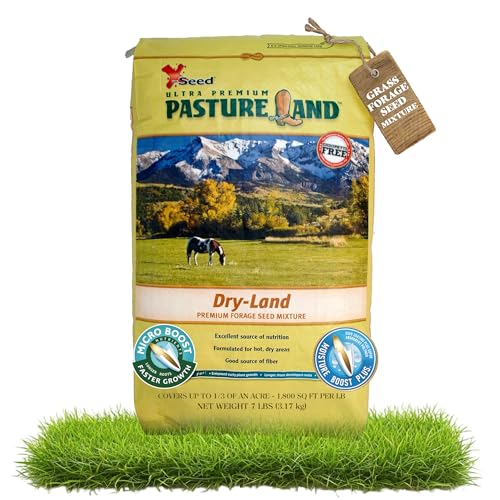
X-Seed’s mix is designed for hot, dry climates and extended sunlight. It combines tall fescue, orchard grass, and ryegrass in a way that supports rapid germination through Micro-Boost technology. The formulation emphasizes strong, fibrous root systems to improve soil stability and forage compatibility, making it suitable for dryland pastures and areas where irrigation is limited. The product notes elevation suitability up to 8,000 feet, further indicating its resilience in hot, dry environments. When establishing seed in arid landscapes, consider providing initial moisture through light, frequent irrigation until germination completes, then scale back as roots develop.
Jonathan Green Black Beauty Dense Shade Grass Seed

This cool-season seed mix emphasizes shade tolerance with a blend that includes Texas bluegrass and Black Beauty tall fescues. While designed for shaded to lightly sunny areas, its drought-resistance features—such as dense foliage and deep root development—aid in moisture retention and resilience during dry spells. The mix supports quick establishment, with a germination window typically around two to three weeks, depending on conditions. It is well-suited for lawns shaded by trees, fences, or buildings where sun exposure is limited yet consistent moisture is needed for healthy growth.
Pennington Kentucky 31 Tall Fescue

Kentucky 31 Tall Fescue is recognized for durability and economical maintenance. This tall fescue variety is well-suited for hot summers and heavy rainfall, delivering thick blades that help withstand dry periods and foot traffic. Its moral of robust growth supports a lawn that resists thinning during drought by maintaining a deeper rooting system. For best results in dry climates, prepare well-drained soil, keep mowing heights higher, and water deeply but infrequently to encourage deep root formation.
Scotts Turf Builder Grass Seed Sun & Shade Mix

This mix combines seed, fertilizer, and soil improver to support deep root growth. It’s designed to perform in both sun and shade conditions, with a focus on resilience and rapid establishment. For dry areas, the emphasis on root building improves drought tolerance by enabling deeper water access. Users should follow recommended irrigation guidelines to avoid stressing newly established seedlings, adjusting watering based on temperature, wind, and soil type. The result is a more uniform lawn that tolerates a range of light conditions while reducing moisture loss.
Scotts EZ Seed Patch & Repair Sun and Shade
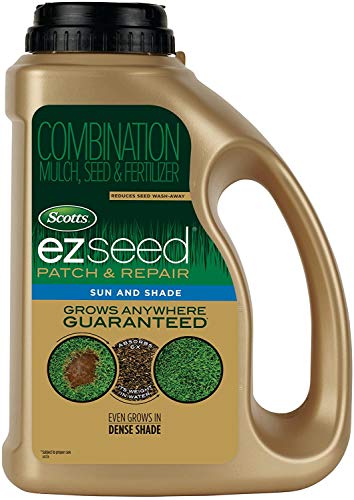
Scotts EZ Seed Patch & Repair is an all-in-one solution featuring high-performance seed, mulch, controlled-release fertilizer, tackifier, and a protective layer. It’s designed to fill bare spots across challenging conditions, including full sun and dense shade. For dry conditions, the mulch and fertilizer components help retain moisture and support germination, while the seed blend adapts to varying light. This product is particularly useful for quick recovery in high-traffic or erosive areas where moisture conservation is critical for seedling survival.
Buying Guide: Dry Area Grass Seed Purchase Considerations
- Moisture retention: Look for seed blends with waxy leaf coatings, mulch components, or hydrophobic properties that reduce evaporation and slow soil moisture loss.
- Root depth and vigor: Deep-rooting varieties (such as tall fescues) improve drought tolerance by accessing deeper moisture reserves and resisting heat stress.
- Sun exposure compatibility: Dry areas often come with intense sun; select mixes that tolerate full sun or variable light to avoid shade-related thinning and color loss.
- Soil preparation: Ensure well-drained soil and proper grading to prevent waterlogging while promoting deep root establishment in dry soils.
- Germination and establishment speed: Micro-Boost or other germination aids can shorten establishment time, which reduces exposure to harsh drying conditions.
- Maintenance tolerance: Choose blends that recover quickly from drought or heat waves, with resilient turf that resists cracking and helps retain soil moisture.
- Aftercare and irrigation: Plan for initial irrigation to support germination, then transition to deeper, less frequent watering to promote drought-tolerant roots.
Choosing grass seed for dry areas requires balancing heat tolerance, drought resistance, and rooting depth. The listed products offer varied approaches—from blends designed for hot climates and deep-rooted grasses to all-in-one seed systems that help establish coverage quickly in arid conditions. When selecting, consider your climate, sun exposure, soil type, and irrigation availability to optimize lawn resilience and long-term health.