Best Grass Seed for Slopes and Banks: 5 Options for Erosion-Prone Areas
The best grass seed for slopes and banks depends on whether you need deep-rooted erosion control, a low-mow cover, or help repairing bare patches. Old Cobblers Farm Wicked Tuff Turf is the most slope-focused choice; Pennington No Mow Mix suits hard-to-mow areas, while Pennington Smart Patch is designed for bare spots and includes a tackifier. The options below compare their stated uses and features so you can match a product to your site.
| Product | Best for | Notable feature |
|---|---|---|
| Old Cobblers Farm Wicked Tuff Turf | Slopes needing soil-binding roots | Fescue and deep taproot claims |
| Pennington No Mow Mix | Low-maintenance banks | Grows tall, then flops shorter |
| Pennington Smart Patch Tall Fescue | Bare or partly shaded patches | Seed, fertilizer, mulch, and tackifier |
| Scotts Turf Builder Sun & Shade | Mixed light conditions | Grass seed with fertilizer and soil improver |
| Scotts EZ Seed Patch & Repair | Small lawn repair areas | Patch product with stated coverage |
Old Cobblers Farm Wicked Tuff Turf Hillside Stabilizer

Best for: Banks, slopes, ditches, cuts, and disturbed ground where anchoring soil matters more than a manicured lawn. This blend is specifically described as an erosion-control mix for those settings, making it the most directly targeted option in this comparison.
Its listed ingredients include creeping red fescue, whose rhizomes are described as knitting the soil surface, and birdsfoot trefoil, which is said to develop a three- to four-foot taproot. The product also lists 16% nitrogen-fixing legumes and says established slopes typically need no fertilizer.
Limitation: The product prioritizes soil binding and survival over a manicured appearance. Its stated growing-zone range is Zones 3–7, so check that against your location and conditions.
Pennington No Mow Mix
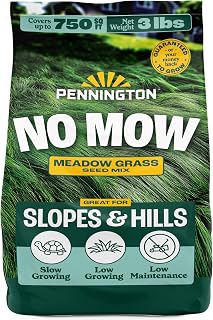
Best for: Homeowners who want grass on a slope or hill without frequent mowing. Pennington says the mix grows up to 12 inches and then naturally flops to about 6 inches, which is useful where mowing is difficult or inconvenient.
The listing describes the seed as drought tolerant and suitable for erosion-prone areas, hills, and lawns. Choose this option if a relaxed, taller look is acceptable and ease of maintenance is a priority. It is positioned as a grass mix rather than a product with a separate mulch or tackifier component.
Limitation: This is not the best match if you want a closely clipped, conventional lawn; its stated growth habit is taller and naturally flopping.
Pennington Smart Patch Tall Fescue

Best for: Repairing bare spots on partly shaded lawns, including sloped patches where seed movement is a concern. The product combines tall fescue seed with fertilizer and mulch, and its listed tackifier is intended to help protect seed on slopes, hills, and during rain.
This combination can be a more convenient choice for spot repairs than buying seed and the listed components separately. The product information identifies spring and fall as application seasons and specifically mentions partly shaded lawns.
Limitation: It is presented as a patch-repair product, not as a dedicated whole-bank erosion-control blend. Choose a slope-specific mix when stabilizing a large or disturbed area is the main goal.
Scotts Turf Builder Sun & Shade Mix

Best for: Lawn areas on slopes that receive varying amounts of sun and shade. The mix includes grass seed, fertilizer, and soil improver, and its listed Root-Building Nutrition is intended to help establish deep roots.
The product information gives application guidance for spring or fall: daily average soil temperatures should be consistently between 55°F and 70°F, or air temperatures between 60°F and 80°F. This makes it a practical choice when the bank is part of a broader lawn with mixed light conditions.
Limitation: The listed features emphasize sun-and-shade lawn establishment, not specialized erosion control. Consider a slope-specific blend for steep, disturbed, or actively eroding ground.
Scotts EZ Seed Patch & Repair Sun and Shade
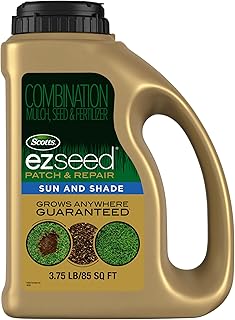
Best for: Filling small bare areas within an existing lawn rather than seeding an entire bank. The listed mix contains Kentucky bluegrass, perennial ryegrass, and fine fescue. One 3.75-pound jug is stated to cover up to 85 square feet.
The product is designed for patching and repair, with a three-step process: prepare the area, apply the seed evenly, and water until no more water is absorbed. Its listed germination conditions are daytime temperatures from 60°F to 80°F with no danger of frost.
Limitation: The stated coverage is intended for patch areas, so calculate the area before choosing it for a large slope. It is not described as a dedicated hillside stabilizer.
Buying Guide: How To Choose Grass Seed For A Slope
Is erosion control the main goal?
For banks, ditches, and disturbed soil, prioritize products described specifically for erosion control and soil anchoring. The Old Cobblers Farm mix lists both creeping red fescue and birdsfoot trefoil as part of its root-focused approach. A standard lawn or patch-repair product may be a better fit when the slope is already stable and the goal is simply to fill in grass.
Do you need less mowing?
Choose a low-mow option if reaching the slope with a mower is difficult. Pennington No Mow Mix is described as growing up to 12 inches before flopping to about 6 inches. That growth habit may not suit buyers seeking a short, formal lawn, so consider the desired appearance as well as maintenance needs.
Will you be repairing a small bare area?
Patch products are suited to localized repairs. Pennington Smart Patch combines seed, fertilizer, and mulch and lists a tackifier for slopes and rain. Scotts EZ Seed is also aimed at bare spots and gives a coverage figure of up to 85 square feet per jug. For a whole bank, compare the coverage needs with a blend intended for larger slope areas.
What light and temperature conditions should you check?
Match the product to the amount of sun and shade at the site, then follow its listed planting guidance. Scotts Sun & Shade provides soil- and air-temperature ranges for spring and fall application. Scotts EZ Seed lists daytime temperatures of 60°F to 80°F and no danger of frost. Product guidance varies, so use the package directions for the chosen seed.
How much seed do you need?
Measure the area before buying and compare it with the product’s stated coverage or available package size. The supplied information gives a specific coverage figure for Scotts EZ Seed but not for every product here. Avoid assuming that patch coverage will be sufficient for a long bank or extensive disturbed ground.
Frequently Asked Questions
What grass seed is best for a steep bank?
A blend specifically described for slopes and erosion control is the most direct match. Old Cobblers Farm Wicked Tuff Turf is listed for slopes, banks, ditches, and disturbed soil.
Can I use no-mow seed on a hill?
Yes. Pennington No Mow Mix is described as suitable for slopes and hills, with a growth habit intended to reduce mowing needs.
Does seed with a tackifier help on slopes?
Pennington Smart Patch lists a tackifier intended to protect seed on slopes, hills, and during rain. Follow the product’s application directions for best placement.
When should I plant grass seed on a slope?
Timing depends on the product and local conditions. The supplied Scotts products list spring or fall guidance and temperature ranges; check the selected product’s label before planting.
Is patch-repair seed suitable for an entire bank?
Patch-repair seed is primarily described for bare spots and localized lawn damage. For a large bank, compare coverage carefully and consider a product specifically formulated for slopes.