Best Grass Seeds for Cow Pastures: Top Picks for Healthy Forage
Answering the question “which grass seeds work best for cow pastures?” this guide highlights five forage-friendly options that balance yield, resilience, and nutrition. These seeds are suitable for cattle grazing across various climates and soil types. Each pick targets different farm setups—from established pastures needing rapid recovery to dry environments where hardiness matters. Read on to see which seed mix fits your herd’s needs, followed by a practical buying guide and common questions.
Summary table of selected products:
| Product | Best For | Key Benefit | Limitations |
|---|---|---|---|
| Seasonal pastures with diverse forage | Balanced mix with Tall Fescue and clover for high yield | Contains multiple species; establishment may vary by soil | |
| Barenbrug SeedPasture25 | Pasture growth and repair | Endophyte-free, versatile across climates | 25 lb bag; may require soil prep |
| X-Seed Pasture Land Dry-Land Mix | Dry, hot regions | Micro-Boost germination and rapid establishment | Endophyte-free; best in well-drained soils |
| Climax Timothy Grass Seeds | Pasture and hay for moderation | Cool-season perennial with broad use | Prefers cooler, moist conditions |
| Pennington Kentucky 31 Tall Fescue | Lawn- or pasture-adjacent forage | Durable, heat- and drought-tolerant | Primarily lawn-focused; adapt to pasture with care |
Mountain View Seeds 100372 Cattle Pasture Mix Grass Seed

Premium cattle forage seed designed to deliver high-yielding, nutrient-rich pasture year after year. The mix balances cool-season grasses with white clover for improved protein content and soil health. Best for established pastures that need a dependable forage basis for cattle and other grazing livestock. Notable for rapid establishment and sustained production.
Who it’s best for: Farmers seeking a ready-to-establish pasture with diverse forage and improved soil biology. Suitable for mid- to long-term cattle operations that value steady yields.
Why selected: It combines tall fescue, perennial ryegrass, Italian ryegrass, alfalfa, and clover to provide broad grazing windows and resilience across climates.
Caution: As a mixed stand, performance depends on proper seeding rates and initial soil preparation.
Pennington Kentucky 31 Fescue 3 LB Tall Fescue Seed

Kentucky 31 Tall Fescue is a durable, economical option for lawns and forage. This tall fescue variety grows thick blades that tolerate hot summers and heavy rain, making it a robust choice for mixed pasture and lawn-adjacent grazing. Best for moderate climates and operations looking for a cost-effective forage component.
Who it’s best for: Pasture managers seeking a reliable, tough grass that can withstand heat and drought when combined with other forage species.
Why selected: Tall fescue provides drought resistance and dense growth, contributing to a steady forage base.
Caution: Some tall fescue varieties can interact with livestock sensitivities; ensure the specific seed is suitable for your herd and grazing plan.
X-Seed Pasture Land Dry-Land Forage Seed
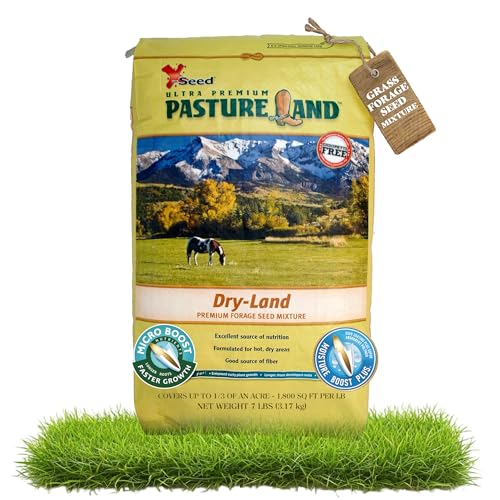
Dry-land forage seed with Micro-Boost technology to improve germination, root development, and seedling size. Formulated for hot, dry climates up to 8,000 feet elevation, this mix aims to deliver consistent pasture growth in arid conditions while catering to safe nutrition in livestock.
Who it’s best for: Operations in dry regions needing faster establishment and reliable forage in challenging weather.
Why selected: Micro-Boost enhances early growth, which can shorten the time to first grazing and help stabilize pastures in arid soils.
Caution: Best results occur in well-drained soils; avoid overly compacted or poorly drained sites.
Climax Timothy Grass Seeds, 1 Pound

Timothy grass is a cool-season perennial bunchgrass that can serve as pasture forage or hay. It tolerates partial shade and grows best under cool, moist conditions. This seed is well-suited for rotation with other grazing species and can contribute stable forage during cooler months.
Who it’s best for: Systems needing a reliable cool-season component for hay or mixed pastures, especially where supplemental forage is desirable in spring and fall.
Why selected: Timothy grass helps diversify forage offerings and can support grazing rotations across seasons.
Caution: Performs best in cooler climates; productivity declines in hot, dry summers without supplemental irrigation or shade management.
Barenbrug SeedPasture25 Grass Seed

SeedPasture25 is a forage seed blend designed for rapid establishment and pasture repair. It is endophyte-free, making it safer for diverse livestock and suitable for northern and transition climate zones. It supports quick re-seeding after pasture losses and can be used for hay production as well.
Who it’s best for: Pasture managers needing fast recovery after grazing pressure or weather damage, with a flexible climate range.
Why selected: Endophyte-free composition reduces potential animal health concerns and supports broad palatability across livestock classes.
Caution: Endophyte-free mixes may establish more slowly in very tough conditions compared with endophyte-containing blends, requiring proper soil preparation.
Buying Guide: Choosing the Right Grass Seed for Cow Pastures
What forage goals matter most?
Consider whether you want rapid pasture recovery, higher protein forage, or a longer grazing window across seasons. Mixes with tall fescue, perennial ryegrass, and clover typically offer a balance of yield and nutrition for cattle.
What climate and soil conditions apply?
Dry, hot climates benefit from drought-tolerant blends with Micro-Boost and well-drained soil needs. Cool, moist regions perform best with Timothy or Kentucky 31 tall fescue blends. Test soil pH and organic matter to tailor seed choices and fertilization plans.
Establishment speed and management
Rapid establishment helps reduce erosion and weed invasion. Look for blends that advertise quick germination and robust seedling vigor. Proper seeding depth, moisture, and early weed control improve success rates.
Endophyte considerations
Endophyte-free blends are preferred when livestock sensitivity is a concern. Endophytes can influence forage tolerance to stress but may carry other considerations, so choose based on herd needs and veterinary guidance.
Pasture rotation and forage diversity
A mix that includes diverse grass species and legumes can improve nutrition and soil health. Rotating grazing areas with reseeding in mind helps maintain pasture resilience and long-term productivity.
Practical quick comparison
- Best for rapid establishment in varied soils: Mountain View Seeds Cattle Pasture Mix
- Better for pasture repair and endophyte safety: Barenbrug SeedPasture25
- Choose this if you’re in a hot, dry region: X-Seed Pasture Land Dry-Land
- A solid cool-season component for hay or rotation: Climax Timothy
- Good all-around tall fescue option for durability: Pennington Kentucky 31
Frequently asked questions
- What grass seeds are best for cows? — Forages like tall fescue, perennial ryegrass, Timothy, and clover-based mixes are commonly used due to nutrition and yield.
- Which seeds establish fastest? — Sections labeled for rapid establishment or with germination-enhancing technology often establish quickly, especially in prepared soils.
- Do endophyte-free seeds affect cattle health? — Endophyte-free seeds reduce certain livestock risks and are often preferred for mixed herds.
- How important is soil prep before seeding? — Soil prep is critical for even germination, soil contact, and nutrient availability, influencing long-term pasture productivity.
- Can I use lawn seeds for pasture? — Some tall fescue blends can work in pasture settings, but you may need adjustments in seeding rates and grazing plans.