Best Solar Powered Greenhouse Fans for Efficient Air Circulation
Answering the demand for reliable, solar-powered ventilation, this guide highlights top options to keep greenhouses, chicken coops, sheds, and outdoor spaces cooler. Each pick is evaluated for who it’s best for, how it performs in sun vs. shade, and practical limitations to consider when choosing. This overview targets readers seeking off-grid, energy-efficient cooling with weatherproof designs. The table below summarizes the five selected products to help you compare at a glance.
| Product | Best For | Key Benefit |
|---|---|---|
| erifyng Solar Powered Fan | Small to medium greenhouses or coops | High IPX7 waterproofing and dual fans for enhanced airflow |
| ORQEMG Solar Powered Fan with Battery Backup | Shade-prone sites and nights | Battery backup with remote control and three modes |
| ZIZIWIN 18″ Solar Fan | Portable, semi-permanent setups | Rechargeable battery with long runtime and 3650 CFM |
| Fanspex 3 Fan Kit | DIY, two-way air circulation systems | Three-fan configuration for 2-way airflow |
| ecoCalm Solar Fans (Two Models) | Greenhouses needing built-in battery or bifacial panels | Battery option and programmable temperature control |
erifyng Solar Powered Fan for Greenhouse and Coop

This dual 5-inch fan system is designed for small to medium spaces such as greenhouses, chicken coops, and sheds. It features a large solar panel kit and dual fans to improve air exchange when sun is available. The design emphasizes weatherproofing with IPX7 protection and a sturdy aluminum housing to withstand outdoor conditions. Best for environments where solar power is reliable for most of the day and safety around fans is a priority.
Who it’s best for: Gardeners and small-scale poultry enclosures needing robust outdoor ventilation without electrical wiring. Limitations: When sunlight is weak, airflow slows; plan for multiple units for larger areas.
ORQEMG Solar Powered Fan with Battery Backup

This 15W panel-powered system includes a control box, a remote, and three operation modes. It is designed for off-grid use, enabling continuous ventilation even when direct sun is intermittent. The battery backup helps maintain airflow during cloudy periods or at night. Best for spaces that need consistent ventilation with a backup power option.
Who it’s best for: Users who want reliable solar ventilation with remote control and a weatherproof setup. Limitation: No battery-free operation; requires battery management and solar light to run at full capacity.
ZIZIWIN 18″ Solar Fan with Battery
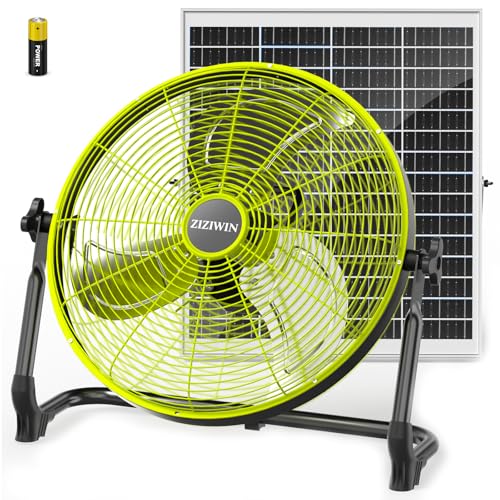
This portable 18-inch fan offers a strong airflow with an integrated rechargeable battery and up to 60 hours on low speed. It supports 360-degree tilt and can be used in a greenhouse, shed, patio, or camping setup. Best for temporary or semi-permanent installations where you want high volumes of air on demand and can accept a larger, more portable unit.
Who it’s best for: Users needing a high-airflow, mobile cooling option for outdoor or semi-covered spaces. Limitation: Higher price and weight compared with smaller, simple fans.
Fanspex Solar 3 Fan Kit

This triple-fan kit is designed for two-way air circulation, offering intake or exhaust configurations with a 25W solar panel. It provides significantly higher air movement than single-fan systems, making it well-suited for larger greenhouses or coops that require enhanced ventilation. Best for DIY projects that want flexible airflow direction.
Who it’s best for: Hands-on installers aiming for maximum airflow with customizable direction. Limitation: No battery backup; air output varies with sunlight and may drop during overcast days.
ecoCalm Solar Fan With Battery and Adjustable Thermostat
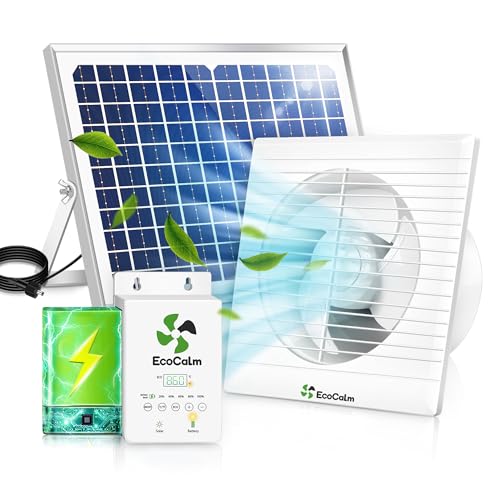
This model pairs a bifacial solar panel with a rechargeable battery and an adjustable thermostat, enabling automatic on/off based on ambient temperature. It provides nighttime or cloudy-day ventilation, with a battery capable of running the fan after sunset. Best for greenhouses that require consistent climate control without continuous sun.
Who it’s best for: Greenhouse operators who value automatic temperature-based ventilation and night-time airflow. Limitation: Efficiency depends on sunlight; cloudy days reduce charging and performance.
ecoCalm 12″ Solar Exhaust Fan Kit

This 12-inch exhaust model includes two 30W bifacial panels and a 5000mAh battery, delivering daytime power with battery-backed nighttime operation. It supports adjustable temperature control for automatic cycling and efficient power generation. Best for medium to large greenhouses needing steady air removal and night-time comfort.
Who it’s best for: Operators seeking solid exhaust capability with battery backup for after-sunset ventilation. Limitation: Power generation can drop on cloudy days and in low sunlight conditions.
DC HOUSE Solar Powered Exhaust Fan

This compact, plug-and-play fan is designed for small spaces such as chicken coops and small greenhouses. It runs entirely on solar power, requiring no wiring, and includes a waterproof panel with mounting holes for easy installation. Best for quick deployment in sheds or windows where you want basic cooling without electrical work.
Who it’s best for: Edges toward quick setup and low-budget projects. Limitation: Limited airflow for larger spaces; consider larger or multiple units for bigger areas.
blessny 2-Fan Solar Kit

This two-fan kit offers flexible installation for intake or exhaust air with 15-foot cords, enabling multiple configurations. It’s fully weatherproof (IP67) for outdoor use and designed to withstand wide operating temperatures. Best for outdoor coops and greenhouses that require adaptable ventilation layouts.
Who it’s best for: DIY enthusiasts needing versatile installation options. Limitation: No onboard battery backup; performance depends on sun exposure.
Buying Guide: Practical Considerations For Solar Greenhouse Fans
- Off-grid viability: If you want full independence from wiring, prioritize models with integrated solar panels and battery backup. Battery-backed options provide nighttime ventilation but add cost and weight.
- Solar panel wattage and efficiency: Higher wattage panels deliver stronger airflow, especially in peak sun. Look for bifacial panels where possible, as they capture light from both sides and can improve overall output.
- Airflow needs by space: Large greenhouses may require multiple fans or higher-CFM units. Compare CFM ratings and consider two or more units to distribute air evenly.
- Weatherproofing and durability: IP ratings and rugged housings protect fans in damp outdoor environments. Aluminum enclosures offer durability and lightweight handling.
- Noise and animal comfort: Quiet operation is important in poultry coops and living spaces. Look for brushless motors and constructive blade design to reduce noise.
- Installation considerations: Evaluate whether you need wall-mounts, roof mounting, or freestanding units. Check for waterproof connectors and straightforward mounting hardware.
- Maintenance needs: Solar fans with simple, modular parts simplify maintenance. Check for accessible blades and protective grills to prevent injury or entry of debris.
FAQ
- Do solar-powered greenhouse fans require battery backup? Not always. Some models run directly from solar panels, while others include batteries to extend operation into the evening or cloudy periods.
- Can I use a solar fan in a shaded greenhouse? Yes, but airflow may be reduced. Larger or multiple panels can compensate for lower sun exposure.
- Is IPX7 waterproofing enough for outdoor use? IPX7 provides strong water protection for immersion and wet conditions; ensure seals and housing are intact for long-term reliability.
- How many fans should I install for a greenhouse? For a small setup, one dual-fan unit may suffice; larger spaces typically benefit from multiple units or a three-fan kit to ensure even air distribution.
- Are bifacial solar panels worth it? Yes, when sunlight is reflected from surfaces or when light comes from multiple angles, they can generate more power than standard panels, boosting ventilation performance.
- What maintenance is required? Regularly inspect blades and guards, clean dust from panels, and check wiring connections to prevent performance drops.