Best Ground Cover Seeds for Lawns, Paths, and Garden Beds
The best ground cover seeds depend on your site’s sunlight, climate, and how you plan to use the area. Creeping thyme is a fragrant choice for sunny spots, while Irish moss is suited to low-growing coverage in partial shade or sun. Mini clover can work as a lawn mix-in, and dichondra is intended for warm-climate ground cover. Verbena moss adds a colorful flowering option.
| Seed | Best For | Key Feature |
|---|---|---|
| Creeping thyme | Sunny paths and garden areas | Fragrant foliage; attracts pollinators |
| Irish moss | Pathways and rock gardens | Low, mat-forming growth |
| Mini clover | Lawn mixes and bare patches | Nitrogen-fixing clover |
| Dichondra | Warm-climate, low-traffic areas | Dense foliage; USDA Zones 8–11 |
| Verbena moss | Flowering ground cover | Colorful clusters of small flowers |
Creeping Thyme Seeds

These seeds are listed as Thymus serpyllum and are intended for paths, patios, and open garden spaces. The product description highlights growth in full sun and poor soil, plus fragrant foliage and flowers that attract bees and butterflies.
Best for: Gardeners seeking a fragrant ground cover for sunny areas. Choose this if scent and pollinator appeal matter alongside green coverage. The listing describes it as a low-maintenance option, but it specifically identifies full sun; it may not suit a deeply shaded planting site.
Outsidepride Irish Moss Seeds
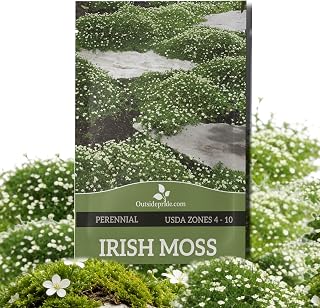
Irish moss is described as a perennial, mat-forming ground cover that grows about 1–2 inches tall. The product is presented for pathways, rock gardens, patio borders, and gaps between stepping stones or pavers. Its listed light range includes partial shade and full sun.
Best for: Buyers who want compact, moss-like greenery around paths or in rock gardens. It was selected for its low growth and stated shade adaptability. The description does not specify a climate range, so check local growing conditions before choosing it for a particular region.
Outsidepride Perennial White MiniClover

This small-leaved perennial clover is intended as a lawn alternative or a mix-in with existing grass. The listing describes it as drought- and wear-tolerant and says it can fix nitrogen, adding a natural source of that nutrient to the soil. It is also suggested for overseeding, bare patches, and lawn renovation.
Best for: Homeowners who want clover in a lawn blend or ground-cover planting. Choose this if you want a low-maintenance option that may contribute nitrogen. The suggested 2–5% mix-in rate applies to blending with grass seed; it is not a universal seeding rate for every use.
Outsidepride Dichondra Repens Seeds

Dichondra is described as a dense, creeping green cover for low-traffic lawns, bare spots, slopes, and garden beds. The listing gives a mature height of about 3–5 inches and identifies USDA Zones 8–11. It also notes that the plant tolerates heat and drought and can grow in partial to full shade.
Best for: Gardeners in the listed warm-climate zones who want a leafy lawn alternative or ground cover for a slope. It was selected for its stated shade range and erosion-control use. Avoid choosing it solely for a cold-winter site, since the product information focuses on Zones 8–11.
HOME GROWN Verbena Moss Seeds

This packet contains more than 6,000 seeds of Verbena tenuisecta, described as a compact, spreading perennial with multicolored flowers. The listing emphasizes branched plants and small flowers arranged in rounded clusters. It also identifies the variety as an All-America Selections winner.
Best for: Buyers who want flowering color rather than a plain green carpet. Its large stated seed count may suit a broader planting area, though the listing does not provide a coverage estimate. Choose another option if your priority is a strictly foliage-based or non-flowering ground cover.
Buying Guide: How To Choose Ground Cover Seeds
Which seeds fit your sunlight?
Match the seed to the light conditions where it will grow. Creeping thyme is described for full sun. Irish moss is listed for partial shade and full sun, while dichondra is described for partial to full shade. The product details do not establish a single light requirement for every site, so check the specific seed’s growing instructions before planting.
Do you need a lawn replacement or a garden accent?
For a lawn mix or bare lawn patches, consider mini clover. For a low-growing surface between pavers or in a rock garden, Irish moss is a closer match. Dichondra is positioned as a low-traffic lawn alternative in warm zones. Verbena moss is the flower-focused choice, while creeping thyme adds fragrance and pollinator appeal.
What should you check before sowing?
Confirm your region’s climate, the planting area’s sun exposure, and the intended use. A seed count does not tell you how much ground a packet will cover, so look for a package seeding rate and follow its planting directions. Prepare soil as directed and account for watering during establishment; “low maintenance” does not mean a seed can be planted without suitable conditions.
Frequently Asked Questions
What is the best ground cover seed for a sunny area?
Creeping thyme is a relevant option because its listing says it thrives in full sun. Irish moss is also listed for full sun, so compare the desired look and use.
Which ground cover seeds are suitable for shade?
Dichondra is described for partial to full shade, and Irish moss is listed as adaptable to partial shade. Confirm the amount of shade at the site before selecting seeds.
Can ground cover seeds replace a grass lawn?
Some options here are presented as lawn alternatives, including mini clover, Irish moss, and dichondra. Choose based on climate, traffic, and whether you want flowering or foliage coverage.
Which option attracts pollinators?
The creeping thyme listing specifically says its flowers attract bees and butterflies. Verbena moss is also described as a flowering ground cover, but its provided features do not make a specific pollinator claim.
Is dichondra suitable for cold climates?
The product listing identifies dichondra for USDA Zones 8–11 and notes slight leaf browning in winter temperatures as low as 20°F. Check local conditions and the seed package guidance before planting outside that range.