Best Herbicides for Woody Plants: Effective Options for Tree and Brush Control
Managing woody plants and dense brush requires targeted products that are effective, safe for nearby vegetation, and labeled for the right sites. This guide reviews five Amazon-listed herbicides designed to kill or control trees, shrubs, and brush without harming non-target plants in adjacent landscapes. Each option addresses different scenarios—stump sprouting, heavy brush, or mixed woodlands—and offers practical guidance on timing, coverage, and application. Use the summary table below to compare core features at a glance before reading the detailed product sections that follow.
| Product | Brand | Primary Use | Notable Feature |
|---|---|---|---|
| Tordon RTU Woody Plant Herbicide | Dow AgroSciences | Woody plant and tree control in non-cropland areas | Translocates to the root system to stop resprouts; not for sale in AK, CA, DC, FL, RI, PR |
| Pro Brush & Poison Ivy Killer | Liquid Harvest | Woody plants, brush, and broadleaf weeds | Concentrated post-emergent formula with dual actives; flexible timing |
| PastureGard HL | Pasturegard | Selective control of woody plants and brush | Thorough translocation; effective on tough woody species |
| Liquid Harvest Concentrated Brush Killer 32oz | Liquid Harvest | 70+ brush types, vines, and woody plants | Stump application and dilutions for varied vegetation |
| Glufosinate Brush Killer 32oz | Liquid Harvest | Broad-spectrum, non-selective weed and woody plant control | Glyphosate-free formulation; versatile spot and broadcast use |
Tordon RTU Woody Plant Herbicide

Tordon RTU is designed for cut-stump treatment on fence lines, roadsides, and other non-cropland areas. The label indicates it translocates within the tree’s root system to stop resprouts, making it a strong option when dealing with species that frequently re-sprout after cutting. Its use is described as effective against more than 20 woody species, providing a long-term reduction in unwanted trees along right-of-ways and non-crop corridors. Some states restrict sales, underscoring the importance of following local regulations and the product label.
- Kills cut stumps on fence lines and non-crop areas.
- Translocates to the root system to prevent resprouts.
- Effective on a broad range of woody species (20+).
- Not for sale in: AK, CA, DC, FL, RI, PR.
Application notes emphasize treating freshly cut stumps for best uptake and avoiding drift to desirable vegetation. As with all tree and shrub control products, users should wear appropriate PPE, follow label directions for mixing and coverage, and ensure proper disposal of any treated material. A careful, site-specific approach helps maximize effectiveness while minimizing environmental impact.
Pro Brush & Poison Ivy Killer

Pro Brush & Poison Ivy Killer is a post-emergent, concentrated herbicide designed to control most woody plants and dense brush as well as annual and perennial broadleaf weeds. It combines two active ingredients—triclopyr and 2,4-D—to provide effective control across cool and warm seasons. Flexible timing allows applications during the growing season or in dormant periods, making it suitable for maintenance along fence lines, rights-of-way, and resprouting stands. The product’s formulation emphasizes targeted vegetation control with practical timing options for varied climates.
- Concentrated post-emergent formula for woody plants and brush.
- Dual actives: triclopyr and 2,4-D for broad-season effectiveness.
- Flexible timing: in-season or during dormancy.
Users should apply when target vegetation is actively growing for best results, and follow label guidelines to minimize impacts on nearby ornamentals or non-target species. Protective equipment, wind-aware spraying, and proper spill containment are advised. This product is intended for brush, woodlands, and similar environments where aggressive woody weed control is needed.
PastureGard HL Brush and Woody Herbicide
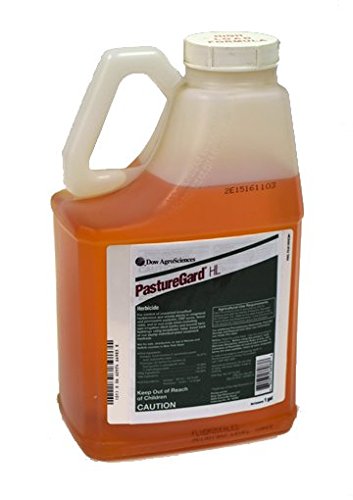
PastureGard HL specializes in selective control of woody plants and brush, delivering thorough translocation that helps kill tough brush such as blackberry, rose, and privet. It also targets other hard-to-control species including wax myrtle, sweet gum, persimmon, and osage orange. This selectivity makes it a favorable option when you want to reduce unwanted woody growth while preserving desirable vegetation in pastures, rangelands, or hedgerows. The label guidance should be reviewed for site-specific restrictions and compatibility with nearby crops or forage grasses.
- Selective control of woody plants and brush.
- Thorough translocation improves kill on tough species.
- Effective on multiple woody varieties including wax myrtle and persimmon.
Application typically involves treating shrubs and small trees in designated areas, often during growing conditions that favor uptake. As with any selective herbicide, careful spot treatments and avoidance of drift are important to protect desirable plants. Readers should verify state registrations and label directions before use to ensure compliant application.
Liquid Harvest Concentrated Brush Killer 32oz

Liquid Harvest Concentrated Brush Killer is described as a versatile option for 70+ types of brush, vines, brambles, and woody plants. Best results occur when treated plants are fully bloomed and actively growing. For stump applications, the product recommends completely covering the freshly cut stump with undiluted product using a paintbrush. Regular use on vines and stubborn plants is achieved by mixing 4–8 ounces per gallon of water. This approach allows targeted control in fence rows, roadsides, and similar settings where heavy brush is present.
- Controls 70+ types of brush and woody plants.
- Stump treatment with undiluted product; paint-on method recommended.
- Mix 4–8 oz per gallon for general use in spray applications.
Application timing favors active growth for maximum uptake, and protective measures should be observed to minimize exposure to non-target plants. The product is well-suited for brush removal along property boundaries, utility corridors, and unmanaged woodland edges where aggressive woody control is necessary.
Liquid Harvest Glufosinate 32oz
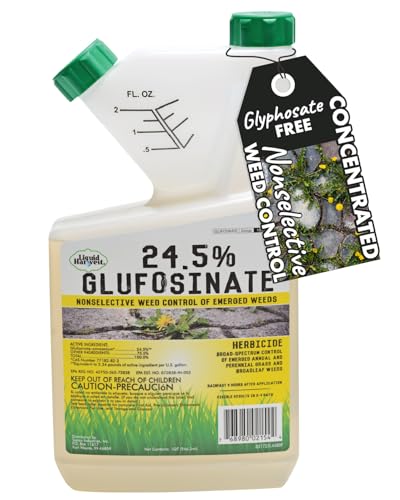
This Liquid Harvest formulation uses 24.5% Glufosinate and is marketed as a broad-spectrum, non-selective weed killer with activity on some woody plants. It is presented as glyphosate-free and offers both spot treatment and broadcast application options. The label indicates flexible rates: spot treatments typically require small amounts per gallon, while broadcast applications call for higher volumes per acre depending on weed type and growth stage. Users should evaluate the risk to nearby ornamentals and water sources and follow label directions precisely.
- Broad-spectrum, non-selective weed control; some woody species affected.
- Glyphosate-free formulation; suitable for sensitive environments.
- Spot and broadcast application options with labeled rates.
Due to its non-selective nature, this product should be applied with caution to protect desirable plants and to avoid runoff into soils and waterways. Always wear appropriate PPE, observe buffer zones, and ensure that vegetation you want to keep is not exposed to drift or overspray. Proper labeling and state-specific restrictions should guide its use in fields, pastures, and landscape settings.
Buying Guide
Choosing the right herbicide for woody plants involves several key considerations. First, determine whether you need selective control of shrubs and brush or non-selective suppression of a broad range of vegetation. Selective products like PastureGard HL target woody species while preserving desirable grasses, whereas non-selective options like the glufosinate-based formula provide broader control but require careful application to avoid collateral damage. Consider the scale of the brush, the proximity to crops or ornamentals, and whether stump treatment or foliar spraying is most appropriate for your site.
Application timing and method are also crucial. Some products are optimized for actively growing plants and may perform differently during dormancy or dry spells. Stump treatments demand precise surface coverage and prompt follow-up if resprouts occur. For brush lines or rights-of-way, products designed for spray coverage and rapid translocation can shorten the time needed to achieve noticeable suppression. Always read the label for dilution rates, sprayer compatibility, and safety gear requirements before mixing or applying.
Safety, environmental impact, and regulatory compliance are vital considerations. Non-target plants, pollinators, and waterways can be affected by drift, runoff, or improper application. Use calibrated equipment, maintain buffer zones, and use spot treatments where possible. Some products carry state restrictions or sale limitations; verify local registrations before purchasing. In areas with sensitive ecosystems or near cattle pastures, opt for selective formulations and seasonal timing that minimize disruption to existing vegetation and wildlife.
Cost, availability, and coverage are practical factors. Concentrated products may offer lower per-acre costs but require accurate mixing to achieve effective rates. Ready-to-use formulations simplify application but may be less economical for large properties. Examine label coverage data to estimate how many acres or square feet you can treat with a given quantity. Finally, compare the long-term benefits of each option, such as reduced resprouting, improved site access, and ease of follow-up management, to select the best fit for your landscape needs.