Best High-Frequency Animal Repellents for Yards and Gardens
The best high-frequency animal repellent depends on the animals you want to deter, the size of the area, and whether you need adjustable modes or a multi-device pack. The gdend model suits buyers who want five settings, while Broox adds flashing lights and an alarm. For wider placement, consider PEXPEL’s two-pack; for a broad detection angle, consider Grrwz. ZLieatmp offers three modes and adjustable sensor sensitivity.
| Product | Best For | Notable Feature |
|---|---|---|
| gdend Solar Ultrasonic Repellent | Trying different deterrent modes | Five working modes |
| Broox Solar Animal Repellent | Sound and light deterrence | Ultrasonic sound, alarm, and flashing LED |
| PEXPEL Two-Pack Repeller | Placing devices in multiple spots | Up to 30-foot motion detection |
| Grrwz Solar Repellent | Wide-angle motion sensing | 150-degree detection zone |
| ZLieatmp Two-Pack Repellent | Adjusting sensor response | Three modes and adjustable sensitivity |
gdend Solar Ultrasonic Animal Repellent

Best for: Buyers who want several deterrent settings to try for different animal activity. The device has five working modes and is listed for deer, cats, squirrels, raccoons, dogs, skunks, and rabbits. Motion detection activates its response when movement is sensed.
Modes 1, 2, 3, and 5 emit ultrasonic waves; Mode 4 emits a loud alarm. Its solar panel supports outdoor use, and the product description specifies IP65 waterproof ABS construction. The listing recommends charging before first use and allowing up to two weeks of consistent use while testing settings.
Why it was selected: The range of modes offers more ways to adjust the device than a single-response model. Limitation: The manufacturer notes that animals may respond differently, so finding a suitable mode can take experimentation.
Broox Solar Animal Repellent
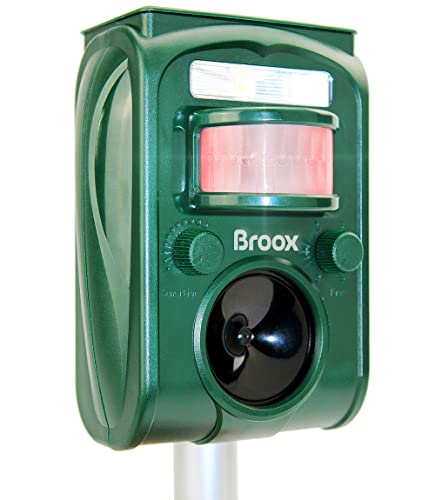
Best for: Buyers looking for a motion-triggered combination of sound and light. Broox activates ultrasonic sound and flashing LED light when its motion detector senses movement. The description also lists an alarm as part of its deterrent approach.
It is solar powered and can also be charged with the included USB cord. Its weatherproof, UV-protected construction is described as suitable for normal rain, snow, and sun. The product is intended for outdoor areas such as gardens, yards, and farms, and is presented as a deterrent for animals including squirrels and deer.
Why it was selected: It combines several types of stimuli rather than relying only on ultrasonic sound. Limitation: The provided details do not state a detection angle or range, so buyers cannot compare its sensing coverage from the listing information here.
PEXPEL Two-Pack Solar Repellers

Best for: Buyers who want two devices for separate parts of a yard or garden. Each unit is described as having a PIR motion sensor with a 120-degree detection angle and detection up to 30 feet away. When movement is detected, it activates ultrasonic waves and flashing lights.
The visual deterrent includes a changing LED flame-spiral effect and strobe lights. The device uses a solar panel and also has DC backup for rainy days. A power-level indicator helps users check the device’s power status.
Why it was selected: The two-pack and stated detection range make it useful for people planning to cover more than one location. Limitation: The listed 120-degree angle and 30-foot range describe detection, not a guaranteed deterrent area; placement and yard layout may affect where motion is sensed.
Grrwz Solar Motion-Activated Repellent

Best for: Buyers who prioritize a wide motion-sensing angle. The product lists a PIR sensor with a 150-degree detection zone and detection up to 30 feet. When it detects movement, it combines high-frequency ultrasonic sound with flashing LED strobe lights.
The listing names deer, raccoons, squirrels, skunks, cats, dogs, and rabbits among the animals it is intended to deter. It is solar powered and has an IP65 weatherproof rating with ABS construction, according to the product details.
Why it was selected: Its stated 150-degree zone is wider than the 120-degree angle listed for the PEXPEL model, which may matter when choosing placement. Limitation: It is a one-pack listing, so covering separate areas may require additional units.
ZLieatmp Two-Pack Ultrasonic Repellent

Best for: Buyers who want to adjust both the deterrent mode and sensor sensitivity. This two-pack has three selectable working modes and a PIR sensor that activates ultrasonic sound and flashing white LED lights when it detects approaching movement.
The listing presents it for use around garden borders, pathways, yard edges, patios, lawns, and farms. It names deer, cats, rabbits, squirrels, and raccoons as animals it may help discourage. Its adjustable sensitivity lets users adapt the sensor response to different outdoor areas.
Why it was selected: Mode choices and sensitivity adjustment provide a more configurable setup than a fixed-response device. Limitation: The supplied product details do not specify a detection distance or angle, so compare placement needs before choosing it over models with stated sensing measurements.
Buying Guide: How To Choose A High-Frequency Animal Repellent
Which detection range and angle do you need?
Check whether the listing provides a motion-sensor distance and angle. PEXPEL lists up to 30 feet and 120 degrees, while Grrwz lists up to 30 feet and 150 degrees. These figures describe the stated sensing zone; they do not guarantee that every animal will be deterred throughout that area. Consider obstacles, approach paths, and whether one unit can face the likely entry point.
Do you want sound only or multiple deterrents?
Some devices pair ultrasonic output with visual signals. Broox lists ultrasonic sound, an alarm, and flashing LED light. PEXPEL and Grrwz pair ultrasonic waves with flashing lights. If you prefer to adjust the response, gdend offers five modes, while ZLieatmp provides three modes and adjustable sensor sensitivity.
Is a single unit or a multi-pack more suitable?
A single device may suit one garden bed or entry point. A two-pack can be placed in separate areas, but check each product’s stated sensing specifications and plan the placement before buying. Do not assume that the number of devices automatically determines total coverage.
How will it stay powered outdoors?
Solar power can reduce the need for routine battery changes, but the device still needs suitable sunlight for charging. Broox also lists USB charging, and PEXPEL lists DC backup. For weather exposure, compare the exact product description: gdend and Grrwz specify IP65, while Broox describes weatherproof and UV-protected construction without a stated IP rating in its feature details.
What animals are you trying to deter?
Compare the animal list in each product description with the visitors to your yard. These devices are presented as deterrents, not guaranteed removal solutions. The gdend listing notes that animals may react differently to different modes, so users may need to try another setting if the first does not appear effective.
Frequently Asked Questions
How does a motion-activated ultrasonic animal repellent work?
A built-in motion sensor detects movement and triggers the device’s response, such as ultrasonic sound or flashing lights. The response is intended to discourage animals from entering the sensed area.
Are these devices intended for outdoor use?
The listed products are marketed for outdoor locations such as yards, gardens, farms, or pathways. Check each model’s weatherproofing and charging details before placing it outdoors.
Do all animals respond to the same frequency or mode?
No response is guaranteed. The gdend listing specifically says animals may respond differently and recommends trying other modes if one setting does not seem effective.
How long should I wait before changing a setting?
The gdend description recommends allowing up to two weeks of consistent use while finding an effective mode. The other supplied product details do not give a specific adjustment period.
Can one device protect an entire yard?
That depends on the sensor’s stated range and angle, the yard layout, and where animals enter. Use the listed detection specifications to plan placement, and consider a multi-pack when separate areas need devices.