Best Home Garden Soil Testing Kits for pH and Nutrients
The best home garden soil test depends on what you need to measure: choose a mail-in lab kit for detailed nutrient results, a liquid kit for multiple at-home readings, or pH strips for a simple acidity check. The MySoil kit is best for tailored lab analysis, while the Rapitest kit is a practical choice for testing pH and key nutrients at home. A smart meter adds ongoing moisture and temperature monitoring but does not replace a complete nutrient test.
| Product | Best For | What It Measures |
|---|---|---|
| MySoil Soil Test Kit | Detailed lab results | 13 plant-available nutrient levels, including nitrogen and pH |
| Rapitest Soil Test Kit | Routine at-home testing | pH, nitrogen, phosphorus, and potash |
| Dewilde Soil Test Kit, 140 Tests | Frequent multi-factor testing | pH, ammonia, nitrogen, phosphorus, and potassium |
| Dewilde pH Test Strips | Low-complexity pH checks | pH from 3.5 to 9 |
| GreenVation Smart Soil Meter | Connected soil monitoring | Moisture, temperature, and EC nutrient readings |
MySoil Soil Test Kit
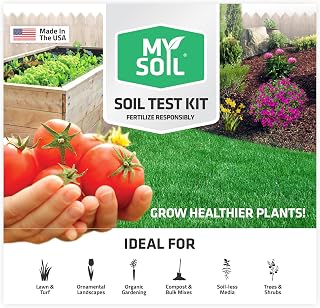
Best for: Gardeners who want a professional lab analysis and recommendations tailored to soil and plant needs. This mail-in kit measures 13 plant-available nutrient levels, including nitrogen and pH, and provides results in 6–8 days.
The listed applications include lawns, vegetables, flowers, trees, houseplants, compost, soil-less media, and hydroponics. That range makes it a flexible pick when one garden contains different growing setups or when you want more detail than a basic home test provides.
Limitation: This is not an immediate-read kit; results take 6–8 days. Choose another option if you need readings the same day.
Rapitest Soil Test Kit
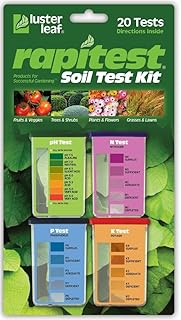
Best for: Home gardeners who want to check both soil pH and common garden nutrients without mailing a sample to a lab. Its capsule system and color comparators are designed for at-home readings.
The kit includes components for 20 tests: five each for pH, nitrogen, phosphorus, and potash. It can be used to test several locations in a yard or garden, which is useful when beds or lawn areas may have different soil conditions. It was selected as a balanced option for gardeners who want more than a pH-only result.
Limitation: The included supply is limited to 20 tests, and results rely on comparing colors. It may not suit buyers seeking a lab report or a larger test supply.
Dewilde 140-Test Soil Kit

Best for: Gardeners who expect to test soil regularly and want several chemical readings in one at-home kit. The product lists tests for pH, ammonia, nitrogen, phosphorus, and potassium, with 140 tests and updated instructions.
Its broader set of measurements can help users compare soil conditions before deciding whether to adjust fertilizer. The listing also describes the kit as suitable for gardens, lawns, flowers, vegetables, trees, houseplants, compost, and other growing settings. It was selected for its stated test count and range of soil factors.
Limitation: The product information does not specify how many of the 140 tests are allocated to each measurement. Review the instructions to understand the process and interpret the results appropriately.
Dewilde Soil pH Test Strips

Best for: Buyers who need a straightforward soil acidity check and do not need nutrient readings. The kit includes 100 strips and measures pH across a stated range of 3.5 to 9.
For each test, mix a soil sample with water and let it sit for 30 minutes. Dip a strip for three seconds, hold it horizontally for 60 seconds, and compare its color with the chart. The quantity makes this a practical choice for repeated pH checks across indoor plants, lawns, and garden areas.
Limitation: These strips test pH only. Choose a different kit if you need nitrogen, phosphorus, potassium, or other nutrient measurements.
GreenVation Smart Soil Meter

Best for: Gardeners who want connected monitoring of moisture, temperature, and soil EC readings. The three-in-one meter sends soil data through the Tuya or Smart Life app over a 2.4GHz Wi-Fi connection and supports remote monitoring and notifications.
Choose this if tracking changing conditions is more useful than running occasional chemical tests. It was selected for its combination of three readings and app connectivity, which can help users follow conditions over time.
Limitation: The listing describes nutrient levels as EC values, not a breakdown of individual nutrients such as nitrogen or potassium. It supports 2.4GHz Wi-Fi only, and the product notes a battery issue if the device is completely drained.
Buying Guide: How To Choose A Home Soil Test
Do you need pH, nutrients, or both?
Start with the question you need answered. pH strips are suitable for an acidity check, while the Rapitest and 140-test kits also cover selected nutrients. For a more extensive nutrient profile, the MySoil mail-in kit measures 13 plant-available nutrient levels. A connected EC meter gives a different kind of reading and should not be treated as a full nutrient-by-nutrient analysis.
How quickly do you need results?
At-home kits and strips are intended for testing without sending a sample to a lab. The MySoil kit lists a 6–8 day turnaround. If you are preparing a bed on a tight schedule, factor in the test method and time required to collect and interpret readings.
Will you test one spot or several?
Soil can vary between beds, lawn sections, and planting areas. The Rapitest kit explicitly includes components for testing several spots, while the Dewilde strip package contains 100 strips for repeated pH checks. For fair comparisons, sample distinct areas separately rather than assuming one reading represents an entire yard.
What should you check before applying fertilizer?
Use the test results and the product instructions to guide decisions. Avoid assuming that a pH reading identifies nutrient levels, or that an EC value names a specific nutrient. When a result is unclear or you need a detailed profile, a lab analysis may be a better fit than a single-factor test.
Frequently Asked Questions
How often should I test garden soil?
Test when you are planning a new planting area or considering a soil amendment. Retest when you need to check whether conditions have changed, following the test kit’s instructions.
Can pH strips tell me which fertilizer to use?
No. The strips listed here measure pH only. They do not report nitrogen, phosphorus, potassium, or other nutrient levels.
Which option gives the most detailed nutrient analysis?
The MySoil kit lists a lab analysis of 13 plant-available nutrient levels, including nitrogen and pH, with results in 6–8 days.
Does a soil meter measure individual nutrients?
The GreenVation meter lists nutrient levels as EC values, alongside moisture and temperature. Its product details do not describe separate readings for individual nutrients.
Should I test different garden areas separately?
Yes. Testing separate beds or lawn sections can help reveal differences in soil conditions instead of relying on one sample for the whole property.