Best Horticulture Oils for Trees: Care and Growth Essentials
Horticulture oils are a versatile addition to tree care, providing insect control, disease suppression, and plant health benefits without harsh chemicals. This article highlights top oil-based products and related tools to help American gardeners protect and nurture trees across seasons. We evaluate usage, benefits, and how they fit into a broader tree care plan.
The following summary table lists five curated products that align with common tree care needs, from insect and mildew control to leaf enhancement and powerful pruning tools. Use this quick reference to compare primary uses, oil types, and intended applications.
| Product | |||
|---|---|---|---|
| Fertilome (16045) Horticulture Oil Ready to Spray | ferti-lome | Canola oil-based horticultural oil | Insect control, dormant spray, mildew suppression |
| Horticultural Oil Concentrate for Plants and Trees | PLANTCO | Cold-pressed karanja oil-based oil | Leaf shine, color enhancement, plant growth stimulation |
| 2-Stroke High Branch Saw | LpqOxnm | Gas-powered tree branch saw | Pruning and trimming large branches |
| DEHANTOOLS 16 Inch Brushless Electric Chainsaw | DEHANTOOLS | Electric chainsaw with oiling system | Tree trimming and wood cutting |
| Additional Oil-Oriented Product Selection | Various | Horticultural oils and related tools | Broad tree care compatibility |
Fertilome Horticulture Oil Ready To Spray

Fertilome’s horticulture oil is designed to provide a broad spectrum of insect control while acting as a dormant and growing season spray. The product uses a 96% canola oil base intended to smother a variety of listed crawling insects, including bed bugs, cockroaches, ants, earwigs, snails, and slugs. The oil can be used on a range of plants—from roses and flowers to fruits, vegetables, houseplants, and trees. In addition to insect control, it doubles as a fungicide that helps combat powdery mildew, offering a two-in-one solution for seasonal plant health. Application timing typically centers on pest life cycles and environmental conditions.
Key considerations: compatibility with flowering stages, potential phytotoxicity on sensitive species, and compatibility with other garden products. For trees, spray timing around dormant periods can help reduce pest populations before bud break, while during growing seasons it can address active infestations. The product’s OMRI listing adds confidence for organic-minded operations. Always follow label directions for dilution, coverage, and safety precautions when applying near beneficial insects, pollinators, or edible crops.
Horticultural Oil Concentrate For Plants And Trees

This cold-pressed oil concentrate uses karanja-based sources to deliver horticultural oil benefits. The product emphasizes leaf shine and color enhancement, making foliage visually appealing while contributing to plant health. Beyond aesthetics, the concentrate acts as a growth stimulator, potentially supporting robust development when used as part of a broader care regime. The 16 oz spray concentrate format is suitable for routine maintenance on trees and a variety of other plants. The vegan and cruelty-free origin underlines ethical considerations for environmentally conscious gardeners.
Considerations for use include the oil’s compatibility with leaf surfaces and the potential for temporary residue on foliage. Since it doubles as a growth stimulant, frequent applications may be counterproductive if not aligned with seasonal growth cycles. A test spray on a small portion of foliage is advised before full application, particularly on sensitive tree varieties or ornamental specimens.
2-Stroke High Branch Saw

While not an oil product, this gas-powered saw is relevant to tree care as a tool for pruning and branches management. Equipped with a 52cc engine and a 6500 rpm output, it provides strong cutting power for removing limb growth and enabling better air circulation around trees. The design includes heat dissipation features and a sizable fuel tank that supports longer work sessions between refuels. For orchard and landscape maintenance, pairing oil-based treatments with efficient pruning equipment ensures healthier tree structure and easier application of treatments to accessible branches.
DEHANTOOLS 16 Inch Brushless Electric Chainsaw
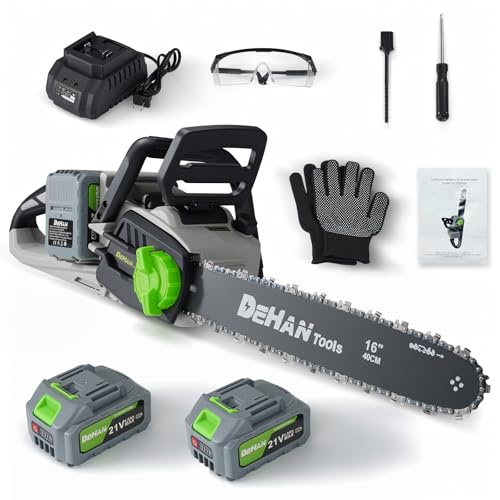
DEHANTOOLS offers a brushless electric chainsaw with a 16-inch bar, battery-powered operation, and a tool-free chain tensioning system. The brushless motor design provides improved torque, efficiency, and reduced maintenance, which is beneficial for regular tree trimming and wood cutting tasks. An automatic oiling system with a clear tank helps maintain chain lubrication, a practical feature when applying any oil-based care products to trees. The included battery capacity supports prolonged use for mid-size pruning jobs, making this a convenient companion to oil-based tree care routines when combined with timely applications of horticultural oil.
Buying Guide
- Oil base and target pests: Choose oils formulated for the pests you encounter, such as aphids, scale, or fungal issues like powdery mildew. Some products are broad-spectrum, while others emphasize leaf shine or growth stimulation.
- Dormant vs. growing season: Determine whether you need a dormant spray to suppress overwinter pests or a growing-season treatment for active infestations and disease management. Follow label timing recommendations for best results.
- Plant compatibility: Test on a small area of the tree or foliage to assess any phytotoxic reactions, especially on delicate species or newly planted trees. Some oils can affect flowering or fruiting stages.
- Organic and regulatory considerations: OMRI-listed products support organic gardening goals. Check local regulations and product labeling for compliance with home or professional use standards.
- Application method and coverage: Some products are ready-to-spray, while others require dilution. Ensure sufficient coverage of both upper and lower leaf surfaces and consider systemic vs. contact action for pests.
- Vehicle and solvent quality: High-quality canola or karanja oil bases are common; consider fragrance, residue, and potential impact on beneficial insects when applying in pollinator-rich periods.
- Tool pairing: For effective tree care, pair oil applications with pruning or trimming tools to remove infested or diseased wood and to optimize spray coverage on larger trees.
- Safety and storage: Follow label directions for protective gear, ventilation, and storage. Oils can pose slipping hazards and may affect indoor spaces if not used carefully.
The selected products illustrate a range of horticultural oil applications—from insect and mildew control to leaf enhancement and growth stimulation—complemented by pruning tools that support overall tree health. For best results, integrate oil use into a seasonal plan aligned with pest lifecycles, weather patterns, and the specific needs of your tree species. Always consult product labels for precise mixing ratios, spray timings, and safety precautions.