Best Irrigation Pumps for Ponds: Durable, Quiet Water Features
Answering buyers’ needs clearly: these irrigation pumps for ponds offer reliable water movement, durable construction, and energy-efficient operation. They are best for homeowners maintaining koi ponds, decorative waterfalls, or garden irrigation systems. The top picks cover submersible and inline models, with varied flow rates for different pond sizes and terrains. This guide highlights five suitable options, explains who they’re best for, and compares strengths and limitations to help you choose with confidence.
| Product | Best For | Key Benefit |
|---|---|---|
| Red Lion RL-SPRK150 | Medium ponds with bioactivity | Dual voltage, rugged cast iron housing |
| OYO WATER UL-Listed 180W 2400GPH | Safe outdoor use, precise flow control | UL-listed, long cord, dry-burn protection |
| OYO WATER Pond Pump 2600 GPH | Larger ponds with waterfalls | Adjustable flow, copper motor, multiple models |
| SHANGDA Water Transfer Pump 110V | Transferring water in gardens | High lift, strong suction, safety features |
| Hurmovae Pond Pump 600-1800 GPH | Quiet operation in small to medium features | Adjustable flow, energy-friendly, UL listed |
Red Lion RL-SPRK150 1.5 HP Sprinkler/Irrigation Pump

This 1.5 horsepower, 71 GPM pump uses a rugged cast iron housing with a glass-filled thermoplastic impeller. It’s designed for well or lake water and offers dual voltage operation (115/230V) with a factory 230V setting, easily switchable to 115V. It features one-time priming, so no priming after initial fill. Best for medium ponds where durability and reliability are priorities, especially in systems that may experience variable water sources.
Selected for: users needing a robust, versatile pump that can adapt to different power sources and resist rough pond conditions. Caution: ensure voltage matches the power supply to avoid electrical issues; no built-in automatic priming beyond initial fill.
OYO WATER UL-Listed 180W 2400GPH Submersible Pump
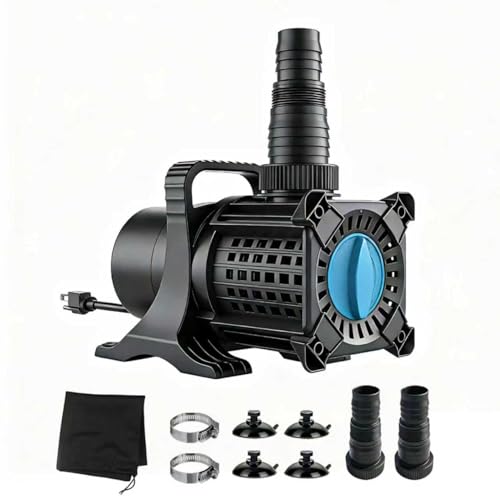
This UL-listed submersible pump delivers up to 2400 GPH with a 20.3-foot power cord and adjustable flow, making it a solid choice for outdoor ponds and waterfalls. It includes dry-burn protection to help prevent burnout when water levels are low. Best for safety-conscious setups where a long cord and precise flow control are valued. Limitation: not the highest head height, so it’s suited to mid-size ponds rather than tall waterfalls.
OYO WATER Pond Pump, 2600 GPH Adjustable Flow

With adjustable flow and multiple model options (PSA2400, PSA5100, PSA8000), this 2600 GPH pump is designed for larger ponds, koi features, or garden waterfalls. It uses a copper motor and high-efficiency impeller for stable water flow, plus silicone carbide shaft components to improve wear resistance. Best for: ponds needing stronger circulation and flexible flow to accommodate waterfalls. Caution: large flow requires adequate electrical wiring and safe placement to avoid overheating or water pressure stress.
SHANGDA Water Transfer Pump 110V Shallow Well

This 1.6 HP shallow well pump delivers up to 1800 GPH with an impressive lift of up to 164 feet. It’s suitable for garden irrigation, water transfer, and outdoor setups requiring substantial vertical reach. Best for: large gardens or ponds where a high lift is needed. Limitation: not a self-priming unit, so priming must be managed prior to use; ensure proper setup and priming before operation.
Hurmovae Pond Pump, 600-1800 GPH

The Hurmovae adjustable pond pump provides 600–1800 GPH with a 13-foot lift, making it suitable for small to medium ponds, water features, or fountains. It features a quiet magnetic motor, 20-foot power cord, and UL listing. Best for: budget-conscious setups that still demand adjustable flow and quiet operation. Caution: ensure the flow is dialed in to avoid excessive disturbance to fish or delicate plants at higher settings.
Buying Guide: How To Choose The Right Pond Pump
- Flow rate vs. pond size: For small ponds, 400–1000 GPH is often enough; larger ponds may require 1500–3000+ GPH for effective circulation and waterfall features. Match your pond’s surface area and desired water movement to the pump’s GPH rating.
- Head height and lift: Consider the vertical distance water must be moved. Pumps with higher lift ratings are better for fountains and elevated waterfalls, while low-lift models suffice for simple circulation.
- Submersible vs. inline: Submersible pumps are easier to hide and install but require careful water-proofing and space within the pond. Inline or external pumps are typically easier to service and often support higher head heights.
- Power and efficiency: Look for energy-efficient motors and features like adjustable flow and dry-burn protection. Dual-voltage models offer flexibility if your power availability changes.
- Durability and materials: Cast iron housings resist corrosion in outdoor ponds; copper motors and corrosion-resistant housings extend life in harsh environments.
- Safety features: UL listing, thermal protection, and dry-run protection prevent damage and increase safety for outdoor installations.
- Maintenance needs: Detachable impellers and cleanable components simplify routine maintenance and extend pump life. Note whether the pump is easy to disassemble for cleaning.
Frequently Asked Questions
- What flow rate do I need for a koi pond?
Typically aim for 1–2 times the pond’s total volume per hour. Larger koi ponds may require higher flows to maintain clean, oxygenated water. - Is a submersible pump better than an inline pump?
Submersible pumps are easier to conceal and protect, whereas inline pumps are often easier to service and can handle higher head heights. - Do I need a pump with dry-burn protection?
Dry-burn protection helps prevent motor burnout if water levels drop, which is especially useful in outdoor setups with variable water levels. - Can I use a single pump for both a fountain and irrigation?
Yes, if the pump supports adjustable flow and can meet both head requirements. Some models offer multiple flow settings ideal for various features. - What maintenance is required for pond pumps?
Regular cleaning of impellers, checking for debris, and verifying seals and cables is recommended. Choose a pump designed for easy disassembly for routine upkeep. - Are UL-listed pumps safer for outdoor use?
UL listing indicates compliance with safety standards for electrical devices, which adds an extra level of reliability for outdoor installations.