Best Japanese Plum Yew Shrubs for Evergreen Garden Structure
The best Japanese plum yew shrub depends on whether you want an upright evergreen, a spreading groundcover, or a similar-looking substitute. The Upright Japanese Plum Yew is the clearest choice for an upright form, while Yewtopia is listed as a live plum yew for Zones 6–10. The spreading Cephalotaxus suits low, shaded areas. Podocarpus Maki and Densiformis are related landscape alternatives, not Japanese plum yews.
| Product | Best suited for | Plant type |
|---|---|---|
| Upright Japanese Plum Yew | Upright evergreen form | Japanese plum yew |
| Southern Living Yewtopia | Year-round interest in Zones 6–10 | Japanese plum yew |
| Perfect Plants Spreading Yew | Groundcover and shade | Japanese plum yew |
| Perfect Plants Podocarpus Maki | Narrow hedge or screen | Podocarpus |
| Japanese Yew ‘Densiformis’ | Buyers considering a Japanese yew | Japanese yew |
Upright Japanese Plum Yew
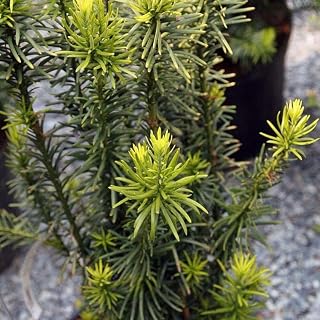
This 3-gallon plant is the most direct match for shoppers searching specifically for an upright Japanese plum yew. Its product name identifies both the plant type and growth form, making it a relevant candidate for a garden design that calls for a vertical evergreen accent.
Best for: Buyers who want an upright Japanese plum yew rather than a spreading groundcover or a different evergreen species. It was selected because it matches the search term closely and clearly specifies an upright habit.
Consider: The listing information provided does not state mature dimensions, hardiness zones, or detailed care requirements. Check the product listing and local growing guidance before choosing a planting site.
Southern Living Yewtopia Plum Yew

Yewtopia is listed as a live evergreen shrub identified as Cephalotaxus harringtonia, the Japanese plum yew species. The product information specifies Zones 6–10 and year-round interest, useful details for matching a plant to a regional landscape plan.
Best for: Gardeners whose location falls within the stated Zones 6–10 and who want a named plum yew cultivar. It was selected for its clear species identification and stated zone range.
Consider: The supplied product details do not specify its mature height or width. Confirm the cultivar’s expected size and the site’s light and soil conditions before planting.
Perfect Plants Spreading Yew

This 3-gallon live groundcover is described as a spreading Japanese Cephalotaxus harringtonia with dark green, needled evergreen foliage. The listing says it thrives in full shade, is drought tolerant, and is suited to Zones 6–9.
Best for: Buyers seeking a low, spreading plum yew for a shaded area or groundcover role. Compared with the upright option, this listing is better aligned with coverage across a broader planting area.
Consider: “Spreading” does not provide an exact mature width. Leave room for growth and verify the plant’s dimensions for your particular cultivar before spacing multiple shrubs.
Perfect Plants Podocarpus Maki

Podocarpus Maki is a different evergreen from Japanese plum yew, despite the listing’s use of “Japanese Yew.” The product description gives a mature size of 8–10 feet tall and 3–4 feet wide, with dense upright growth and glossy dark green foliage. It is presented for narrow hedges, privacy screens, and foundation plantings, in Zones 7–11.
Best for: Buyers prioritizing a narrow upright screen and willing to consider Podocarpus instead of Cephalotaxus. Its stated dimensions make it easier to assess for narrow planting spaces.
Consider: This is not a Japanese plum yew. The listing also says it does not ship to California or Arizona due to state law.
Japanese Yew ‘Densiformis’

This listing identifies a Japanese yew, ‘Densiformis,’ in a 3-gallon pot. It may be relevant to shoppers comparing evergreen shrubs with “yew” in the name, but the supplied product details do not identify it as Japanese plum yew or give its mature size and growing requirements.
Best for: Buyers open to a Japanese yew rather than specifically seeking Cephalotaxus harringtonia. It is included as a clearly labeled alternative, not as a direct plum yew substitute.
Consider: Do not assume that Japanese yew and Japanese plum yew are the same plant. Confirm the botanical name and site requirements before ordering.
Buying Guide
Do you need a true Japanese plum yew?
Check the botanical name when species matters. The two direct matches here identify Cephalotaxus harringtonia. Podocarpus Maki and Japanese yew ‘Densiformis’ are separate options, so choose them only if you are open to alternatives.
Should you choose an upright or spreading form?
Choose an upright form when the design calls for vertical structure or an accent. Choose a spreading form for groundcover-style planting. The product names indicate these habits, but only Podocarpus Maki includes specific mature dimensions in the supplied details.
How should you compare zones and site conditions?
Compare the listed hardiness range with your location before buying. Yewtopia lists Zones 6–10, the spreading plum yew lists Zones 6–9, and Podocarpus Maki lists Zones 7–11. The supplied information describes the spreading plum yew as suited to full shade; verify light needs for the other selections.
What else should you check before ordering?
Confirm pot size, mature width, delivery restrictions, and planting requirements on the listing. Plan spacing around mature dimensions when available, and account for shipping exclusions. If a listing does not state a key detail, do not assume the plant will suit a particular site.
Frequently Asked Questions
What is a Japanese plum yew?
Japanese plum yew is identified in these listings as Cephalotaxus harringtonia, an evergreen shrub. It is distinct from Podocarpus and Japanese yew.
Which option is listed for full shade?
The Perfect Plants Spreading Yew listing says it thrives in full shade and is suitable for Zones 6–9.
Which product has stated mature dimensions?
Podocarpus Maki is listed at 8–10 feet tall and 3–4 feet wide. These dimensions apply to that Podocarpus product, not the Japanese plum yews.
Are all products in this list Japanese plum yews?
No. The upright plum yew, Yewtopia, and spreading yew are the direct plum yew matches. Podocarpus Maki and ‘Densiformis’ are different evergreens.