Best Jute Mats for Microgreens: Five Soil-Less Growing Options
The best jute mat for microgreens depends on whether you want a ready-to-use small pad or a roll you can cut for different trays. Choose the 20-pack from UMOKO for multiple small growing batches, UCandy’s 10-pack for a smaller starter supply, or a long roll from Humyoun or the organic-labeled roll for flexible sizing and larger growing needs. The options below compare dimensions, format, and listed features so you can match a mat to your setup.
| Product | Format | Best For |
|---|---|---|
| Humyoun 10 x 315-inch roll | Cut-to-size roll | Frequent or larger batches |
| UMOKO 20-pack | Twenty 5 x 5-inch pads | Small, repeated plantings |
| Organic-labeled 10 x 236-inch roll | Cut-to-size roll | Flexible tray sizes |
| Humyoun 10 x 236-inch roll | Cut-to-size roll | Home or commercial growing |
| UCandy 10-pack | Ten 5 x 5-inch pads | Trying a small pack of mats |
Humyoun 10 x 315-Inch Jute Roll

Best for: Growers who want a long roll to cut into multiple tray liners. At 10 inches wide and 315 inches long, this is the longest listed roll in this selection. Its cut-to-size format can suit both home batches and larger growing operations.
The seller describes the mat as natural jute without adhesives or synthetic additives. Its porous structure is designed to hold moisture while allowing air circulation, supporting seed germination and root development. Listed uses include microgreens, wheatgrass, pea shoots, and sprouts.
Limitation: This is a roll, not a set of pre-cut pads, so you will need to measure and cut it for your trays.
UMOKO 20-Pack Of 5 x 5-Inch Mats

Best for: People growing small batches who prefer separate pads over cutting a roll. The pack includes 20 mats, each measuring 5 by 5 inches, offering multiple ready-sized pieces for repeated plantings.
UMOKO describes the pads as high-density natural jute fiber and soil-less growing media for microgreens, sprouts, and wheatgrass. The compact individual format can make it easier to prepare separate small growing areas without handling a long sheet.
Limitation: Each pad is only 5 inches square, so check your tray dimensions before buying; larger trays may need more than one mat.
Organic-Labeled 10 x 236-Inch Jute Roll

Best for: Growers who need a cut-to-size roll for different tray shapes or planting quantities. The 10-by-236-inch dimensions provide a long strip that can be divided as needed for home growing or larger production.
The listing describes the material as pure jute fiber without chemical additives or synthetic glues. It also highlights moisture retention, air permeability, and drainage of excess water. Suggested crops include microgreens, wheatgrass, bean sprouts, and pea shoots.
Limitation: The roll requires cutting before use. The product name uses “organic,” but buyers seeking a specific verified organic standard should check the listing for supporting details.
Humyoun 10 x 236-Inch Jute Roll

Best for: Home growers or larger operations that want a long, customizable mat without choosing the 315-inch option. This roll measures 10 inches by 236 inches and can be cut to fit a range of tray sizes.
Its listed features include natural jute without adhesives or synthetic additives, plus a porous structure intended to retain water and allow air circulation. The seller lists microgreens, wheatgrass, pea shoots, and sprouts as suitable uses.
Limitation: Its roll format means you must cut each piece yourself. Choose the longer Humyoun option if the listed length is not enough for your planned batches.
UCandy 10-Pack Of 5 x 5-Inch Mats
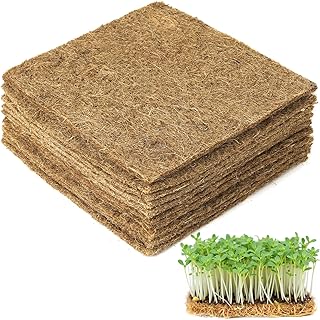
Best for: Buyers who want a smaller set of pre-cut pads for modest planting needs. The package includes ten 5-by-5-inch jute mats, which the listing says can be used in growing trays or on a windowsill.
UCandy identifies the material as natural jute fiber and lists microgreens, wheatgrass, sprouts, micro herbs, pea shoots, and barley grass among its intended uses. The ready-cut format avoids measuring a roll for small batches.
Limitation: Ten small pads provide less material than the 20-pack or a roll. Confirm the pad size works with your growing tray before choosing it.
Buying Guide: How To Choose A Jute Mat
Should you choose a roll or pre-cut pads?
Choose a roll if you want to set the length yourself, use different tray sizes, or prepare many liners from one piece. A roll can reduce the need to buy several small packs, but it requires measuring and cutting. Pre-cut pads are convenient for small, repeatable growing areas and need no trimming if their dimensions fit your setup.
What size mat fits your tray?
Measure the usable inside area of the tray before buying. The listed rolls are 10 inches wide, while the UMOKO and UCandy pads are 5 inches square. A mat that is too small may leave part of the growing area uncovered; a roll can be trimmed to fit, but small pads cannot be expanded.
What should you look for in the material?
Compare the stated fiber composition and growing features. The roll listings describe porous jute that holds moisture and allows airflow. Those properties are relevant to seed starting, but follow the seed and tray instructions you use, and avoid assuming that all products have identical thickness or absorbency unless the listing specifies it.
How much should you buy?
Estimate how many trays you plan to prepare and how often you will replant. A 10-pack or 20-pack gives a defined number of small mats. A long roll offers more flexibility when you need varied lengths, but the amount left after cutting depends on your tray sizes and how much material each planting uses.
Frequently Asked Questions
Are jute mats suitable for microgreens?
The listed products are marketed for microgreens and other small edible crops. Their jute fiber provides a soil-less growing surface, according to the product descriptions.
Can I cut a jute growing mat to fit a tray?
The 10-inch-wide roll products are described as cut-to-size. The 5-by-5-inch pads are pre-cut, so select them only if their dimensions suit your growing area.
Can these mats be used for wheatgrass?
Wheatgrass is specifically listed as a suitable crop for all five products.
What is the difference between the two Humyoun rolls?
Both list natural jute, a 10-inch width, and cut-to-size use. One is 315 inches long; the other is 236 inches long.
Do jute mats replace soil?
These products are marketed as soil-less growing pads. They provide a growing surface, but follow the growing method and watering guidance appropriate for your seeds.