Best Large Containers for Gardening: Grow More in Smaller Spaces
For urban and space-conscious gardeners, large containers and grow bags offer a practical way to cultivate vegetables, herbs, and flowers without a traditional yard. This guide highlights top large container options, focusing on durability, airflow, drainage, and overall versatility. Each product is evaluated for its capacity, material quality, and ease of use to help you choose the right setup for balconies, patios, and backyards.
| Product | Container Type | Capacity | Best For | Material |
|---|---|---|---|---|
| CJGQ Fabric Raised Garden Bed | Fabric Raised Bed | 128 gallons | Large veggie plots, potatoes | Non-woven fabric |
| EarthBox Container Gardening System | Container System | 2.0 cu ft growing media, 3 gal reservoir | All-in-one growing | Plastic, UV-stabilized |
| FEED GARDEN Grow Bags | Grow Bags (4 Pack) | 10 gallons each | Breathable, durable bags | Nonwoven fabric |
| Fiskars Kangaroo Collapsible Garden Bag | Collapsible Bag | 30 gallons | Yard waste or harvest transport | Plastic with hardshell bottom |
| ZtohPyo Grow Bags | Grow Bags | 15 gallons | Compact space solutions | Non-woven fabric |
CJGQ Fabric Raised Garden Bed Overview

The CJGQ system combines a large 128-gallon capacity with eight grid sections, enabling organized plant placement. Made from thickened non-woven fabric, it emphasizes durability and reusability for multiple growing seasons. The design supports roots with enhanced airflow and drainage, reducing the risk of root circling. The 72″ by 36″ footprint and 12″ height offer ample space for potatoes, vegetables, and flowering beds, making it suitable for balconies, backyards, terraces, or patios.
EarthBox Container Gardening System

The EarthBox system includes a durable container, aeration screen, water fill tube, and reversible mulch covers. It is designed to hold 2.0 cubic feet of peat-based growing media and a 3-gallon reservoir for continuous irrigation. All components are food-safe, UV-stabilized, and made in the USA, offering a complete, compact solution for controlled growing environments. This setup is ideal for users seeking a ready-to-use, self-contained gardening option with steady moisture control.
FEED GARDEN 10 Gallon Grow Bags (4 Pack)
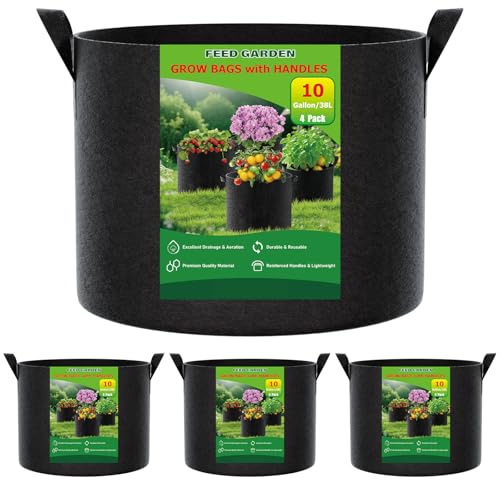
These 10-gallon grow bags emphasize superior aeration and drainage, thanks to a thick nonwoven fabric that reduces overwatering and root rot. They are heavy-duty and reusable, designed for long-term use across multiple growing seasons. Reinforced double-stitched handles allow easy mobility, even when bags are full of soil. This makes them a practical choice for gardeners with limited space who still want deep, nutrient-rich root zones.
Fiskars Kangaroo Collapsible Garden Bag

The Fiskars Kangaroo collapsible bag combines portability with durability. It features a heavy-duty plastic base and a flexible fabric body, with foldable handles that lock for one-handed use. The 30-gallon capacity is suitable for collecting yard waste, harvests, or other garden debris. Drain holes in the base help prevent water accumulation, supporting long-term use in outdoor conditions and rough terrain.
ZtohPyo 15 Gallon Plant Grow Bags

ZtohPyo offers a 15-gallon fabric grow bag with a diameter around 23.5 inches and a height of about 8 inches. The thickened non-woven fabric is breathable and reusable, with reinforced stitching for durability. The design emphasizes 360-degree root ventilation and effective drainage to support vigorous plant growth, while remaining suitable for both indoor and outdoor use in compact spaces.
Buying Guide
- Container material: Fabric grow bags prioritize breathability and drainage, helping prevent root rot and circling; rigid plastic containers offer stability and precise moisture control, while mixed setups can balance airflow and structure.
- Size and capacity: Consider available space and plant types. Larger containers suit root crops like potatoes and heavy feeders, while smaller or modular options work well for herbs, leafy greens, and compact tomatoes.
- Drainage and aeration: Look for fabrics with reinforced seams and proper drainage holes. For bags, ensure the base design minimizes water pooling; for hard-sided containers, check drainage ports and reservoir options where applicable.
- Mobility: Weigh factors such as handles, weight when filled, and whether the container is foldable or collapsible for winter storage or seasonal relocation.
- Durability and reuse: Reusability is important for cost-effectiveness. Nonwoven fabrics should resist tearing and maintain shape with multiple growing cycles; rigid systems should resist UV damage and cracking.
- Maintenance: Easy cleaning and soil rinsing matter for long-term use. Fabric bags typically dry faster and are easier to clean, while plastic systems may require more careful drying between uses.
- Plant compatibility: Ensure the container size aligns with your crop choices—high-volume crops like potatoes benefit from larger, shallower beds; leafy greens tolerate smaller, shallower containers well.
- Setup and maintenance: Some systems include irrigation components or mulch covers; decide whether you prefer a turnkey solution or a modular approach to customize watering and soil mix.
Overall, these large containers provide flexible options for American gardens with varying space constraints. They balance root health, moisture management, and portability, enabling productive grows from balconies to backyards.