Best Large Stones for Retaining Walls and Landscape Projects
For a retaining wall, choose stone based on whether it will provide structural support or serve as a decorative accent. The gray granite cobblestones offer a more uniform, block-like shape; the large river rocks and mixed-color stones are better suited to borders and visual accents. The drainage kit is an accessory, not a wall stone. None of the listed stone products includes specifications that establish suitability for building an engineered retaining wall, so check project requirements before using them structurally.
| Product | Best suited for | Key detail |
|---|---|---|
| Gray Granite Cobblestone | Defined edging and paving | Nominally 5 x 5 x 9 inches |
| Large Pigeon River Rocks | Large landscape accents | Approximately 6–12 inches |
| YISZM Large River Rocks | Smaller accents and borders | Approximately 3–4 inches |
| Wesnoy Drainage Kit | Wall drainage support | Designed for wall materials 3–8 inches |
| CJGQ Mixed Color River Rocks | Small focal arrangements | Five stones, approximately 6–8 inches |
Gray Granite Cobblestone

This Belgian block-style granite stone is listed at an average nominal size of about 5 x 5 x 9 inches and a weight of 25 pounds. Its classic gray color, naturally antiqued texture, and distinctive shape make it a better fit for defined landscape edging, patios, or walkways than for a loose decorative-rock border.
Best for: Projects that need a more regular, block-like appearance. It was selected because its dimensions and shape are more consistent than the rounded river-rock options in this list. The product information describes paving and edging uses, but does not provide structural wall specifications. Avoid assuming it is suitable for a load-bearing retaining wall without confirming design requirements.
Large Pigeon River Rocks

These natural stones are approximately 6–12 inches and have rounded, irregular shapes in tan, cream, brown, and gray tones. The 40-pound package is described for landscape accents, garden borders, dry creek beds, ponds, water features, and drainage areas.
Best for: Adding visual weight beside a low landscape edge or creating accents near a retaining wall. Their size makes them more noticeable than small pebbles, while the natural variation suits informal designs. Because the rocks are rounded and irregular, they may not stack or fit together like purpose-made wall blocks. Use them as decorative stones unless the project’s structural design accounts for their shape and placement.
YISZM Large River Rocks
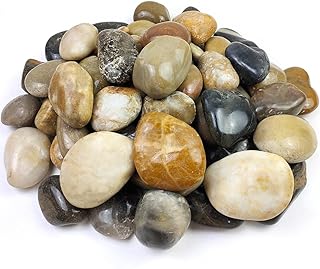
This 40-pound assortment contains natural river rocks approximately 3–4 inches across. The stones are described as polished and smooth, with individual differences in size and color; slight cracks are noted as normal. The listed uses include gardens, sidewalks, ponds, flower beds, fountains, and landscaping.
Best for: Smaller decorative borders, planting areas, or accents around a wall rather than the wall structure itself. It was selected as the smaller-stone option among the listed landscape products. The smooth, rounded form may be less suited to building a stable stacked face than angular blocks. Choose this if you want a finer scale than the 6–12-inch rocks; avoid treating it as a structural building stone based on the available product details.
Wesnoy Retaining Wall Drainage Kit

This four-pack is a drainage accessory for retaining walls, not a stone product. The listing says it works with wall materials from 3 to 8 inches, including concrete, timber, and natural stone, and is intended to fit pre-drilled gaps or interlayer positions without cutting. Its pipes are designed to direct water away from behind the wall.
Best for: Buyers planning a wall and looking for a listed drainage component to consider alongside the wall materials. It is included because water management is relevant to retaining-wall projects. The product information does not establish that this kit alone provides complete drainage or verifies the design of a particular wall. Confirm fit and drainage requirements for the specific construction.
CJGQ Mixed Color River Rocks

This set includes five natural river rocks measuring approximately 6–8 inches. The product listing notes that color, shape, thickness, texture, and exact dimensions vary. Suggested placements include pond borders, tree surrounds, garden entrances, dry creek beds, and flower borders.
Best for: A small number of prominent accents beside a garden wall or at an entry. The five-stone format may suit a focused arrangement better than a larger quantity of uniform edging material. These natural rocks vary in shape and are presented as decorative landscaping stones, so they are not a predictable substitute for dimensioned retaining-wall blocks.
Buying Guide: How To Choose Large Stones For A Retaining Wall
Are the stones for structure or decoration?
Start by identifying the job. A retaining wall holds back soil, while decorative stones can define a border or add visual interest nearby. The listed river rocks are described mainly for landscaping accents and water features. The granite cobblestone is described for paving and edging. Check product specifications and project plans before using any of them as structural wall material.
Which size and shape fit the project?
Compare the listed dimensions with the scale of the area. The 3–4-inch YISZM rocks are smaller; CJGQ’s set is approximately 6–8 inches; the Pigeon River rocks are approximately 6–12 inches. The granite cobblestone has an average nominal size of 5 x 5 x 9 inches and a more block-like form. Natural rocks vary, so allow for differences when planning spacing and appearance.
How should drainage factor into the choice?
Water management matters when planning a retaining wall. The Wesnoy kit is specifically described as directing water away from behind a wall and fitting materials from 3 to 8 inches. Confirm that its stated fit matches the wall and that the overall drainage plan meets the project’s needs. Do not assume a drainage accessory replaces a complete wall design.
What should buyers confirm before ordering?
Verify quantity, approximate dimensions, intended use, and whether variation in natural color or shape is acceptable. The CJGQ set contains five stones, while the other rock listings describe 40-pound packages. Check delivery and installation logistics for heavy materials, and consult a qualified professional when the wall will retain significant soil or affect nearby structures.
Frequently Asked Questions
Can river rocks be used to build a retaining wall?
The listed river rocks are described for landscaping and decorative uses, not as engineered wall units. Confirm structural suitability with a qualified professional before using them to retain soil.
Which option has the largest listed stones?
The Large Pigeon River Rocks are approximately 6–12 inches, the largest size range stated among these stone products.
Which product has the most uniform, block-like shape?
The gray granite cobblestone is described as a Belgian block with an average nominal size of about 5 x 5 x 9 inches.
Is the Wesnoy product a retaining wall stone?
No. It is a drainage accessory listed for use with certain retaining-wall materials; it is not a wall block or natural stone.
Do natural stones have identical dimensions and colors?
No. The listings note natural differences in size, shape, color, texture, and thickness. Check the product details and plan for variation.