Best Lawn Core Aerator Tool for Healthier Turf
Answering the search for a reliable lawn core aerator tool, these top picks are suited for homeowners dealing with soil compaction, dry patches, or thick thatch. The best options emphasize ease of use, durable construction, and effective core removal. Choose based on soil type, hand strength, and whether you prefer a manual or semi-assembled design. The buyers this list serves include small-yard owners, DIY lawn enthusiasts, and gardeners seeking long-term performance without electric gear.
| Product | Best For |
|---|---|
| LawnVigor Manual Core Aerator | Compact to moderate yards; easy-to-handle manual core removal |
| hugeneroy Manual Push Core Aerator | Serious gardeners; heavy-duty needs; 3-tine cores |
| Dolibest Lawn Coring Aerator | Rust resistance and plug storage; pre-assembled use |
| Josmimic Knee-Friendly Manual Aerator | Back or knee concerns; height-adjustable for comfort |
| EKIORI Manual Lawn Aerator | Clog-free, step-to-eject design; quick work pace |
LawnVigor Manual Core Aerator Lawn Tool
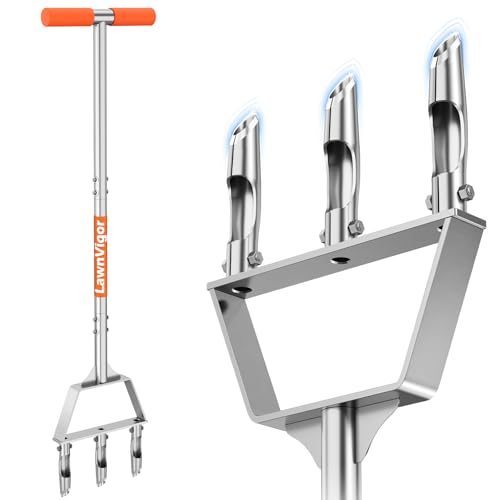
This manual aerator uses 3 hollow tines to extract soil plugs and improve water, air, and nutrient access to roots. It is designed for easier penetration into compacted soils and is built to withstand multiple seasons of use. Best for homeowners with moderate lawn areas who want a simple, durable tool you can push into the ground without power.
- Best for smaller to mid-sized lawns seeking deeper penetration and easier plug removal.
- Pros: hollow tines promote deeper aeration; replaceable tines for longevity.
- Consideration: water dry soil before use; avoid side-to-side rocking in the ground.
Who it’s for: Homeowners prioritizing a straightforward, robust core aerator with a focus on core longevity and soil improvement.
hugeneroy Manual Push Core Aerator

This semi-assembled aerator features 3 replaceable hollow tines crafted from industrial-strength steel. The 3-tine design removes soil cores and improves soil aeration, making it suited for serious lawn care. Best for gardeners who want a durable, professional-grade tool that remains effective over years of use.
- Best for deeper, consistent core extraction across various soil types.
- Pros: replaceable tines; sturdy steel construction.
- Consideration: water dry areas 24 hours before use; avoid sideways motion when tines are underground.
Who it’s for: Enthusiasts and professionals needing a rugged, long-lasting aerator with replaceable parts for heavy-duty seasons.
Dolibest Lawn Coring Aerator

Dolibest offers a stainless steel core aerator with a soil core storage tray and a comfortable rubber grip. The tray collects plugs automatically, reducing cleanup time. This tool is designed for durability and consistent plug formation, making it suitable for regular lawn maintenance and easier plug management.
- Best for: gardeners who value rust resistance and plug storage convenience.
- Pros: stainless steel core and tray; comfortable grip.
- Consideration: the tray aids cleanup but adds overall tool weight.
Who it’s for: Those who want a corrosion-resistant tool with built-in plug storage for efficient aeration routines.
Josmimic Knee-Friendly Manual Aerator

This adjustable-height aerator uses four hollow tines to pull soil cores, improving airflow and nutrient uptake. It features an anti-clog side ejection ramp and knee-friendly design with a dual-level foot bar and ergonomic handle. Best for users who want reduced back strain and efficient coverage of larger sections of lawn.
- Best for: users with back or knee concerns who still need effective aeration.
- Pros: adjustable height; anti-clog, side-ejection design.
- Consideration: taller users may prefer the maximum height setting for comfort.
Who it’s for: Gardeners seeking a balanced mix of comfort and high-performance aeration across compacted areas.
EKIORI Manual Lawn Aerator
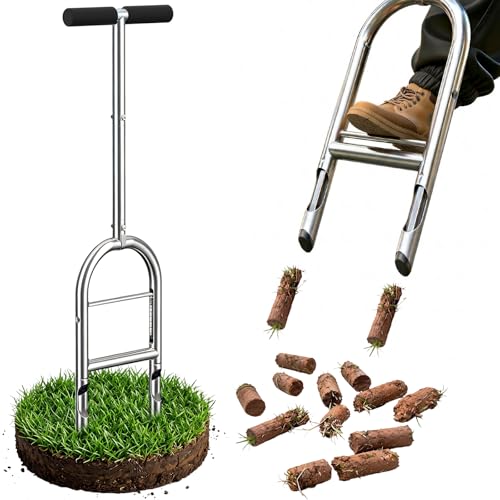
EKIORI introduces a step-to-eject design that prevents clogging by ejecting cores to the side with a single fluid motion. The tool uses reinforced steel construction for durability and promotes true soil loosening rather than merely piercing the surface. Best for users who want a fast, clog-free experience and robust build.
- Best for: rapid aeration with minimal downtime due to clogging.
- Pros: anti-clogging, easy step-to-eject action; sturdy steel.
- Consideration: work best on moist grass for easier plug removal.
Who it’s for: Those who value a streamlined aeration workflow and reliable performance in tougher soils.
Buying Guide
What to look for when choosing a lawn core aerator
- Core vs. spike design: Core aerators remove plugs and improve porosity; spike aerators push soil aside and can worsen compaction over time.
- Tine material and durability: Stainless steel and heat-treated tines resist bending and corrosion, increasing tool lifespan.
- Number and configuration of tines: More tines typically provide faster coverage; three or four tines are common for home use.
- Adjustability and ergonomics: Height-adjustable handles and knee-friendly designs reduce back strain during longer sessions.
- Clog prevention: Look for side-ejection, anti-clog ramps, or step-to-eject features to minimize downtime.
- Maintenance: Replaceable tines and easy cleaning components extend tool life and keep performance consistent.
Morning vs. afternoon aeration: when to aerate
Aerate when the lawn is moist but not waterlogged, typically after rainfall or after watering. Early morning or late afternoon reduces evaporation and heat stress on the turf during the process.
Soil and lawn considerations
- Soil texture: Heavier clay soils require deeper core removal; sandy soils benefit from more frequent aeration.
- Lawn type and usage: High-traffic lawns may need annual aeration; ornamental or low-traffic lawns might require every 1–2 years.
- Post-aeration care: Overseed or top-dress lightly after aeration to maximize germination potential and soil contact.
Quick comparison at a glance
- Best overall durability: hugeneroy Manual Push Core Aerator.
- Best for rust resistance and plug storage: Dolibest Lawn Coring Aerator.
- Best for back-friendly use: Josmimic Knee-Friendly Manual Aerator.
- Best clog-free operation: EKIORI Manual Lawn Aerator.
- Best entry-level core aerator: LawnVigor Manual Core Aerator.
FAQ
- What is the main benefit of a core aerator? Core aeration creates channels that allow air, water, and nutrients to reach grassroots, promoting healthier and deeper root growth.
- How often should I aerate my lawn? Most home lawns benefit from annual to biennial aeration, depending on soil compaction and traffic.
- Can I aerate if the soil is dry? It’s best to aerate after a light watering or rainfall to prevent tines from digging poorly into hard ground.
- Do I need to remove soil plugs after aeration? Generally, plugs will break down or can be raked into the lawn; this is a seasonal maintenance task.
- Is a four-tine aerator better than a three-tine aerator? More tines can cover ground faster, but the tool’s overall design and user strength determine effectiveness.
- Should I use fertilizer after aeration? Yes, applying fertilizer or overseeding after aeration can improve seed-to-soil contact and nutrient uptake.