Best Lime for Deer Food Plots: Top Soil Boosters for Healthier Forage
Answering the question most hunters and land managers ask: which lime-related products deliver real soil and forage benefits for deer plots? This guide reviews five top options that address soil pH, nutrient availability, and plant health. Best for small plots, easy application, or in areas with limited equipment, these picks help you unlock better forage growth. Each product is evaluated for who it suits best and why it stands out, with practical cautions where relevant.
| Product | What It Does | Best For |
|---|---|---|
| Whitetail Products Gone Wild Mega Lime 10X | Lime-based soil conditioner that improves pH and nutrient uptake | Small to mid-size plots needing rapid pH adjustment |
| Whitetail Institute Impact Soil Amendment for Deer Food Plots | Turns poor soil into productive plots; long-lasting nutrient release | Areas with hard-to-treat soil or low nutrient availability |
| FASSTLIME Liquid Lime | Liquid lime that works quickly; applies to existing plots | With limited time or when quick pH improvement is needed |
| Earth Science Fast Acting Lime Granules | Granular lime that raises soil pH and improves color | Small lawns or garden patches with low pH |
| Whitetail Institute Laboratory Soil Test Kit | Soil testing with professional guidance to optimize lime use | Those planning a precise lime plan or troubleshooting poor plots |
Whitetail Products Gone Wild Mega Lime 10X

Key features: Treats up to one acre; Improves soil pH by up to one point; Enhances nutrient absorption and plant health.
- Best for: Small to medium plots needing a straightforward pH boost and improved plant uptake.
- Why selected: It combines lime action with soil conditioning that can help establish better forage quickly.
- Caution: Effect size may vary with soil type; follow application guidelines for the specific plot size.
Whitetail Institute Impact Soil Amendment

Key features: Turns poor soil into productive plots; Improves seedling vigor; Long-lasting nutrient release; Easy to apply where bulk lime is unavailable.
- Best for: Plots with poor soil structure or limited access to traditional lime products.
- Why selected: It provides a next-generation approach to feeding forages when soil conditions resist standard lime.
- Caution: Performance depends on overall soil chemistry; consider a soil test for precise needs.
FASSTLIME Liquid Lime

Key features: Made in the USA; Fast-acting formula; Suitable for existing food plots.
- Best for: Quick pH adjustments on established plots where tilling isn’t feasible.
- Why selected: Liquid lime can reach targets faster than granular products in some soils.
- Caution: Performance depends on adequate coverage; uneven application may lead to patchy results.
Earth Science Fast Acting Lime Granules

Key features: Instantly raise soil pH; Reduces nutrient runoff; Long-lasting calcium supplementation.
- Best for: Small lawns and gardens with acidic soil needing a clear pH lift.
- Why selected: Granular format is convenient for broader plots and easier measurement for uniform coverage.
- Caution: Do not assume identical results across different soil types; testing helps calibrate rates.
Whitetail Institute Laboratory Soil Test Kit
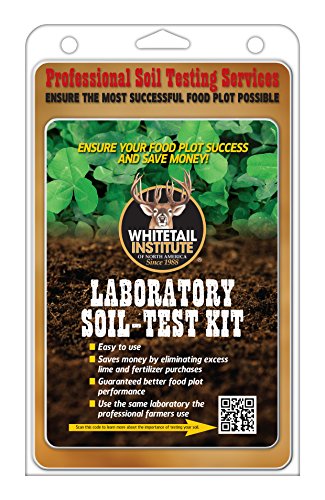
Key features: Ensures the most successful deer food plot possible; Includes professional consultation; Results within one week.
- Best for: Land managers planning precise lime and nutrient strategies and needing expert guidance.
- Why selected: Helps tailor lime applications to actual soil conditions, potentially saving resources.
- Caution: Requires follow-up actions based on test results; not a stand-alone solution.
Buying Guide
What should I consider before choosing lime products?
Soil pH goals vary by region and crop mix. Start with a soil test to determine current pH and nutrient needs, then pick a product that matches your plot size, equipment, and timeline. Granular lime is often best for larger or broadcast applications, while liquids can deliver faster results on established plots. For hard-to-treat soils, soil amendments with nutrient-release properties can offer long-lasting benefits.
What are the best approaches for small deer plots?
In smaller plots, precision matters. Liquid lime or fast-acting granular formulations let you adjust pH quickly without heavy equipment. Pair with a soil test to avoid over-liming, which can harm plant growth. Consider a soil amendment when soil structure or low nutrient availability is the primary challenge.
How does soil testing impact lime decisions?
Soil testing provides data on pH, nutrients, and buffering capacity. Use test results to select lime type, application rate, and timing. A test kit with professional guidance can help align lime use with forage species and seasonal growth patterns.
What are practical cautions when using lime products?
Over-liming can raise pH above the optimal range, reducing nutrient availability. Uneven spread may create hotspots or patches. Some products work better in specific soil types; always follow label directions and local guidelines. For best outcomes, integrate lime applications with ongoing forage management and monitoring.
How to plan a lime-and-forage schedule?
Plan based on seasonal growth and harvest windows. Apply lime well before planting or regrowth periods to allow chemical reactions to stabilize. Use a soil test to verify progress and adjust subsequent applications. Combine lime with soil amendments or nutrient strategies to sustain forage quality over multiple seasons.
FAQ
- What is the primary purpose of lime for deer food plots?
To raise soil pH to a level where nutrients become more available to forage plants, improving growth and health.
- How long does lime typically take to affect soil pH?
Granular lime often begins changing pH within weeks, while liquid lime works more quickly in some soils.
- Is a soil test necessary before applying lime?
Yes. A soil test helps determine exact pH targets and prevents over- or under-liming.
- Can I apply lime and plant at the same time?
It’s usually best to lime before planting, allowing time for pH adjustments, but follow product-specific guidance.
- What should I do if my plot has poor nutrient availability despite liming?
Consider a soil amendment or targeted nutrients based on test results to support forage growth.
- Are there risks with using lime on a small plot?
Yes, including potential over-correction and patchy results. Use precise measurements and test-guided rates.