Best Liquid Garden Fertilizer for Every Garden
Choosing the right liquid fertilizer can drive healthier plants, bigger yields, and more vibrant colors across outdoor beds, indoor pots, and hydroponic systems. This guide highlights five top liquid fertilizers that span general-purpose formulas, organic options, and hydroponic-specific blends. Each product is evaluated for nutrient balance, form, and ease of use, helping you pick the best match for your garden style. A compact summary table below compares key specs at a glance, followed by in-depth sections that explain why each option might fit your needs.
| Product | Brand | NPK | Size | Best For |
|---|---|---|---|---|
| GardenWise 10-10-10 All Purpose | GardenWise | 10-10-10 | 8 oz | Indoor/Outdoor, vegetables, flowers, lawn |
| Schultz SPF45170 10-15-10 | Schultz | 10-15-10 | 8 oz | Universal plant feeding |
| Espoma Organic Grow! | Espoma | 2-2-2* | 16 oz | Organic indoor/outdoor plants |
| Miracle-Gro AeroGarden Liquid | AeroGarden | Not specified | 3 oz | Hydroponic indoor systems |
| True Organic Liquid Tomato & Vegetable Food | True Organic | Not specified | 16 oz | Tomatoes and vegetables |
*Espoma Grow! lists a 2-2-2 analysis in its product description.
GardenWise 10-10-10 Liquid Fertilizer

GardenWise 10-10-10 All Purpose Plant Food is a balanced liquid fertilizer designed for broad use in both indoor and outdoor settings. The formula emphasizes a classic NPK balance of 10-10-10 to support foliage growth, root development, and overall plant health. The blend is enriched with seaweed extract and iron, introducing micronutrients and growth hormones that can help plants establish strong roots and more robust shoots. This product is positioned as an all-purpose solution suitable for vegetables, flowers, lawns, and container plants, making it a practical choice for mixed gardens. The 1×8 oz bottle format is convenient for smaller setups or trial applications.
Practical application cues include following label directions for dilution and applying during the growing season. GardenWise emphasizes versatility, suggesting the product can be used across a wide range of garden types without needing separate formulas for different plant groups. For gardeners seeking a straightforward, balanced feed that covers most common plant needs, this liquid fertilizer provides a familiar, easy-to-use option with ocean-derived micronutrients to complement the major NPK nutrients.
Schultz SPF45170 Purpose Liquid Plant Food 10-15-10

Schultz SPF45170 is a universal liquid plant food formulated with a higher phosphorus level (10-15-10) to support flowering and fruiting in a broad range of plants. The 8 oz size makes it a handy option for frequent feedings across mixed borders, container gardens, and houseplants where a quick nutrient boost is beneficial. The product’s structure focuses on promoting bloom development and robust tissue growth, which can help plants establish strong stems and vibrant blossoms. While not marketed as organic, Schultz’s formulation is compatible with many common gardening scenarios that require dependable, ready-to-use nutrition.
Usage guidance centers on mixing with water per label instructions and applying during active growth periods. For gardeners aiming to encourage blooms or fruit set, a higher middle number in the NPK ratio can be advantageous. This option is especially suitable for gardeners who want a reliable, easy-to-mix solution that supports a wide array of plant types without specialized formulas for different species.
Espoma Organic Grow! Liquid Concentrate

Espoma Organic Grow! is a liquid concentrate designed for organic gardening, with a balanced 2-2-2 nutrient profile and natural inputs such as kelp extracts and humic acids. The product emphasizes natural protein-based nutrients and seaweed-derived micronutrients to support plant health in both landscape settings and containers. The 16 oz bottle is geared toward steady feeding across many plant types while aligning with organic gardening principles. It is presented as free from sludges or toxic ingredients, which may appeal to gardeners prioritizing organic certification and soil health alongside plant growth.
Espoma Grow! is typically used every 2-4 weeks during the growing season, with dilution according to label directions. This makes it a domestically friendly option for home gardeners who prefer an organic-feeling feed that still delivers consistent results. Its emphasis on natural inputs and soil health makes it a solid choice for those who want to balance plant performance with organic gardening goals.
Miracle-Gro AeroGarden Liquid Fertilizer
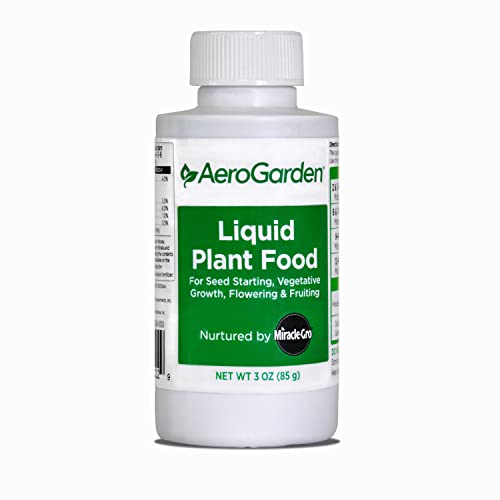
Miracle-Gro AeroGarden Liquid Plant Fertilizer is tailored for hydroponic indoor gardens, notably AeroGarden systems. This fertilizer line focuses on supplying essential nutrients to support rapid growth and consistent germination in hydroponic contexts. The packaging is compact (3 fl oz), making it convenient for regular use with reservoir-based growing systems. Its design includes a pH buffering component to help maintain a stable environment for nutrient uptake, which is particularly beneficial in controlled indoor settings where precise nutrient management matters. This product is a practical pick for hydroponic setups seeking a specialized, easy-to-use nutrient solution.
For hydroponic users, the fertilizer is intended to be added directly to the water reservoir with each watering cycle, supporting continuous nutrient availability. While some hydroponic formulas include explicit NPK values, this AeroGarden variant emphasizes system compatibility and growth performance in indoor, soil-free environments. Gardeners with AeroGardens or similar systems may find this option aligns well with their needs for reliable, hydroponic-specific nutrition.
True Organic Tomato & Vegetable Food

True Organic Tomato & Vegetable Food is designed to support fruiting and yields in tomatoes and other vegetables with an organic-friendly approach. The formulation centers on an exclusive Soy Protein Hydrolysate blend, which aims to improve soil health and provide nourishing elements for both plant and soil ecosystems. While explicit NPK values aren’t listed, the product emphasizes balanced nourishment for both in-ground beds and containers, making it a versatile option for organic gardens seeking a nutrient boost that aligns with sustainability goals. The 16 oz bottle is suitable for mid-season feeds and ongoing soil nourishment for vegetable gardens.
True Organic’s approach highlights soil biology alongside plant nutrition, an appealing angle for gardeners who prefer organic inputs and want to sustain long-term soil health. As a liquid feeding option, it offers convenient application while aiming to support superior harvests through natural, soil-friendly ingredients.
Buying Guide
When selecting a liquid fertilizer, balancing your garden’s needs with product characteristics matters. The following considerations help you compare options across general, organic, and hydroponic contexts, and choose a formula that aligns with your goals.
- Garden type and plant groups: Outdoor vegetable beds, flowering borders, lawns, indoor houseplants, and hydroponic systems each have distinct nutritional needs. General-purpose liquids work across many types, while hydroponic-specific feeds optimize nutrient availability in water-based systems. Organic formulas suit soil health and sustainability-minded gardens.
- NPK balance and nutrient focus: A neutral 10-10-10 is versatile for mixed plantings, but flowering boosts often benefit from higher phosphorus (P) levels, while leafy growth favors nitrogen (N). Organic blends may not list precise NPK but offer soil- and plant-friendly inputs like kelp, humic acids, or soy proteins.
- Organic vs synthetic: Organic feeds emphasize soil biology and long-term health, often with slower release. Synthetic (or mineral-based) formulas deliver quick, predictable results and precise NPK values. Your choice depends on goals, certifications, and willingness to manage soil biology.
- Form and application: Liquid concentrates require dilution and regular feeding. Hydroponic formulas are tuned for nutrient delivery through irrigation, sometimes with pH buffering. Always follow label directions and consider your watering schedule and reservoir management for hydro systems.
- Packaging size and frequency: Smaller bottles suit trial use or container gardens; larger bottles reduce cost per feeding for extensive beds. For hydroponics, reservoir capacity and feeding frequency influence convenience and cost efficiency.
- Soil and water compatibility: Some formulas interact with soil pH, hardness, or existing amendments. If you test soil or work with water high in minerals, choose a formula that aligns with your conditions or provides buffering.
- Safety and storage: Store away from children and pets, in a cool, dry place. Liquid concentrates are typically stable but should be used within the product’s shelf life and within recommended dilution ranges to avoid nutrient burn.
Choosing by garden setup
- Outdoor gardens and lawns: Look for all-purpose or growth-balanced liquids (like 10-10-10) with compatibility for vegetables, ornamentals, and turf. Consider seasonal feeding schedules and dilution rates suitable for broader plant groups.
- Indoor container plants: Opt for gentle, versatile formulas that avoid salt buildup and fit small volumes. Organic options can support soil health in contained environments, while hydroponic-specific feeds optimize nutrient availability in water.
- Hydroponics and Aeroponics: Select fertilizers explicitly designed for hydroponic systems, which include micronutrients and pH buffering. Regular-use products in reservoir systems help maintain steady growth and germination.
- Organic growers: Prioritize organic-certified liquids that emphasize soil biology, natural inputs, and plant health. Be mindful of potential slower release and adjust feeding schedules accordingly.
In practice, many home gardeners benefit from pairing a general-purpose liquid with a supplemental organic option for soil health or a hydroponic formula for indoor systems. The right combination depends on your garden type, climate, plant variety, and whether you prioritize rapid growth or long-term soil vitality. By understanding the NPK emphasis, organic content, and system compatibility of each product, you can select a liquid fertilizer that supports your garden’s unique needs while fitting your management style.