Best Loam-Like Soil for Indoor Plants: Top Potting Mixes for Healthy Growth
Choosing the right potting mix is essential for thriving indoor plants. When a loam-like balance of texture, nutrients, and drainage meets your plant’s needs, root health and foliage flourish. This guide highlights five highly relevant indoor potting mixes that mimic garden loam characteristics while staying optimized for indoor conditions. Each option emphasizes moisture retention, aeration, and root development—key factors for pothos, monstera, ferns, palms, and tropical varieties. Read on to compare textures, organic content, and moisture management to find the best match for your indoor garden.
Summary of chosen products:
- Miracle-Gro Houseplant Potting Mix: Fertilized, Perlite Soil for Indoor Gardening, Designed to Be Less Prone to Gnats, 4 qt.
- Back to The Roots 100% Organic Indoor Potting Mix (6 Quart)
- Rosy Soil Indoor Potting Soil for House Plants
- Miracle-Gro Indoor Potting Mix, 6 qt (2-Pack)
- Craft Houseplant Potting Mix, Elite House Plant Soil, 4 qt
Miracle-Gro Houseplant Potting Mix

Miracle-Gro Houseplant Potting Mix blends essential elements to help indoor plants thrive. The formula emphasizes perlite, sphagnum, and peat moss, producing a medium that drains while retaining adequate moisture. This mix aims to reduce gnats by balancing moisture and aeration. It’s well-suited for popular houseplants such as Pothos, Spider Plants, Monstera, Philodendron, and English Ivy, supporting steady growth and vibrant foliage.
Back to The Roots 100% Organic Indoor Potting Mix (6 Quart)
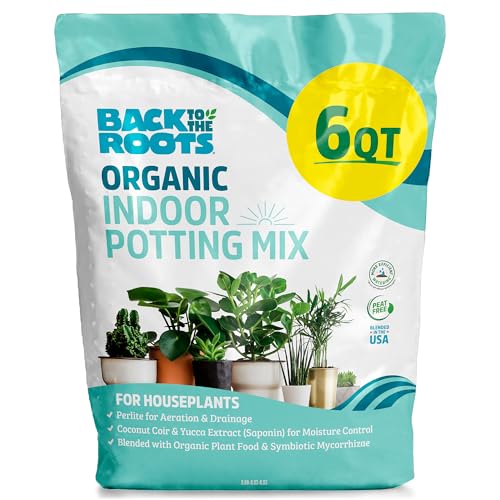
This 6-quart bag focuses on organic composition with yucca extract for improved moisture retention, supporting extended watering intervals. It includes ROOT-BOOSTING MYCORRHIZAE to enhance root development and nutrient uptake. The mix is designed to be organic and peat-free, offering a lower environmental impact while maintaining healthy indoor plant growth. It’s a versatile option for a range of houseplants and herbs in containers.
Rosy Soil Indoor Potting Soil

Rosy Soil combines a biochar-enriched mix with pine bark fines to support robust root systems and balanced moisture retention. The formula promotes a living soil environment with beneficial microorganisms, enhancing growth for foliage plants, flowers, herbs, and tropicals. It’s described as peat-free and less prone to gnats, creating a resilient base for a diverse indoor garden while encouraging healthy microbial activity.
Miracle-Gro Indoor Potting Mix (6 qt) 2-Pack
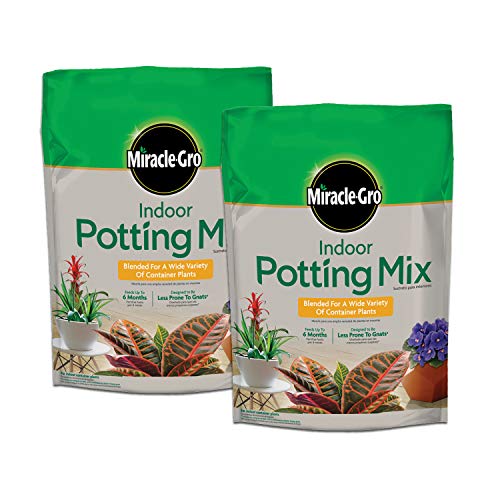
This 2-pack provides Miracle-Gro’s indoor potting mix in two 6-quart bags, suitable for a broad spectrum of container plants. It’s designed to fill multiple planters, offering blended support for climbing, foliage, flowering, and tropical houseplants. The product guide notes use in typical potting routines: partially fill a container, place the plant, then add more mix to secure roots. The blend aims to balance moisture retention with airflow to promote healthy root growth.
Craft Houseplant Potting Mix by Grow Queen

Grow Queen’s Craft Houseplant Potting Mix emphasizes premixed potting soil designed for indoor plants, balancing moisture and airflow to support healthy root development. The mix is pre-moistened to reduce transplant shock and is infused with premium organic worm castings for micronutrients, contributing to vibrant foliage and steady growth. It’s marketed as peat-free and suitable for a range of houseplants, including cuttings and sensitive species needing reliable soil stability.
Buying Guide: Key Purchase Considerations
- Moisture Management: Look for blends that balance drainage with moisture retention. Indoor soils should avoid staying waterlogged while preventing rapid drying, especially for tropicals and ficus varieties.
- Aeration and Texture: A loam-like mix often benefits from perlite, pumice, or bark fines to improve airflow to the roots. This reduces compacting and supports healthy root systems.
- Organic Content: Organic matter such as peat, coir, compost, or biochar can provide nutrients and improve moisture holding capacity. Peat-free options are available for environmentally conscious buyers.
- Root Health and Microbes: Some mixes include mycorrhizae, biochar, or worm castings to boost root growth and nutrient uptake. These additives can help establish resilient indoor plants.
- Plant Type Compatibility: Choose blends tailored to the plant types you grow—foliage plants often benefit from more aeration, while flowering tropicals may need higher moisture retention.
- Transplant Readiness: Pre-moistened mixes reduce transplant shock and ease repotting. For cuttings, a settled soil helps establish roots more quickly.
- Environmental Impact: Peat-free or organic formulations offer lower environmental footprint and may align with sustainable gardening goals.
Comparative Considerations
- For gnats-prone setups: Choose blends that improve drainage and reduce lingering moisture near surface, such as blends with perlite and sphagnum.
- For moisture-loving tropicals: Favor mixes with enhanced water retention (coir or peat-based) while preserving drainage to prevent root rot.
- For beginners: Pre-moistened mixes with clear planting instructions and root-friendly textures ease the learning curve and minimize transplant shock.
- For eco-conscious buyers: Peat-free options and soil components like biochar and organic matter offer sustainable alternatives without sacrificing performance.
When selecting a loam-inspired indoor potting mix, consider your plant species, container size, and watering routine. The five products highlighted here provide a spectrum of textures and organic content designed to support root development and healthy foliage in typical American homes. Always follow container drainage guidelines and monitor moisture to maintain a thriving indoor garden.