Best Low-Nitrogen Fertilizers for Tomatoes: Grow Healthy, Flavorful Crops
When growing tomatoes, choosing a low-nitrogen fertilizer helps promote fruit development and reduces excessive foliage. This guide showcases five options that emphasize balanced or lower nitrogen content, making them suitable for tomato plants at various stages. Each product is evaluated for who it’s best for and why it’s a good fit, with practical cautions to consider before buying. The following selections are ideal for gardeners seeking steady fruit production without lush, oversized leaves.
| Product | Best For | N-P-K Focus |
|---|---|---|
| Burpee Organic Tomato & Vegetable Granular Plant Food | Organic gardeners seeking long-lasting nutrition | Balanced, organic nutrients (exact N-P-K not stated) |
| Farmer’s Secret Tomato Booster Fertilizer (8oz) | Tomato growers aiming for bigger yields with strong fruit set | 3-8-7 |
| Miracle-Gro Water Soluble Tomato Plant Food | Quick, soluble feeding for steady growth | Typically balanced to moderate N-P-K |
| Jobe’s Organics Granular Garden Fertilizer (4 lbs) | Organic gardeners desiring easy, low-leaching feeding | 2-5-3 |
| Cz Garden 5-10-10 Tomato & Vegetable Fertilizer (4 lb) | Gardeners needing a convenient, US-made option | 5-10-10 |
Burpee Organic Tomato & Vegetable Granular Plant Food

Best for organic gardeners who want a time-released feeding cycle. Burpee’s granular formula is designed to provide nutrients over up to three months, helping tomato plants steady through the growing season without rapid flushes of growth. The product is labeled as an all-purpose organic plant food, suggesting broad compatibility with tomatoes and other vegetables. Consider this option if you prefer organic inputs and a low-maintenance feeding schedule.
Who it’s for: Organic gardeners seeking long-lasting, slow-release nutrition that supports steady fruiting. Why selected: The extended nutrient supply aligns with tomato fruit development while staying within organic standards. Caution: Exact nutrient breakdown isn’t specified, so precise N-P-K values aren’t guaranteed.
Farmer’s Secret Tomato Booster Fertilizer (8oz)

Best for tomato growers seeking to maximize fruit size and yield with a compact, highly potent formula. This product is noted as 3-8-7, which leans toward lower nitrogen relative to potassium and phosphorus, supporting robust fruit development. It’s especially useful for plants that have established root systems and are ready to push into heavy fruiting phases.
Who it’s for: Gardeners wanting a strong boost for tomatoes and related fruiting vegetables. Why selected: The 3-8-7 balance prioritizes bloom and fruit development. Caution: As a concentrated product, follow dilution directions to avoid leaf burn or excessive foliage in some sensitive varieties.
Farmer’s Secret Tomato Booster Fertilizer (8oz) – 3:8:7

This option mirrors the tomato booster approach with a compact 8-ounce package, designed to deliver concentrated nutrition for ongoing tomato growth. Best for: small to medium gardens where a precise, repeatable feeding routine is desired. Why selected: The product emphasizes lasting performance in tomato life cycles. Caution: Very small quantities can still deliver significant nutrients, so measurement accuracy matters to avoid over-fertilization.
Farmer’s Secret Tomato Booster Fertilizer (32oz)

Best for gardens requiring a larger supply of tomato-specific nutrition with a focus on fruit production. The 32-ounce bottle provides a longer interval between applications while maintaining the same target N-P-K balance. Why selected: It supports consistent feeding across a broader growing season. Caution: Higher volume requires careful storage and proper labeling to prevent over-application in small plots.
Miracle-Gro Water Soluble Tomato Plant Food
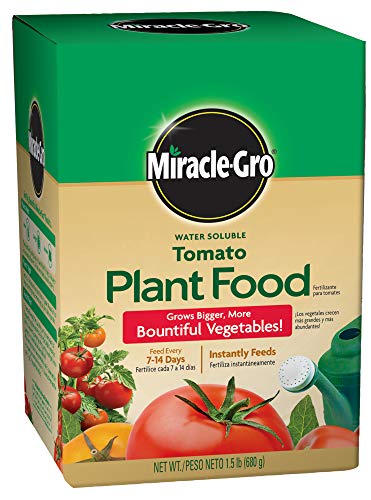
Best for quick, adjustable feeding when tomatoes need a quick nutrient boost. This water-soluble formula dissolves in water for rapid uptake, making it suitable for frequent, moderate feeding schedules. Why selected: It supports consistent growth and fruit set, especially in soil with variable nutrient availability. Caution: Soluble formulas can increase salt buildup if over-applied or used too frequently without proper irrigation.
Miracle-Gro Shake ‘N Feed Tomato, Fruit & Vegetable Plant Food

Best for gardeners who want a long-lasting feed with simple application. Shake ’N Feed provides nutrients for up to three months and supports both above and below-ground nourishment. Why selected: The extended feeding window reduces the frequency of applications while supporting robust fruit development. Caution: It includes calcium for stronger fruits, so avoid applying near freshly limed soils to prevent nutrient imbalance.
5-10-10 Tomato & Vegetable Fertilizer – Cz Garden Supply

Best for gardeners who want a well-rounded N-P-K profile that supports both foliage and fruit production. The 5-10-10 ratio emphasizes potassium and phosphorus, which can foster fruit quality and yield. Why selected: It’s a US-made option with resealable packaging for convenient storage. Caution: Higher nitrogen content than some low-nitrogen products means monitoring leaf growth to avoid excessive foliage at the expense of fruiting in certain varieties.
Buying Guide
What should I look for in a low-nitrogen tomato fertilizer?
Focus on the nitrogen level in relation to potassium and phosphorus. A lower N relative to P and K generally favors fruit development over leafy growth. For organic options, check for OMRI listings or organic certifications. Consider the application frequency and whether the product is granular (longer release) or water-soluble (rapid uptake).
Which N-P-K ratio is ideal for fruiting tomatoes?
Common choices include 3-8-7 or balanced formulations with modest nitrogen. Ratios like 2-5-3 or 3-8-7 help support flowering and fruit set without encouraging excessive foliage. For large container plants, a fertilizer with added calcium can improve fruit quality and reduce blossom-end rot.
What are practical application tips?
- Follow label directions carefully to avoid over-fertilizing, especially with concentrated products.
- Water deeply after application to help nutrients reach the root zone.
- Alternate between organic and synthetic options if you’re managing soil biology and ongoing nutrient needs.
- Monitor leaf color and growth; yellowing or excessive foliage may indicate imbalanced feeding.
How to choose between granular and water-soluble formulas?
Granular fertilizers provide slow, extended release, reducing the risk of burns and needing fewer applications. Water-soluble formulas offer quick adjustments but require more frequent feeding and careful watering to prevent salt buildup.
What about organic versus synthetic options?
Organic fertilizers release nutrients gradually as they break down, supporting soil microbiology. Synthetic formulas often provide precise nutrient delivery and quicker results. Your choice depends on gardening style, soil health, and the level of immediacy you desire in growth and fruiting.
Quick FAQ
- Q: Can I use low-nitrogen fertilizer for established tomato plants? A: Yes, especially to promote fruiting after initial vegetative growth. Monitor for signs of nutrient imbalance.
- Q: How often should I feed tomatoes with these products? A: It depends on the product; many offer intervals from every 2-4 weeks to a few months. Follow label directions.
- Q: Are these products safe for containers? A: Most are suitable for containers, but check packaging for container-specific guidance and potting mix considerations.
- Q: Should I avoid fertilizer if soil already has high organic matter? A: Not necessarily; adjust application rate and monitor plant response to prevent excess growth.
- Q: Is calcium important with these fertilizers? A: Some products include calcium or should be paired with calcium sources to improve fruit quality and reduce blossom-end rot risks.
- Q: Can I mix multiple fertilizers? A: Only if label instructions allow it. Mixing can lead to nutrient imbalances or over-fertilization.