Best Low Pressure Irrigation Timer Solutions for Gardens
Answering the needs of homeowners with gravity-fed systems, rain barrels, or low water pressure, these timers optimize watering while conserving water. The top picks below are best for gardeners seeking hands-free control, flexible scheduling, and reliable operation under low pressure. Ideal buyers include backyard farmers using rain barrels, small garden owners with hose faucets, and families needing child-safe, timer-driven irrigation. The table lists each chosen product and the scenario it serves best.
| Product | Best For |
|---|---|
| QUOBAS Zero Pressure Water Timer (B0GJCR1MD5) | Rain barrels, gravity-fed layouts, low-pressure garden beds |
| Yardeen Water Timer Electronic Hose Sprinkler (B0746BKXZ6) | Low pressure, simple battery-powered scheduling |
| QUOBAS Zero Pressure Sprinkler Timer With Child Lock (B0GWCCLZ2D) | Families needing protected settings and 2-zone control |
| QUOBAS 2 Pack Low Pressure Water Timer (B0GJCDH15Y) | Two sites or zones; rain barrel integrations |
| Toro 53453 Low-Pressure Tap Timer (B081W7RVRH) | Reliable basic scheduling with preset cycles |
QUOBAS Zero Pressure Water Timer

The QUOBAS timer uses a zero water pressure ball valve design that works with drip irrigation, rain barrels, and gravity-fed setups. It also handles standard household water pressure, making it versatile for garden hoses and low-pressure irrigation. The soft close reduces water hammer. It offers a clear LCD for start times, durations (1–240 minutes), and frequencies (every 1–12 hours or every 1–7 days). A rain-delay option supports 24/48, or 72 hours, helping conserve water when rain is expected. Best for rain-barrel setups and gravity-fed systems that require reliable, hands-free control.
Who it’s best for: homeowners with rain barrels or gravity-fed irrigation who want a single-zone timer that’s easy to program and water-saving. Limitation: may require stable mounting on outdoor spigots for best results in windy locations.
Yardeen Water Timer Electronic Hose Sprinkler Controller
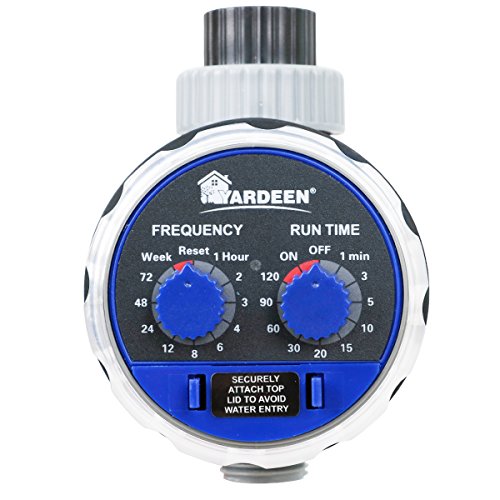
This timer supports low water pressure with a 0–8 bar range and is designed for a standard 3/4″ garden hose. It allows multiple durations (1–120 minutes) and frequencies (1 hour to 7 days). It is battery-powered by two AAA batteries (excluded) and uses a simple, reliable design that avoids complex wiring. Battery status is monitored to prevent unexpected watering gaps. It’s a solid choice where low pressure and battery-powered operation are essential, especially in small gardens or greenhouses.
Who it’s best for: budget-conscious gardeners seeking a straightforward, battery-powered controller that works well with rain barrels and low-pressure sources. Limitation: requires battery replacements roughly every several months, depending on use.
QUOBAS Zero Pressure Sprinkler Timer With Child Lock

This QUOBAS model offers the same zero-pressure ball valve concept with an added child lock to prevent accidental schedule changes. It supports 1–240 minute watering durations and fixed intervals (for example every 12 hours or every 3 days). The rain-delay function is present (24, 48, or 72 hours) to avoid waste during wet weather. Best for households with kids or pets where schedule integrity matters. Limitation: two-zone capability is not explicit; verify multi-zone needs if you require separate zones.
Who it’s best for: families needing safeguard features to prevent tampering and straightforward programming. Limitation: may be limited to single-zone operation depending on installation.
QUOBAS 2 Pack Low Pressure Water Timer

This package includes two timers with a zero water pressure ball valve design. It is compatible with rain barrels and gravity-fed systems while handling standard household pressure. Each unit has a programmable LCD for start times, durations (1–240 minutes), and frequencies (e.g., every 12 hours, every 3 days). A rain-delay feature helps conserve water. Best for homeowners who need two independent timers for separate watering zones or locations. Limitation: may require separate faucet adapters or fittings for certain installations.
Who it’s best for: those needing a budget-friendly dual-timer solution to manage multiple areas. Limitation: ensure each unit has the required fittings for your setup.
Toro 53453 Low-Pressure Tap Timer

The Toro 53453 timer is a durable option with 11 preset watering cycles and a 1–120 minute adjustable watering duration. It’s built for reliability and straightforward operation in low-pressure environments. Best for basic, predictable irrigation needs where a quick setup is preferred. Limitation: fewer customization options compared to more advanced digital timers.
Who it’s best for: gardeners who want a simple, dependable timer with preset cycles for routine irrigation. Limitation: less flexible than full-digital programmable models when complex schedules are required.
Buying Guide
What counts as “low pressure” for irrigation timers?
Low pressure typically means systems relying on gravity, rain barrels, or modest household pressure. Timers with a wide working pressure range (0–8 bar) and a valve design that tolerates fluctuating pressure perform best in these setups. Look for maximum pressure compatibility and a reliable seal to prevent leaks when pressure fluctuates.
Single-zone vs. multi-zone timers
Single-zone timers are sufficient for a single bed or container, while multi-zone timers or dual-outlet devices suit larger gardens or separate drip lines. If you plan to irrigate two distinct areas, a two-zone model or two timers in parallel can simplify scheduling and maintenance.
Power source and battery life
Battery-powered timers are easy to install but require periodic replacement. If minimal maintenance is preferred, choose models specifying long-life batteries and clear low-battery indicators. Solar-powered options are less common in low-pressure timers and may not be available on all units.
Features to compare
- Watering duration range: 1–240 minutes is common; extend if you have longer plant watering needs.
- Frequency options: every 1–12 hours or every 1–7 days provide flexible scheduling.
- Rain delay: 24, 48, or 72 hours helps guard against overwatering.
- Child lock or safety features: helpful in homes with kids or pets.
- Valve design: zero-pressure ball valves reduce water hammer and work with gravity-fed systems.
Installation tips
- Verify thread sizes (3/4″ hose connections are standard for outdoor timers).
- Secure the timer away from direct sun and wind to prolong life and readability of the LCD.
- Keep the device clean and check seals after rain to prevent leaks.
Safety and maintenance considerations
- Ensure timers are rated for outdoor use and have water-resistant housings.
- Periodically test the timer by running a short cycle to confirm proper operation.
- Replace worn O-rings or seals as needed to prevent leaks.
Quick recommendation snapshots
- Best for rain barrels: QUOBAS Zero Pressure Water Timer (B0GJCR1MD5)
- Best for families with kids/pets: QUOBAS 2nd option with Child Lock (B0GWCCLZ2D)
- Best value for two sites: QUOBAS 2 Pack Low Pressure (B0GJCDH15Y)
- Best simple battery timer: Yardeen Water Timer (B0746BKXZ6)
- Best proven basic: Toro 53453 (B081W7RVRH)
FAQ
- What is considered low pressure for irrigation timers? Answer: Systems relying on gravity or rain barrels typically operate at low pressure; timers with 0–8 bar tolerance are suitable.
- Do these timers require a special faucet? Answer: Most use standard 3/4″ garden hose threads, fitting typical outdoor faucets.
- Can I use these timers for multiple zones? Answer: Some models offer two outlets or dual-zone setups; others are single-zone but can be paired with a second timer.
- How long can a timer run continuously? Answer: Programs often allow durations from 1 to 240 minutes per cycle, with cycles repeating according to the chosen frequency.
- Are child-safety features common? Answer: Some models include a child lock to prevent accidental changes, which is useful in households with children.
- Will rain delay help conserve water? Answer: Yes; the rain-delay feature pauses watering during rainy conditions to prevent overwatering.