Best Meadow Grass Seed Mixtures for Colorful, Low-Maintenance Lawns
Answering the common search for meadow grass seed mixtures, this guide highlights five reliable options and explains who each is best for. Whether you want a vibrant wildflower meadow, a drought-tolerant blend, or a wetland-friendly mix, these selections help you create a natural-looking landscape with varying maintenance. The top picks cover slopes, shade, sun, and moisture-rich sites so you can choose confidently. Below, compare features, best-use cases, and potential limitations to match your yard’s conditions.
Summary table of selected products
| Product | Best For | Key Benefit | Limitations |
|---|---|---|---|
| Jonathan Green Wildflower & Meadow Grass Mix | Low-maintenance natural landscapes | Versatile mix with wildflowers and hard fescue | May reseed aggressively in ideal conditions |
| GreenView Pure Grass Seed Sunny Mixture | Sunny lawns needing fast germination | Fast germination and weed-free quality | Requires weed-free soil for best results |
| Wet Meadow Grass and Flower Seed Mix | Moist or wet sites | Rich diversity for consistently moist areas | Specific moisture needs; may not suit dry zones |
| Pennington Bare Spot Repair Mix | Repairing sparse patches | Quick establishment for bare spots | Not a full lawn replacement |
| GreenView Pure Grass Seed Dense Shade Mix | Heavy shade | Shaded-area performance with weed-free seed | Shade-focused; limited use in sun |
Jonathan Green Wildflower & Meadow Grass Mix
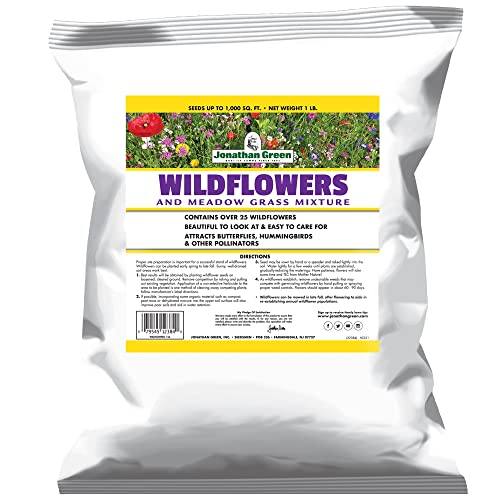
Best for creating a natural landscape with minimal maintenance, this mix blends over 25 annual and perennial wildflowers with hard fescue grass seed and birdsfoot trefoil. It supports a colorful, self-sustaining display as the annuals bloom first year and perennials reseed for ongoing color. Ideal for slopes or areas with poor soil where mowing is not desired. A potential limitation is reseeding, which can lead to self-sown flowers in multiple seasons if conditions are favorable.
GreenView Pure Grass Seed Sunny Mixture

Best for sunny lawns that demand a lush, weed-free result, this mixture focuses on sun-tolerant grasses and quick establishment. It promises quick germination (7-12 days) and a weed-free seed bed, which helps achieve a pristine lawn with less subsequent weed management. Choose this if your soil is prepared and weed-free. A caveat is that soil cleanliness strongly influences results; otherwise, even premium seed may struggle to outperform existing weeds.
Wet Meadow Grass and Flower Seed Mix

Best for very moist, wet-meadow sites, this blend includes a diverse mix of grasses, sedges, and wildflowers suitable for consistently damp soils. It supports a colorful, textured landscape that stays lush in wet seasons. The primary limitation is moisture dependence; it’s not ideal for dry or drought-prone areas unless irrigation is available.
Pennington Bare Spot Repair Mix Central

Best for quickly repairing lawn thin spots, this mix helps establish grass in bare areas with three simple steps. It is a practical choice when you need rapid coverage in patchy lawns. It is not designed to replace a full lawn; ongoing lawn care may still be required to maintain uniform density around repaired zones.
GreenView Pure Grass Seed Dense Shade Mix

Best for shaded yards, this blend targets grass varieties that tolerate limited sun while remaining weed-free and easy to establish. It’s a good match for under-tree lawns or north-facing zones where sunlight is scarce. A potential limitation is that shade-tolerant grasses may not tolerate heavy foot traffic as well as sun-loving varieties.
Scotts PatchMaster Lawn Repair Mix Sun + Shade

Best for bare spot repair and lawn patches, this all-in-one mix includes mulch, seed, and lawn fertilizer to support rapid establishment. It works well for small, targeted repairs and helps retain moisture in seed beds through mulch. It is not intended as a full lawn replacement and should be used selectively to fill gaps along existing turf.
Buying Guide
What should you consider when choosing a meadow grass seed mixture?
- Site moisture: Pick wet meadow blends for damp areas and drought-tolerant mixes for dry sites. Consider irrigation if needed.
- Sun exposure: For sunny lawns, look at sun-loving blends; for shady yards, choose dense shade or shade-tolerant mixes.
- Maintenance level: Low-maintenance meadow mixes reduce mowing yet may reseed; plan for ongoing weed management where applicable.
- Soil health: Prepare soil by removing weeds and improving drainage before seeding. Weed-free soil improves germination and establishment.
- Scale of project: For patches, consider repair mixes; for entire lawns, select a comprehensive turf blend or a meadow mix with flowering diversity.
- Establishment time: Some blends germinate quickly; others provide slower but longer-lasting color. Choose based on desired timeline.
Common considerations for successful sowing
- Follow sowing rates and depth guidelines printed on seed bags to optimize germination.
- Water consistently after planting until seedlings are established, especially in dry periods.
- Control competing weeds but avoid harsh herbicides that could damage new seedlings.
FAQ
- Q: Which meadow mix is best for slopes? A: Jonathan Green Wildflower & Meadow Grass Mix is designed for areas where mowing is not desired and can help stabilize slopes.
- Q: How soon will a sunny mix germinate? A: Many sunny mixes show germination in about 7-12 days, depending on soil prep and moisture.
- Q: Can I use a shade mix in partial shade? A: Yes, but performance improves with more shade-tolerant varieties and proper irrigation if needed.
- Q: Are these blends suitable for wetland areas? A: Wetland-specific blends like Wet Meadow Grass and Flower Seed Mix are best for consistently moist sites, not dry regions.
- Q: Should I overseed an existing lawn with a meadow mix? A: For best results, choose a blend oriented to overseeding and ensure the current lawn is well-prepared and weed-free.
- Q: Do these mixes require ongoing mowing? A: Some meadow mixes are less mowing-intensive and may self-seed; plan for periodic maintenance to control spread if desired.