Best Mole and Gopher Repellent Options for a Pest-Free Yard
Managing moles and gophers in American yards requires effective, safe solutions. This guide compares top repellents designed to deter burrowing pests while protecting families, pets, and wildlife. We review granular formulas, natural oil blends, castor oil-based products, solar-powered deterrents, and other humane options. For each pick, you’ll find practical notes on coverage, application, and safety to help homeowners choose the best fit for lawns, gardens, and planting beds. The selections emphasize effectiveness, ease of use, and environmental considerations to support a pest-proof landscape.
| Product | Brand | Notable Feature | Coverage | Safety |
|---|---|---|---|---|
| Chase Mole & Gopher Repellant 6 Lbs. | Chase | Granular, easy to apply | Up to 6,000 sq ft | Safe for children, pets, wildlife |
| LEBMP Mole Repellent | LEBMP | Natural essential oil blend | Not stated | Safe for use around yard |
| PVTYSZES Mole Repellent For Lawns | PVTYSZES | Ball form; long-lasting | Up to 6,000 sq ft | Safe for general use in lawns |
| Natural Elements Mole And Vole Repellent | Natural Elements | 100% castor oil | Coverage not specified | Pet-safe and non-toxic |
| Solar Powered Mole Repeller Gopher Deterrent 8 Pack | X-octenol | Solar-powered deterrents | Up to 5,000 sq ft | Varies by model; safe for children and pets |
Chase Mole And Gopher Repellant 6 Lbs

The Chase Mole & Gopher Repellant is a granular formula designed to cover large outdoor areas. It claims to protect up to 6,000 square feet, making it suitable for medium to large yards. The product is advertised as safe for children, pets, and wildlife, enabling family-friendly use around play areas and gardens. Application is straightforward—spread across lawns, around planting beds, and along known burrow entrances to create a protective barrier. Homeowners may find this option convenient for seasonal pest pressure, as the granules work gradually to deter digging activity without immediate repellent scent or noise. Reapplication schedules depend on weather and turf conditions.
Users should follow label directions for distribution and avoid mowing immediately after application to maximize soil contact. While the product emphasizes safety for non-target animals, it’s wise to monitor any wildlife activity near treated areas, particularly in regions with active burrow systems. Properly applied, this repellent can reduce tunnel emergence and new damage in high-activity zones.
Key application notes
- Apply evenly around affected zones and burrow entrances.
- Reapply after heavy rain or irrigation to maintain efficacy.
- Store securely away from children and pets when not in use.
LEBMP Mole Repellent
LEBMP offers a natural approach to mole and gopher deterrence through a blend of essential oils and natural ingredients. The description emphasizes repelling moles, voles, gophers, armadillos, and other burrowing animals by creating an irritant environment that discourages tunneling. The formula includes a tunnel-penetrating mechanism that helps the product reach buried pests, with the goal of fast acting results. This option is positioned for gardeners seeking a more natural solution that reduces reliance on synthetic chemicals while protecting lawns, planting beds, and vegetables throughout the year.
Pros include the use of natural ingredients and a focus on year-round protection. Consumers should consider the potential for essential oils to fade with weather exposure and may need periodic reapplication after rainfall. For best results, apply around new sod, freshly tilled soil, or edge borders where pests frequently appear. The product is compatible with various lawn types and garden setups, offering a practical, low-toxicity alternative for pest management.
Usage tips
- Target burrow entrances and runways for maximum impact.
- Reapply after heavy rain or irrigation cycles.
- Test on a small lawn area before broad application to confirm compatibility with plants.
PVTYSZES Mole Repellent For Lawns

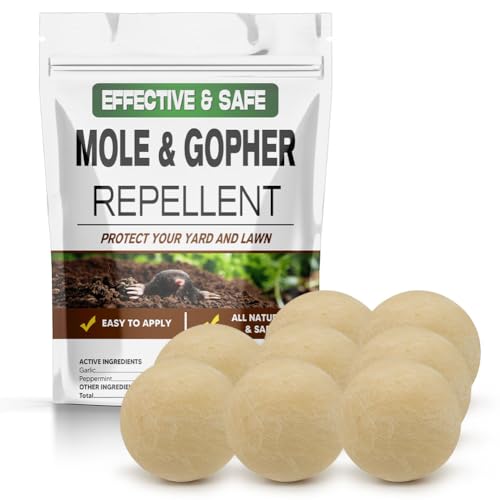
PVTYSZES offers mole and gopher repellent balls designed for lawn use. The product line emphasizes a natural approach and features repellent balls that are placed into tunnels or spread across the lawn to deter pests. It is described as long-lasting, with protection claimed for 30 to 90 days, and designed to cover a considerable area—up to approximately 6,000 square feet. The packaging indicates a pack of eight, providing a simple, scalable option for homeowners with larger yards or multiple problem zones. The approach aligns with ongoing lawn maintenance without introducing harsh chemicals into the soil.
Users should plan a distribution strategy that targets known burrows and suspect runways. To maximize effectiveness, place balls at regular intervals along active tunnels and reapply according to weather exposure and lawn growth. This method reduces the likelihood of pests returning promptly and supports a steady defense over time. It can be combined with other deterrents for enhanced results.
Practical considerations
- Ball-shaped delivery supports steady soil contact.
- Best used as part of a broader pest management plan.
- Monitor for signs of activity and adjust placements accordingly.
Natural Elements Mole And Vole Repellent
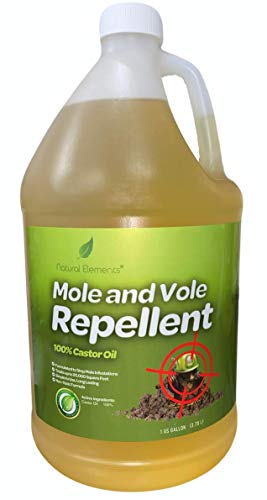
Natural Elements emphasizes a castor oil-based approach, marketed as 100% castor oil and inherently non-toxic. The product targets moles and voles by affecting their sensory perception, making the lawn an unattractive habitat. The formula is described as gradual, with lingering scent and taste in the soil contributing to a long-term barrier. This option is positioned as pet-safe and food-grade, appealing to households seeking a non-chemical or low-toxicity solution that aligns with organic gardening practices. It can be applied to lawns, garden beds, and planting areas without harsh chemical residues.
Expect a progressive effect rather than instantaneous results. Because castor oil breaks down slowly in soil, patience is required before evaluating full effectiveness. For best outcomes, apply along the perimeter of gardens and near known tunnels to encourage moles and voles to relocate. The approach is well-suited for gardeners prioritizing safety and sustainability, though it may require longer timelines to see clear improvements in burrowing activity.
Considerations
- Non-toxic and pet-safe with food-grade assurances.
- Gradual deterrence that relies on soil chemistry and scent.
- Apply according to soil type and moisture levels for optimal penetration.
Mole Repellent Solar Powered 4 Pack

This solar-powered deterrent uses vibrations and sonic waves to deter multiple pests, including moles, gophers, and voles. The device is designed for outdoor use and features solar panels to recharge a built-in battery, reducing ongoing energy costs. The product emphasizes a broad coverage area (up to about 5,000 square feet) and straightforward installation—drill a pilot hole, insert the unit, and switch it on. The design aims to be safe for children and pets since it relies on sound and vibration rather than chemicals. It’s suitable for yards, gardens, and farms seeking a durable, eco-friendly deterrent.
Pros include easy setup, weather resistance, and continuous operation without electrical outlets. Potential limitations involve effectiveness depending on soil conditions and pest pressure; in some yards, multiple units may be needed to achieve uniform deterrence. Users should position units away from metal fences or utilities to avoid interference and ensure the soil remains adequately penetrated by vibrations for best results.
Tips for use
- Place units in a grid pattern for even coverage.
- Monitor activity and adjust spacing as needed.
- Check during heavy rainfall to ensure the devices remain secure and functional.
Buying Guide
Key purchase considerations
When choosing a mole and gopher repellent, consider the size of your yard, the severity of burrowing activity, and the presence of children or pets. Granular and ball-based products tend to offer broad coverage and straightforward application, while natural oil blends and castor oil repellents emphasize safety and sustainability. Solar-powered deterrents provide ongoing, chemical-free protection but may require multiple units for larger properties. Pelleted or ball-form products can provide long-term defense, but timing and reapplication after weather events are crucial for maintaining effectiveness.
Coverage and application
Evaluate the stated coverage area to determine how many products you need for your space. Consider placement around known tunnels, garden beds, and border edges where burrowing tends to concentrate. Some products require reapplication after rainfall or irrigation; others offer longer intervals between treatments. For best results, combine different approaches (e.g., a granular barrier with a solar deterrent in high-traffic zones) to address multiple pest behaviors and reduce the chance of adaptation.
Safety and environmental impact
Pet and child safety is a common priority. Natural and castor oil-based repellents provide lower-toxicity options, though efficacy can vary by soil type and weather. Granular products may leave residues on turf and require careful handling during application. Solar and ultrasonic devices offer non-chemical alternatives with minimal environmental impact but may depend on weather conditions and device placement. Always follow label directions and consider local wildlife regulations when planning a deterrent strategy.
Cost and maintenance
Initial cost and ongoing maintenance differ across products. Granular repellents often require seasonal applications, while pellet or ball formats may last multiple weeks to months. Solar devices incur higher upfront costs but lower ongoing energy usage. Balance upfront investments with expected protection duration and the level of pest pressure in your yard to determine the best value option.
Multi-pest considerations
Many deterrents claim to address several burrowing or ground-dwelling pests beyond moles and gophers, including voles, groundhogs, and armadillos. If your landscape faces multiple challenges, a combination approach—using a primary repellent plus a secondary barrier or a solar deterrent—can offer broader protection. Always ensure compatibility with your soil, plantings, and any edible gardens when mixing pest-control methods.