Best Natural Fungicides for Lawns: Five Products Compared
For a natural lawn-fungus treatment, consider Arber Organic Lawn Fungicide RTS first: it is specifically described for turf and comes with a hose-end sprayer. MilStop SP and GrowSafe are organic-oriented options for foliar diseases, but their listed uses focus on plants rather than lawns. Scotts DiseaseEx is a conventional lawn-fungicide comparison, while Wondercide is a pest-control spray, not a fungicide. Check each label for the lawn type, disease, and application directions before treating.
| Product | Best fit | Important distinction |
|---|---|---|
| Arber Organic Lawn Fungicide RTS | Hose-end lawn application | Specifically lists turf diseases |
| MilStop SP Organic Foliar Fungicide | Organic foliar-disease control | Listed uses emphasize ornamentals and greenhouse plants |
| GrowSafe Bio-Pesticide | Mildew plus listed garden pests | Listed uses focus on plants and garden crops |
| Scotts DiseaseEx | Broad lawn-disease comparison | Not presented as a natural product |
| Wondercide Outdoor Pest Control | Outdoor insect control | Not a fungicide |
Arber Organic Lawn Fungicide RTS

Best for: Lawn owners seeking a product expressly labeled for turf and a ready-to-use hose-end application. Its listed targets include brown patch, dollar spot, summer patch, and rust. The feature description also mentions mildew and use on ornamental trees and shrubs.
The 16-ounce bottle has a hose-end sprayer attached. The directions provided say to connect a hose, set the dial to ARBER, and spray until the grass is dripping. That avoids mixing and measuring, and makes it a practical pick for buyers who want a simple application method.
Limitation: The supplied product information does not specify coverage area or list every disease it controls. Confirm that the label includes your lawn’s suspected disease and follow its full directions.
MilStop SP Organic Foliar Fungicide

Best for: Buyers looking for an organic-use foliar fungicide, especially for powdery mildew on plants. The product information says it cures powdery mildews, prevents most other foliar diseases, is OMRI Listed for organic use, and is compatible with most beneficial insects.
It may interest gardeners managing ornamentals, houseplants, or greenhouse plants alongside a lawn. However, the listed features do not specifically name turf, lawn diseases, or application directions for grass.
Limitation: Do not assume it is suitable for lawns based only on its general foliar-fungicide description. Check the product label for turf approval and the disease you intend to treat.
AgroMagen GrowSafe Bio-Pesticide
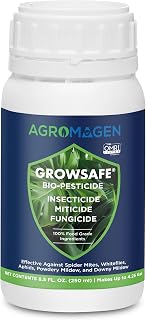
Best for: Gardeners who need a product described for powdery or downy mildew on vegetables, flowers, houseplants, ornamentals, or other garden crops, and who also want control of certain listed pests. The 8.5-fluid-ounce product is described as using food-grade, plant-based ingredients and an oil blend that mixes with water.
GrowSafe is more relevant to mixed garden beds and ornamental planting than to lawn-only treatment. It was included because it lists fungal diseases, but its supplied feature information does not identify turf as an application site.
Limitation: The listed uses do not establish that it is appropriate for grass or common lawn diseases. Check the label before considering it for turf.
Scotts DiseaseEx Lawn Fungicide

Best for: Lawn owners who want a direct comparison with a product specifically formulated and described for lawns. The listed feature claims control of 26 lawn diseases, including brown patch, rust, powdery mildew, red thread, and anthracnose. It is described for both prevention and control at the first sign of symptoms.
The product information says it starts working within 24 hours and continues controlling disease for up to four weeks. It also says it is safe for all grass types when used as directed. These claims make it a broad lawn-focused comparison, rather than a natural-first recommendation.
Limitation: This product is not identified in the supplied information as natural or organic. Choose it only if its label and your lawn-care preferences align.
Wondercide Outdoor Pest Control Spray

Best for: Buyers dealing with outdoor insects, not lawn fungus. This ready-to-use, hose-attached spray is described for pests such as mosquitoes, ants, fleas, and ticks. The feature information gives different treatment areas depending on the pest.
It is included to clarify a common shopping distinction: a yard spray may be intended for lawns without being a fungicide. Its listed active purpose is pest control, so it is not a substitute for a product labeled to treat a lawn disease.
Limitation: The supplied features do not list fungal disease control. Avoid choosing it to treat brown patch, mildew, or other lawn fungus.
Buying Guide: How To Choose A Lawn Fungicide
Is the product actually labeled for turf?
Start with the application site on the label. A product for ornamentals, vegetables, or greenhouse plants is not automatically suitable for grass. Among these choices, Arber and Scotts are the products whose descriptions specifically identify lawns or turf.
Does it target the disease you see?
Brown patches and other discoloration can have causes besides fungus. Compare the suspected disease with the product’s listed targets, and avoid treating based on color alone. Arber lists several lawn diseases, while Scotts lists 26. MilStop and GrowSafe describe foliar or plant diseases, with less explicit lawn-specific information.
Do you prefer ready-to-use spray or another format?
Arber and Wondercide are described as hose-connected sprays, but only Arber is presented as a lawn fungicide. Scotts comes in a 10-pound bag, and MilStop is supplied in a 5-pound bag. Review the complete package directions to understand mixing, application, and coverage before buying.
What does “natural” mean for this purchase?
Look for clear label language about organic use, ingredients, and approved application sites rather than relying on product names alone. MilStop is described as OMRI Listed for organic use, and GrowSafe describes plant-based ingredients. The provided information does not identify Scotts as natural, and Wondercide is an insect-control product rather than a fungicide.
Frequently Asked Questions
What is the most lawn-specific natural option in this comparison?
Arber Organic Lawn Fungicide RTS is the clearest match because its description identifies turf and several lawn diseases.
Can I use GrowSafe on my lawn?
The supplied features list garden plants and crops, not turf. Check its full label for lawn approval before applying it to grass.
Is Scotts DiseaseEx a natural fungicide?
The supplied information describes it as a lawn fungicide but does not identify it as natural or organic.
Does Wondercide treat lawn fungus?
No fungal-disease claims appear in its listed features. It is described as an outdoor insect-control spray.
Should I treat a lawn as soon as a patch appears?
First identify the likely cause and check whether the product lists that disease and your grass as suitable. Follow the label’s timing and application directions.