Best Netting to Keep Leaves Out of Yard and Protect Plants All Season
Answer: A sturdy leaf-blocking netting setup can dramatically cut yard cleanup and shield plants from debris and wildlife. This guide focuses on purpose-built nets for leaves, pests, and small wildlife, with clear guidance on who each product is best for. The top picks cover garden beds, ponds, patios, and pet-safe enclosures, helping you choose according to space, durability, and how you use your outdoor space. The following table summarizes the five selected products to jumpstart your decision.
| Product | Best For | Key Benefit | Ideal Use |
|---|---|---|---|
| Feitore Deer Fence Netting | Vegetable gardens, fruit trees | Reinforced edge with UV protection | Low-maintenance fencing around beds |
| Pond Netting 20×30 Ft | Koi ponds and water gardens | 1/2″ fine mesh for leaves and debris | Over ponds to block leaves and wildlife |
| 10x20ft Nanocomposite Mosquito Net | Patios, balconies, raised beds | Ultra-fine, tear-resistant mesh | Bird and insect barrier for small spaces |
| MaPorch Plastic Chicken Wire Fencing | Pets and balconies | Heavy-duty plastic, UV-resistant | Under-bed blockers or balcony netting |
| Stronger Garden Mesh Netting | Vegetable patches, trees | Ultra-fine, tear-proof, 33% shade | Multiuse garden and patio protection |
Feitore Deer Fence Netting, 7x100ft Garden Net Bird Netting

Best for large garden beds and orchard borders, this netting features a reinforced edge and anti-UV coating to withstand sun exposure. The 3/4″ mesh size helps deter larger animals while still allowing air and light to reach plants. The kit includes stakes and zip ties for quick setup. This option is ideal for gardeners seeking a durable, long-term fencing solution around multiple beds or small trees. A potential limitation is that the 7x100ft length may require multiple runs for scattered plots, increasing installation time.
Pond Netting 20×30 Ft, 1/2 in Woven Fine Mesh

Best for koi ponds and water gardens, this 1/2 inch woven mesh blocks leaves, twigs, and debris while allowing water, air, and sunlight to pass. It also helps deter herons, raccoons, and other wildlife from accessing the pond. It is well suited for round or irregularly shaped ponds because the mesh can adapt to various contours. A note: larger ponds may require multiple nets or larger coverage to ensure full protection.
10x20ft Nanocomposite Mosquito Net Garden Netting, Black

Better for patios, balconies, and raised beds, this ultra-fine nano-PP netting is tear-resistant and designed to shield plants from birds and pests while maintaining airflow. Its large 20×10 ft area supports flexible customization to fit odd spaces or multiple small beds. A limitation to watch: the dense weave may slightly reduce light transmission if stretched too tightly over densely planted areas.
MaPorch Plastic Chicken Wire Fencing, 15.7″ x 10ft
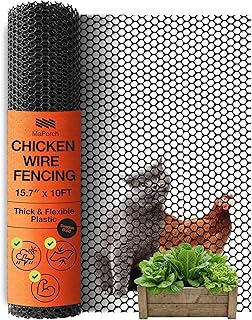
Best for pets and balcony use, this heavy-duty HDPE plastic mesh is UV-resistant and weatherproof, making it a versatile barrier for cats, small dogs, or under-bed blocking. It serves as a discreet garden perimeter or balcony netting without rust or corrosion. A caution: it’s a plastic mesh, so it may not offer the same rigid structure as wire fencing in windy exposed locations.
Stronger Garden Mesh Netting – 10 x 20 ft

Best for multi-use protection, this 10×20 ft PE mesh features ultra-fine weave with 33% shade, providing both pest control and light diffusion. It excels for protecting vegetable patches, fruit trees, and berry bushes while offering some shade. Choose this if you want a versatile netting that doubles as a patio screen or chicken-safe enclosure. A potential drawback is the shade factor, which can slightly reduce photosynthesis in very dense plantings if not placed carefully.
Buying Guide
What should you consider when selecting yard netting?
- Coverage area and shape: Measure beds, ponds, and balconies to determine net size and whether multiple sheets are needed.
- Mesh size: Smaller mesh blocks smaller debris but can limit airflow and light; larger mesh offers better airflow but may allow smaller pests through.
- Material and durability: UV resistance, tear strength, and weather tolerance influence long-term performance.
- Intended use: Gardens, ponds, or pet containment each benefit from different mesh densities and installation methods.
- Ease of installation: Stakes, ties, and pre-formed edges speed up setup, especially for irregular spaces.
Practical Comparison Notes
- Best for large garden beds: Feitore Deer Fence Netting for durable, long-term fencing.
- Best for ponds: Pond Netting with 1/2″ mesh to reduce leaves without blocking water flow.
- Best for patios and balconies: Nanocomposite Mosquito Net for easy shaping and airflow.
- Best pet-friendly option: MaPorch Plastic Chicken Wire for under-bed blocking and balcony use.
- Best versatile option: WenTao Stronger Garden Mesh Netting for multi-use protection with shade.
Frequently Asked Questions
- What mesh size is best for leaves?
A: About 1/2 inch to 3/4 inch mesh is effective for leaves and larger debris while still allowing airflow. - Can these nets protect koi ponds?
A: Yes, finer ponds nets help block leaves and reduce debris, while deterring some wildlife from entering the water. - Are plastic nets durable for outdoor use?
A: High-density polyethylene (HDPE) and UV-resistant plastics offer good durability but may require periodic inspection for wear. - Will nets affect plant growth?
A: Properly sized and positioned nets typically do not hinder growth; ensure adequate light and airflow where needed. - How do I install nets quickly?
A: Use included stakes and zip ties, secure edges to frames, and shape nets to fit irregular areas for tight coverage.