Best Netting to Protect Plants From Birds
Clear, reliable bird netting can protect fruit, vegetables, and ornamental plants without harming wildlife. This guide highlights five top options that balance visibility, durability, and ease of use for American gardeners. Designed for different needs—from small berries to large fruit trees—these nets help reduce bird damage while allowing sunlight and rain to reach plants. The buyer most likely to benefit ranges from home gardeners seeking simple protection to hobby farms needing long-lasting covers.
| Product | Best For | Mesh Size | Notes |
|---|---|---|---|
| Sukh Garden Netting | General garden protection | 0.8 in | Large, cut-to-fit; durable polyethylene |
| LCHUANG Garden Netting (4 Pack) | Vegetables and fruit crops | Unknown (drawstring) | Drawstring design for easy cover |
| Feitore Deer Fence Netting | Deer and bird protection | 3/4 in | Reusable, multipurpose |
| Ruolan Bird Netting | Fruit trees and berries | 0.8 in | DIY-friendly, reusable |
| RIFNY 13×40 Ft Netting | All-season protection | 5/8 in | HDPE, UV-stable, weather resistant |
Note: All products are designed to protect crops from birds and other small animals while maintaining airflow and light penetration. When choosing, consider crop type, coverage area, ease of installation, and whether you prefer a fixed net or a drawstring system for quick adjustments.
Sukh Garden Netting For Garden 13x33ft

Best For: General garden protection for fruit trees, vegetables, and flower beds. Suitable for home gardens needing a single, large piece that can be cut to fit individual plants or wrapped around a fence.
Why selected: The net measures 13×33 feet with a 0.8-inch mesh, balancing sunlight and rain passage with animal protection. It is lightweight yet durable, and you can cut it to size to protect specific plants or form a perimeter fence.
Caution: Large nets can be cumbersome to manage in small spaces; plan your layout before installation to avoid gaps.
LCHUANG Bird Netting Protection – 4 Pack Garden Netting

Best For: Vegetables, berries, and fruit crops with multiple small plants. The drawstring design makes it easy to deploy over individual plants or groups of plants.
Why selected: The set includes a drawstring system for quick tensioning, helping protect crops from birds, insects, and other pests. Its lightweight PE material minimizes plant pressure and reduces risk of growth retardation.
Caution: The product description notes the net is lightweight; ensure secure anchoring in windy locations to prevent dislodgement.
Feitore Deer Fence Netting 7×100 Feet

Best For: Larger gardens or orchard gaps where deer, birds, and other animals threaten long stretches of plants. Ideal for extending protection without frequent re-installation.
Why selected: This netting is rugged, reusable, and suitable for preventing a range of animals from accessing crops. Its 3/4-inch square mesh provides robust protection while allowing air and light to reach plants.
Caution: The mesh size can limit airflow slightly for dense plant canopies; plan spacing and overlap to avoid microclimates that encourage disease.
Ruolan Bird Netting For Garden 13x20Ft
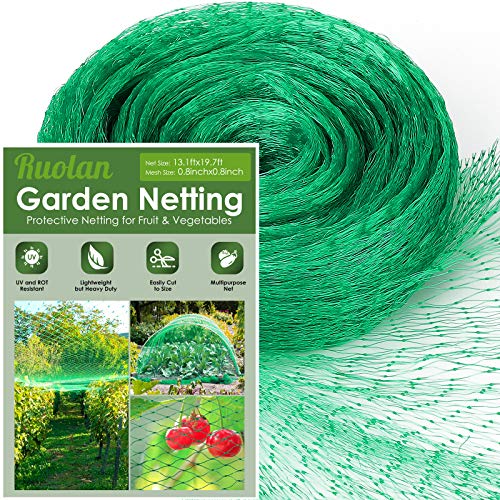
Best For: Flexible use around fruit trees, berry bushes, and vegetable beds. Suitable for hobby gardens that need a DIY-friendly, reusable option.
Why selected: The netting is reusable and easy to customize, with a fabric-like polypropylene mesh that can be fixed with stakes or columns. It provides reliable coverage while remaining easy to remove and store.
Caution: Ensure the net sits securely to prevent birds from pecking through gaps; if the mesh is stretched too tight, it may wear at attachment points.
RIFNY Bird Netting 13×40 Ft Heavy Duty

Best For: All-season protection for larger gardens or multiple plant categories, including vegetables and fruit trees.
Why selected: Uses high-density polyethylene (HDPE) with UV resistance for longevity in varied weather conditions. Its 5/8-inch mesh is designed to deter both small birds and larger pests without hindering plant growth.
Caution: Some users may prefer slightly finer mesh for very small insects; choose this netting if bird exclusion is the primary goal and minor pest access is acceptable.
Buying Guide
- Mesh size and plant type: Smaller mesh blocks smaller pests but can reduce airflow; larger mesh improves airflow but may allow smaller insects through. Match mesh size to the pest pressure and crop type.
- Material and durability: PE and HDPE are common for weather resistance and reusability. Consider UV stability for sun-exposed areas and flexibility in cold climates.
- Installation method: Drawstring nets offer quick coverage of individual plants; single-piece nets are ideal for perimeters; consider how you will anchor or weigh the net to keep it in place during winds.
- Size and coverage: Measure your planting area and plan overlaps to prevent gaps. Larger nets can cover more area but may be harder to manage in tight spaces.
- Reusability and storage: Reusable nets save money over time; look for nets that resist tearing and are easy to clean and store.
- Multi-use flexibility: Some nets double as insect barriers or garden row covers. If you need protection from a broader range of pests, consider multipurpose options.
FAQ
- Will bird netting harm birds? No. Netting is designed to deter birds from crops without harming them. Ensure openings are large enough for airflow but small enough to prevent access to the plants.
- How do I install bird netting quickly? Use drawstring nets for individual plants or place a larger sheet over a bed and secure edges with stakes or clips. Overlap edges to seal gaps.
- Can these nets affect plant growth? Netting should allow light, air, and water through. Choose mesh size that balances pest exclusion with plant needs for photosynthesis and pollination.
- Are these nets reusable? Yes. Most nets are designed for multiple seasons with proper care, storage, and maintenance against tears and fraying.
- What’s the best netting for fruit trees? Look for longer rolls or larger pieces with easy installation around trunks and branches. Deeper coverage helps protect higher-growing crops.
- How do I prevent wind damage? Secure nets firmly and avoid large openings that catch wind. Use clips, ties, or landscape staples to maintain position.