Best Oak Trees to Plant for Shade, Color, and Longevity
Answering the question “which oak trees should I plant?” this guide highlights five oak options that are reliable, adaptable, and well-suited for typical American landscapes. These selections emphasize fast establishment, striking fall color, wildlife value, and long-term resilience. Ideal buyers include homeowners creating shade for yards, new landscapers building screens along property lines, and anyone wanting durable trees that endure varied climates. Below is a quick reference table of the featured oaks to help compare at a glance.
| Product | Best For | Key Strength |
|---|---|---|
| 3 White Oak Trees for Planting – Quercus alba | Large yards, long-lived shade | Beautiful fall color; multiple saplings |
| 3 Pack Red Oak Trees (Quercus rubra) | Privacy borders, driveways, small groves | Vibrant red fall foliage; fast growth |
| Northern Red Oak Tree | Moderate lawns, wildlife yards | Deciduous canopy with strong structure |
| Pin Oak Tree | Open spaces, wind-prone sites | Fast growth; adaptable to zones 4–8 |
| 3 Bur Oak Tree Live Plants | Large landscapes, mixed woodlands | Massive canopy; extremely hardy |
3 White Oak Trees for Planting
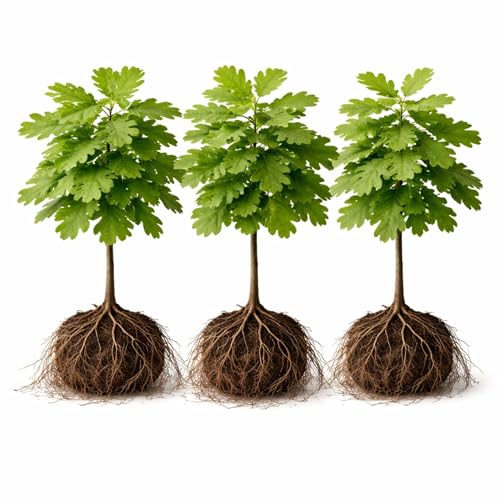
Best for: yards requiring long-lasting shade and dramatic autumn color. These three saplings establish into a stately white oak canopy, delivering substantial growth over time. The trio helps create a mature look faster than a single-tree approach and is suited for large lawns or park-like landscapes.
Why selected: Quercus alba is known for strong wood, reliable growth, and memorable fall foliage. The package includes three healthy saplings, increasing the chance of successful establishment in diverse soils.
Limitation: Trees ship dormant; planting timing should align with local frost-free windows to maximize rooting success.
3 Pack Red Oak Trees (Quercus rubra)

Best for: creating immediate privacy lines or decorative borders along driveways and property edges. The three-pack assembly offers a cohesive planting scheme to establish a small grove or visual barrier.
Why selected: Red oaks provide robust growth and vibrant red fall color that stands out in curb appeal. The set is designed for versatile planting projects and zone coverage (3–10).
Limitation: Growth pace may vary with soil quality and moisture; select locations with consistent irrigation during establishment.
Northern Red Oak Tree

Best for: landscapes that need a tall, majestic deciduous canopy with strong structure and wildlife value. This 5-gallon root-ready tree is suited for medium to large yards with well-drained soil.
Why selected: Northern Red Oak offers robust growth, drought tolerance after establishment, and broad leaf display with a traditional oak silhouette.
Limitation: Agricultural shipping restrictions note limited availability for certain states; plan planting to accommodate local regulations and seasonal timing.
Pin Oak Tree

Best for: open spaces and areas needing a fast-growing hardwood with strong wind tolerance. Pin Oak is a solid choice for property borders or a quick shade screen.
Why selected: This oak thrives in zones 4–8 with full sun, offering rapid canopy development and a classic oak profile.
Limitation: Leaves fall in winter alongside seasonal leaf drop, so plan for seasonal cleanup and ground cover under the canopy.
3 Bur Oak Tree Live Plants

Best for: large landscapes and wildlife-friendly settings where a broad canopy and drought tolerance are valued. Bur Oak adapts to various soils and climates once established.
Why selected: Bur Oak is a native option with exceptional hardiness (zones 3–8) and an extensive canopy that supports shade, wildlife, and long-term landscape value.
Limitation: May require more space due to its expansive mature spread; ensure planting site can accommodate eventual width and root growth.
Buying Guide
What should I consider before planting an oak tree?
- Site and space: Ensure adequate room for the eventual canopy and root spread. Bur Oak and White Oak can reach wide canopies; Pin Oak and Red Oak varieties also require thoughtful spacing.
- Soil and drainage: Most oaks prefer well-drained soil. Some tolerate clay or slightly acidic to neutral pH; check your local soil conditions before selection.
- Climate and zones: Match the oak’s hardiness zone to your location. Some varieties are more tolerant of drought or cold than others.
- Watering during establishment: New oak saplings typically need regular moisture during the first growing season. Plan irrigation accordingly.
- Maintenance: Consider leaf litter, pruning needs, and potential splitting or storm damage in high-wind areas.
Which oak is best for my goals?
- Best for rapid, broad shade: Bur Oak or White Oak depending on space.
- Best for fall color and curb appeal: Red Oak varieties offer striking red foliage in autumn.
- Best for establishing a privacy screen or border quickly: Pin Oak or Red Oak 3-Pack.
Planting and care tips
- Plant in a shallow, wide hole that allows root growth without girdling the trunk.
- Mulch lightly to conserve moisture but keep mulch away from the trunk base.
- Water deeply during dry spells, especially in the first growing season.
- Monitor for signs of pests or disease and consult local guidelines if issues arise.
FAQ
- Q: When is the best time to plant an oak sapling? A: Plant during the cooler planting season in your region, typically spring after the last frost or fall before the first frost, to help establish roots before extreme temperatures.
- Q: Do oaks require heavy pruning? A: Minimal pruning is usually sufficient. Prune to remove dead wood or to shape the crown after the tree is established.
- Q: Are oaks good for wildlife? A: Yes. Oaks provide food and habitat for birds and mammals; acorns are a key wildlife resource in many ecosystems.
- Q: Can I plant multiple oaks close together? A: Plant spacing depends on the mature canopy width. Allow room for each tree to reach its full spread to prevent crowding.
- Q: Do these trees ship with root systems ready to plant? A: Many listings indicate saplings or live plants prepared for planting, with specific instructions included in the product detail.
- Q: Are there shipping restrictions for certain states? A: Some varieties may have state-specific shipping limitations due to agricultural regulations; verify state restrictions before purchase.