Best Oil Based Semi Transparent Deck Stain for Lasting Outdoor Finish
Oil-based semi-transparent deck stains provide durable protection while letting natural wood grain show through. This guide reviews five top oil-based, semi-transparent options, focusing on performance, application, and maintenance for American decks, fences, and siding. The products below balance color, longevity, and ease of use across common outdoor environments. A quick summary table at the top helps you compare essentials at a glance.
| Product | Brand | Notable Benefit |
|---|---|---|
| Cabot Redwood Semi-Transparent Stain + Sealer | Cabot | Long-lasting color with moisture and UV resistance |
| DeckWise Ipe Oil Plus Hardwood Deck | DeckWise | Enhanced UV protection; feeds hardwoods |
| Armstrong-Clark Rustic Brown Semi-Transparent | Armstrong-Clark | Traditional oil stain with rejuvenation properties |
| Flood Easy Seal Natural Cedar Semi-Transparent Finish | Flood | One-coat application with deep Penetration |
| Armstrong-Clark Natural Oak Semi-Transparent | Armstrong-Clark | Classic oil-stain look with durable protection |
Cabot Redwood Semi-Transparent Stain + Sealer

Cabot’s oil-based semi-transparent stain and sealer blends color with protection, designed to highlight the wood grain while delivering durable color. The product acts as both a stain and a sealer, penetrating into wood pores to extend life and reduce moisture uptake. It aims to resist UV fading and moisture intrusion, helping maintain a natural look for decks, fences, and siding. With a one-coat application, it is marketed to speed up projects while reducing brush marks and streaks. Ideal for exterior softwoods and hardwoods where grain visibility matters, this stain emphasizes traditional oil-based performance with a focus on longevity.
In terms of usage in the United States, Cabot’s formula aligns with common oil-based deck stains that emphasize deep penetration, pigment stability, and color retention. Homeowners should prepare properly—clean, dry surfaces and thorough brushing along boards—to achieve even color. Drying times vary with weather, and longer cure periods can improve final hardness and UV resilience. While VOC content is typically higher than water-based options, Cabot’s coverage and longevity can offset the need for frequent reapplication in sun-baked regions.
DeckWise Ipe Oil Plus Semi-Transparent

DeckWise Ipe Oil Plus is designed for hardwoods with a semi-transparent finish that preserves grain while adding color. The product notes a VOC limit of 250 g/L and includes enhanced UV protection to extend outdoor life. It’s formulated to feed and nurture hardwoods through natural oils, supporting durability against sun and moisture. California shipping restrictions are mentioned for certain formulations, so buyers in restricted areas should verify availability. This option appeals to exterior projects where hardwoods demand deeper nourishment and a resilient, long-lasting finish even in sun-drenched climates.
For American DIYers, DeckWise Ipe Oil Plus may require careful surface preparation—clean, dry, and free of debris—to maximize penetration. When applying, follow recommended temperatures and avoid staining on wet or overly humid days. Cleanup typically uses standard solvents if oil-based formulations are used. While strong in performance, the product’s higher VOC level and regional shipping limitations may influence selection depending on local regulations and project scope.
Armstrong-Clark Rustic Brown Semi-Transparent
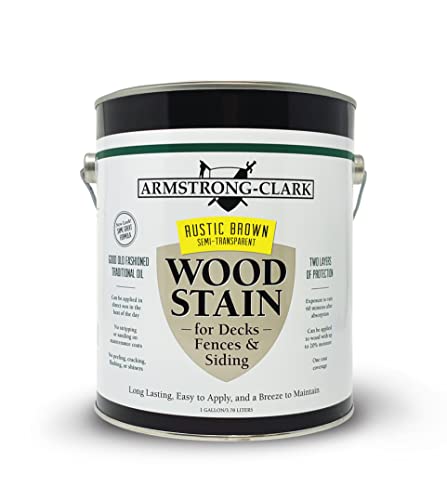
Armstrong-Clark Rustic Brown is an exterior oil stain formulated to condition and rejuvenate wood without water-based additives. The semi-transparent finish provides color while allowing wood grain to show, with a focus on long-term protection against the elements. The product emphasizes traditional oil-based performance and is reported as highly regarded by wood restoration professionals for durability and ease of maintenance. It suits decks and fences exposed to sun, rain, and seasonal changes, needing a consistent recoat interval to maintain color depth and protective bark.
Users should prepare surfaces by cleaning and sanding, then apply evenly with brush or roller, allowing appropriate drying time between coats if a second application is desired. Oil-based formulas tend to require odor management and ventilation during application, as well as safe handling and storage of rags to prevent spontaneous combustion. The Rustic Brown shade provides a warm, classic wood tone that complements natural surroundings and exterior architecture.
Flood Easy Seal Natural Cedar
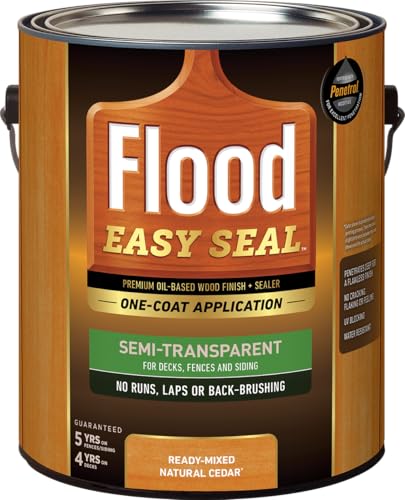
Flood Easy Seal Natural Cedar provides a premium oil-based finish with a one-coat application. It is fortified with PENETROL to enhance deep penetration, achieving a smooth, uniform appearance with minimal runs or laps. The finish is designed to seal wood against moisture while preserving the natural Cedar look. It is suitable for decks, fences, and exterior wood surfaces where a straightforward, durable solution is desired. The product targets professionals and DIYers seeking strong protection and a simple workflow, particularly in moderate climates with variable weather patterns.
As with other oil-based finishes, surface preparation is critical for best results—clean, dry, and free of old finishes. Temperature and humidity influence cure times, so staining during optimal conditions yields a faster, more durable result. Cleanup typically requires mineral spirits or appropriate solvents, depending on local regulations and project constraints. The Easy Seal approach emphasizes quick turnarounds while delivering robust weather resistance.
Armstrong-Clark Natural Oak Semi-Transparent
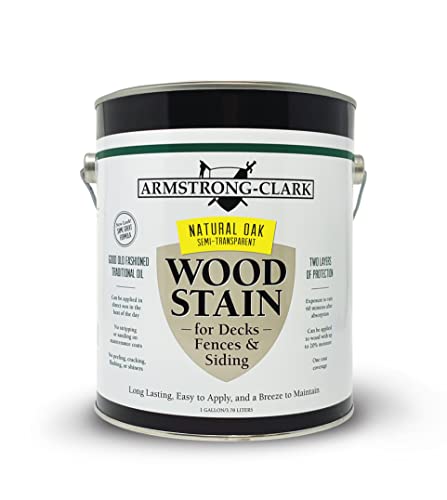
Armstrong-Clark Natural Oak Semi-Transparent offers a traditional exterior oil stain without water-based additives. It conditions and rejuvenates wood while resisting peeling and cracking, providing enduring color and protection. The formula is well-regarded by professionals for reliable performance on decks and other exterior wood surfaces. It’s suitable for a range of woods and climates, requiring appropriate prep and recoat timing to maintain color integrity and protection in sun, rain, and seasonal shifts. The Natural Oak tone provides a classic, versatile look for homes with varied architectural styles.
Buying Guide
Choosing an oil-based semi-transparent deck stain involves balancing wood type, climate, and maintenance goals. Oil-based formulas penetrate deeply to seal and protect but often come with higher VOCs and stronger odors. Semi-transparent stains add color while preserving grain, offering a natural or warm look rather than an opaque film. Consider the following factors to select the best option for your project and region.
- Wood type and condition: Softwoods like cedar and pine respond differently than hardwoods. Plan for thorough cleaning, sanding, and proper surface prep to maximize adhesion and color uniformity.
- Oil-based vs water-based trade-offs: Oil-based stains deliver durable moisture resistance and longer life but may require longer drying times and stronger solvents for cleanup; water-based options dry quickly and clean with soap and water but often need more frequent reapplications.
- Color and opacity: Semi-transparent finishes emphasize grain while adding color. Choose a shade that complements your home exterior and surroundings; deeper tones hide less grain but provide more concealment of imperfections.
- UV and moisture protection: Look for pigments, UV blockers, and moisture resistance to extend deck life. Some formulas use specialized additives to reduce fading and graying over time.
- Application and coverage: Review per-gallon coverage, recommended application tools, and whether sprayers are suitable. Plan for recoat timing, weather windows, and surface prep needs.
- VOC and environmental considerations: Higher VOC levels may affect odor and air quality during application. Check local regulations and choose compliant products if possible.
- Maintenance and recoat schedule: Oil-based finishes typically require reapplication every 2–5 years depending on exposure, wear, and color. Regular inspection helps catch wear early and prevent wood damage.
- Safety and handling: Use protective gear, ensure proper ventilation, and follow safety guidelines for storage and disposal of solvents and rags to prevent hazards.
- Budget and availability: Premium pigments and oils may cost more upfront but can offer longer protection and fewer recoats over time, improving long-term value.