Best Organic Fungicide for Lawns: Safe Solutions to Protect Green, Healthy Turf
Answering the search intent for organic lawn care, these selections focus on kid- and pet-safe fungicide options that effectively defend against common lawn diseases like brown patch, dollar spot, and powdery mildew. The listed products are suited for homeowners seeking organic or low-toxicity options that can be applied with ease and without harsh residues when used as directed. This guide highlights five top choices, explains who they’re best for, and compares ease of use, coverage, and disease targets.
Summary at-a-glance: the following five products are featured for their organic or low-chemical approach, convenience, and broad disease coverage. Use the table to compare target diseases, application style, and coverage considerations before purchasing.
| Product | Best For | Coverage | Application Style | |
|---|---|---|---|---|
| ARBER Organic Lawn Fungicide – 16oz | Small to medium lawns; ornamental beds | Up to 16,000 sq ft | Ready-to-spray hose-end | Bio-fungicide with Bacillus amyloliquefaciens |
| Scotts DiseaseEx Lawn Fungicide | All-season prevention on all grass types | Up to 5,000 sq ft | Ready-to-use spray | Broad disease control, quick action |
| BioAdvanced Fungus Control for Lawns | Hose-end convenience; larger yards | Up to 5,000 sq ft | Ready-to-spray hose-end | Controls multiple listed diseases |
| Organic Fungicide for Plants – ARBER | Homes with mixed landscapes (plants, lawns, containers) | Varies; concentrates | Liquid concentrate | Plant-derived actives; supports soil microbiome |
| Earth’s Ally Disease Control Concentrate | Safe, natural approach for diverse plantings | Concentrate for multiple applications | Concentrate spray | Citric-acid-based, safe for people and pets |
ARBER Organic Lawn Fungicide – 16oz Hose-End

Best for: Lawns and ornamentals that need a fast-acting, easy-to-use organic option. This 16-ounce hose-end bottle treats up to 16,000 sq ft, making it well suited for medium to large yards. The product uses Bacillus amyloliquefaciens to form a protective barrier on blades and roots, defending turf while supporting soil microbiology. It’s gentle on turf when used as directed and minimizes harsh residues.
Why selected: It combines true hose-end convenience with an organic bio-fungicide approach, reducing stress on grass while targeting common diseases such as brown patch, dollar spot, rust, powdery mildew, leaf spot, and root rot. Spray after rain and during humid periods to disrupt disease cycles and protect new growth.
Caution: Follow label directions to avoid overspray on non-target plants, and avoid irrigation or mowing immediately after application unless specified.
Scotts DiseaseEx Lawn Fungicide
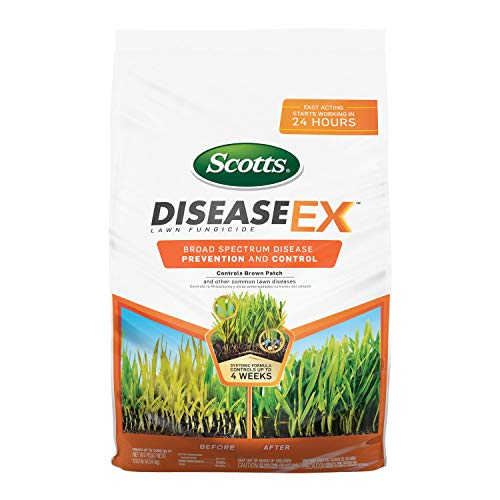
Best for: Homeowners seeking broad-spectrum disease prevention with quick action. This product targets 26 listed diseases, including brown patch, pythium blight, rust, powdery mildew, and more, making it a versatile choice for mixed turf types. It starts working within 24 hours and provides up to four weeks of protection when applied as directed.
Why selected: The breadth of disease coverage and rapid response time make it a solid all-season option. Its suitability across grass types adds flexibility for diverse lawns and seasonal challenges.
Caution: Ensure the product is used as directed to avoid stressing sensitive grasses and to prevent potential surface staining on ornamentals adjacent to lawns.
BioAdvanced Fungus Control for Lawns

Best for: Users wanting a ready-to-spray option that covers up to 5,000 sq ft and protects for about a month. It works on all lawn types and is simple to connect to a garden hose for straightforward application, making it ideal for busy households.
Why selected: It provides broad control of listed diseases such as red thread, brown patch, dollar spot, rust, and others, with convenient refillable packaging and consistent month-long protection when used correctly.
Caution: Follow the label for lawn-only use and avoid applying on ornamental plants or edible crops unless specified.
Organic Fungicide for Plants – ARBER

Best for: Gardens and mixed landscapes where an all-natural, plant-based approach is preferred. This concentrate treats powdery mildew, leaf spot, root rot, and lawn diseases, making it versatile for lawns, containers, and landscape beds. It is derived from plant actives to create a protective barrier while supporting soil microbiology.
Why selected: Its organic formulation and easy dilution make it adaptable for recurring treatments, including after humid periods or during rapid growth. It is suitable for greenspaces, patios, and balconies alike when used as directed.
Caution: Concentrates require proper dilution and timing; avoid over-application and follow safety instructions for skin contact and inhalation risks.
Earth’s Ally Disease Control Concentrate

Best for: Gardeners seeking a natural, citric-acid-based fungicide for plant health across diverse species, including lawns, flowers, fruit trees, and vegetables. The concentrate format supports multiple applications and a flexible coverage plan.
Why selected: The product prioritizes safety for people, pets, and the environment while delivering disease control for powdery mildew, blight, black spot, and leaf spot. Its natural formulation appeals to households preferring fewer chemical residues.
Caution: Concentrate handling requires adherence to dilution instructions and proper storage away from children and pets when not in use.
Buying Guide: Key Purchase Considerations
What should you look for when choosing an organic lawn fungicide?
- Active ingredient and mode of action: Bio-fungicides vs. plant-derived actives; consider whether you prefer microbial suppression or botanical compounds.
- Disease coverage: Match products to the diseases common in your region and lawn type (cool-season vs. warm-season grasses).
- Application method: Hose-end sprayers offer convenience, while concentrates require mixing but can be economical for large spaces.
- Safety and compatibility: Check labels for pet and child safety, contact time, and whether the product is safe for ornamentals near lawns.
- Coverage and frequency: Evaluate square footage coverage and how often applications are needed to maintain protection.
- Seasonal timing: Some products are best applied after rain or during humid periods to break disease cycles.
Frequently Asked Questions
- What is an organic fungicide for lawns best used for? — It targets common lawn diseases with reduced synthetic chemical content, suitable for households prioritizing environmental safety.
- Can organic fungicides replace conventional products? — They can supplement or substitute in many cases, but some lawns may require stronger treatments depending on disease severity and climate.
- Are hose-end fungicides easier to apply? — Yes, they offer quick, ready-to-use application without mixing, ideal for busy homeowners.
- How often should I apply fungicides to lawns? — Follow label directions; many products suggest applications every 2–4 weeks during active disease periods, with breaks for rain and mowing schedules.
- Are these products safe for kids and pets? — Most options in this list are formulated with safety in mind, but always follow label directions and avoid applying when children or pets are present in the treated area.
- Will these products harm my ornamentals? — Some products are labeled for lawn use only; others may be safe for adjacent ornamentals when used as directed. Always read the product label for plant compatibility.