Best Organic and General Hydroponic Nutrient Solutions for Indoor Gardens
Answering the question “Which organic nutrient solution is best for hydroponics?” this guide highlights five reliable products suited for different grower needs. It covers organic options and robust hydroponic blends that support vegetative growth, flowering, and healthy roots. The top picks vary from organic-focused formulas to versatile base nutrients that work in deep water culture, drip systems, and coco coir. Ideal buyers range from hobbyists building a small home hydroponic setup to experienced growers seeking steady, repeatable feeding schedules.
| Product | Best For | Why It Stands Out |
|---|---|---|
| MARPHYL All-Purpose Plant Food | Organic enthusiasts, hydroponic and soil growers | Organic, nutrient-rich, soil enhancer with balanced macro/micronutrients |
| Nature’s Way Soil Organic Hydroponic Nutrients | Cost-conscious growers, mixed systems | Organic concentrate with worm castings and fermented duckweed |
| H Humboldts Secret Base A & B | All-purpose hydroponics, consistent feeding | Complete two-part system with full-spectrum nutrients |
| Hapxalie Hydroponic Nutrients | All-in-one convenient solution | 1000ml complete A & B with universal compatibility |
| HiThrive 32oz Liquid Plant Food | Aeroponics and hydroponics with high feedings | 4-3-6 NPK with micronutrients for quick, consistent growth |
HiThrive Organic Liquid Plant Food for Hydroponics

Best for: Hydroponic systems in need of a rapid feeding boost. This 32 oz bottle supports up to 96 feedings with a 4-3-6 NPK ratio and essential micronutrients, making it suitable for frequent top-offs in aeroponics or deep water culture. The formula feeds instantly upon application, helping plants reach harvest-ready health quickly.
Why selected: It provides a balanced macro and micronutrient mix designed for hydroponics, emphasizing consistent growth across feedings. The high feed count makes it economical for larger setups or frequent replenishment schedules.
Caution: Ensure reservoir mixing is thorough to avoid localized concentration spikes and monitor for any signs of nutrient burn in sensitive strains.
MARPHYL All-Purpose Plant Food (Organic)

Best for: Organic growers seeking nutrient-rich support for indoor and hydroponic setups. This organic nutrient-rich fertilizer is designed to improve soil quality while promoting healthy roots, vibrant foliage, and abundant blooms.
Why selected: MARPHYL combines macro- and micronutrients with an organic focus, supporting balanced growth and compatibility with various growing media, including hydroponics. It’s suitable for a wide range of indoor plants and garden crops.
Limitation: Organic blends may work more slowly than synthetic formulas; expect gradual uptake and longer preparation time for peak results.
Nature’s Way Soil Organic Hydroponic Nutrients
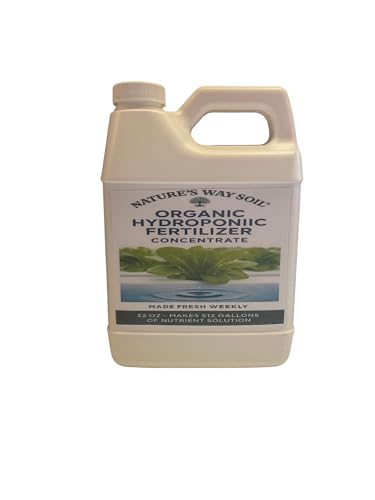
Best for: Value-conscious growers using mixed media or hydroponic systems who want liquid organic feedings. This concentrate feeds up to 64 gallons per bottle at a low cost per gallon.
Why selected: It includes worm castings and fermented duckweed to promote nutrient efficiency with living biology, aligning with organic gardening principles and hydroponic flexibility.
Limitation: Not all nutrient exactly matches every hydroponic recipe; monitor plant response and adjust as needed for specific crops or growth stages.
H Humboldts Secret Base A & B

Best for: Growers seeking a simple two-part, complete nutrient system compatible with many setups. It supports steady vegetative growth and flowering in hydroponics, coco, or soil-based environments.
Why selected: The Base A & B two-part approach is widely used and trusted for reliable nutrient delivery, with a straightforward mix ratio that reduces guesswork during feeding.
Limitation: Packaging transitions may change labeling; confirm you have the current Base A and B blend before use.
Hapxalie Hydroponic Nutrients

Best for: Indoor and outdoor use with universal compatibility. Provides a complete A & B nutrient system designed for steady growth across vegetables, fruits, and flowers.
Why selected: The product emphasizes easy application with a dispensing cup and precise mixing, reducing measurement errors and enabling consistent feeding across systems.
Limitation: As a universal solution, it may require adjustments for crops with specialized nutrient needs or highly alkaline media.
VIVOSUN Liquid Nutrients Base A & B (8oz)

Best for: Growers needing a concise, two-part nutrient system for vegetative growth and flowering. Great for beginners and seasoned gardeners alike.
Why selected: This bundle provides a complete macro/micronutrient mix with pH stabilization, designed to integrate smoothly into routine watering schedules.
Limitation: The 8 oz size may require more frequent replenishment for larger systems; plan accordingly for reservoir volume and feeding schedule.
Buying Guide: What to Consider When Picking an Organic or General Hydroponic Nutrient Solution
- System compatibility: Choose nutrients that match your growing medium (DWC, NFT, drip, coco, soil-to-hydro transfers).
- Organic versus synthetic: Organic blends support soil biology and sustainability but may act slower; synthetic-based nutrients often provide faster, predictable responses. Decide based on your goals and plant types.
- NPK balance and micronutrients: Look for a balanced ratio and access to essential micronutrients like calcium, magnesium, iron, and trace elements to prevent deficiencies.
- Two-part versus one-part: Two-part systems (A & B) offer flexibility and precise control; single-part formulas are simpler but may require careful reading of usage guidelines.
- Ease of use: Consider dispensing tools, mixing instructions, and whether the product includes pH stabilization or buffering elements.
- Cost per feeding: Calculate the total feedings per bottle and compare the cost per feeding to determine long-term value.
- Safety and compatibility: Check for warnings about recommended water types, reservoir temperatures, and any crop-specific cautions.
FAQ
- What is the difference between organic and non-organic hydroponic nutrients?
– Organic nutrients rely on natural sources and microbial activity, often supporting soil ecosystems, while non-organic nutrients provide precise, readily available minerals for rapid growth. - Can I mix different brands of hydroponic nutrients?
– It’s generally discouraged to mix brands due to different formulation bases. If mixing is necessary, test a small reservoir first and monitor plant response. - Which nutrient should I start with for a hydroponic seedling?
– Start with a mild base nutrient designed for early growth and follow label directions to avoid nutrient burn. - How do I know if my hydroponic plants need a nutrient adjustment?
– Look for signs like pale leaves, slow growth, or abnormal coloration. Measure reservoir pH and electrical conductivity (EC) to guide adjustments. - Are organic nutrients suitable for all hydroponic systems?
– They work well in many setups, but some hydroponic systems favor synthetic formulations for precise control and faster responses. - What is the best practice for feeding frequency?
– Follow product-specific schedules, usually linked to plant stage (vegetative vs. flowering) and reservoir volume. Avoid overfeeding by monitoring plant cues.