Best Organic Rose Food Fertilizer Options for Beautiful Blooms
Direct answer: For organic rose care, choose a balanced, OMRI-listed fertilizer that supports vigorous growth and abundant blooms. This guide features five proven options suited to different garden needs—from convenient water-soluble formulas to ready-to-use granular blends. Ideal buyers include organic gardeners, container gardeners, and those seeking plant-safe solutions for family-friendly yards. Below, compare each product’s strength, best use, and any limitations.
| Product | NPK / Type | Best For | Notes |
|---|---|---|---|
| Jobe’s Organics Granular Rose Fertilizer (4 lb) | 3-4-3, Organic Granules | Season-long feeding for roses and flowering shrubs | OMRI listed, low runoff |
| Espoma Organic Rose-Tone (4 lb bag, pack of 2) | 4-3-2, Organic | All types of roses and flowering plants | Bio-tone enriched, no mixing |
| Dr. Earth Total Advantage Rose & Flower Fertilizer (4 lb) | Balanced organic blend (no synthetic) | Healthy soil and vibrant blooms | Non-GMO, pet-safe |
| Miracle-Gro Water Soluble Rose Plant Food (1.5 lb) | Water-soluble, easy-to-use | Quick feeding for roses, frequent apply | Instant feeding, compatible with regular irrigation |
| Down To Earth All Natural Fertilizers Organic Rose & Flower Mix (4-8-4, 5 lb) | 4-8-4, Organic | Vibrant blooms and robust roots | OMRI listed, no synthetics |
Jobe’s Organics Granular Rose Fertilizer (4 lb)

Product overview: A granular organic fertilizer formulated with a 3-4-3 NPK to feed roses and other flowering shrubs. It is designed to minimize runoff and odor while delivering steady nutrients for abundant blooms and vibrant foliage. OMRI-listed and free of synthetic chemicals. The 4 lb bag is suitable for small to mid-size rose beds, while the 16 lb option provides a larger feeding supply for bigger gardens.
Who it’s best for: Organic gardeners seeking a ready-to-use granular option that integrates easily into existing soil without manual mixing. Choose this if you want long-lasting feed with minimal handling and clear organic labeling.
Limitations: Granular formulations may require thorough watering after application to activate nutrients. Suitable for outdoor use; avoid applying during heavy rainfall to prevent potential runoff.
Espoma Organic Rose-Tone 4-3-2
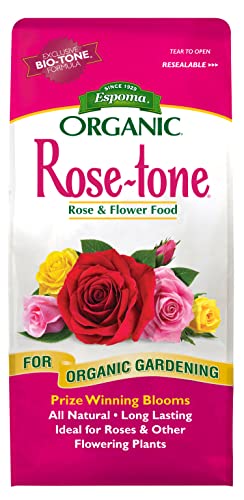
Product overview: A ready-to-use organic fertilizer designed for all types of roses and flowering plants. The blend includes a 4-3-2 analysis with 5% calcium and Bio-tone beneficial microbes. It’s formulated to be environmentally safer with no sludges or toxic ingredients and is ready to apply monthly through the growing season.
Who it’s best for: Gardeners who want a simple, no-muss feeding routine with added soil biology benefits. Ideal for roses in diverse climates and for those who prefer not to mix over time.
Limitations: Monthly feeding schedule may require consistent reminders; not a quick-release product for immediate boosts between bloom cycles.
Dr. Earth Total Advantage Rose & Flower Fertilizer (4 lb)
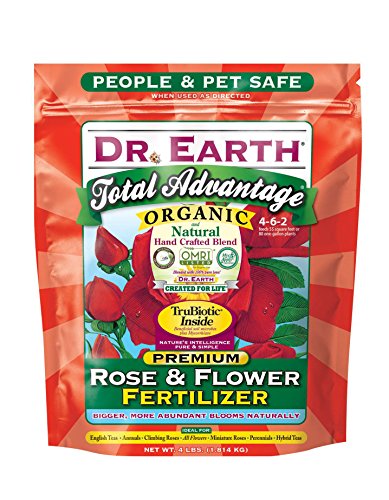
Product overview: The only Non-GMO Project Verified fertilizer listed here, featuring a plant-safe formula with no synthetic chemicals or animal byproducts. Crafted from human and feed-grade ingredients, enriched with multi-minerals, proteins, carbs, humic acids, and trace elements to support soil health and robust flowering.
Who it’s best for: Gardeners prioritizing non-GMO, pet-friendly, and health-conscious soil stewardship. This option suits organic practices that emphasize soil biology and long-term plant vigor.
Limitations: As with many organic blends, results may vary with soil condition; slow-release nutrients mean visible effects may take time compared with quick-release options.
Miracle-Gro Water Soluble Rose Plant Food (1.5 lb)

Product overview: A water-soluble formula designed for quick feeding of roses. It begins to feed instantly and is recommended for regular applications every 7 to 14 days to encourage larger blooms and healthier foliage.
Who it’s best for: Gardeners who want a fast-acting feeding option that can be integrated with irrigation or hand-watering routines. Suitable for those prioritizing rapid color and growth responses.
Limitations: This product is a synthetic-style option within a familiar brand; not an OMRI-listed organic fertilizer. Best used as a supplement to organic soil management for best results in an all-organic garden.
Down To Earth Organic Rose & Flower Mix (4-8-4, 5 lb)

Product overview: An organic mix with a higher phosphorus content (4-8-4) to promote flowering and robust root development. It is OMRI-listed and free from synthetic chemicals, making it suitable for certified organic gardens and culinary herb beds adjacent to ornamentals.
Who it’s best for: Gardeners seeking a balanced, soil-building fertilizer that prioritizes bloom production while supporting root health. Particularly effective for roses, bulbs, and other ornamentals that require strong flowering signals.
Limitations: Higher phosphorus means longer-term soil conditioning; those needing immediate green-up may benefit from combining with a supplemental nitrogen source during peak bloom periods.
Buying Guide: How to Choose Organic Rose Fertilizers
- Organic certification and safety: Look for OMRI listed or equivalent certifications to ensure suitability for organic gardens and safe for pets and children when used as directed.
- Fertilizer type: Granular blends provide slow release and long-term feeding; water-soluble formulas offer quick results but may require more frequent applications.
- NPK balance: For roses, a balanced or slightly higher phosphorus and potassium blend supports blooms and root health without excessive leaf growth. Typical options include 4-3-2 or 3-4-3 blends.
- Soil health emphasis: Some formulas add soil biology boosters (Bio-tone, humic acids, microbes) that improve nutrient cycling and root development. Consider these for nutrient-rich, long-term soil improvements.
- Application timing: Most roses benefit from feeding through the growing season. Follow label directions for frequency and seasonal windows to maximize bloom cycles.
- Container vs. in-ground: Container roses often require more frequent feeding and lighter formulations to avoid salt buildup. Select products specifically labeled for containers if applicable.
- Safety notes: Some blends contain higher calcium or other minerals; ensure compatibility with your plant mix, especially if you have calcareous or acidic soils.
Frequently Asked Questions
What is the best organic fertilizer for roses?
Any OMRI-listed rose-focused fertilizer that matches your garden size and application style (granular or water-soluble) can be effective. Consider balancing bloom promotion with soil health benefits.
Should I fertilize roses in containers differently?
Yes. Container roses often require more frequent feeding in smaller volumes of soil and should use lighter, water-soluble formulas to prevent salt buildup.
Can I mix fertilizers?
Consider sticking to one primary fertilizer to maintain a consistent nutrient balance. If mixing, follow label guidance and avoid doubling up on salts or nutrients.
How often should I feed roses outdoors?
Most organic rose fertilizers are applied monthly through the growing season. Water in after application to help nutrients reach the roots.
Do organic fertilizers improve soil over time?
Yes. Organic blends enrich soil biology, support microbial life, and improve nutrient cycling, contributing to healthier roots and longer-lived plants.