Best Organic Starter Fertilizer for Grass: A Practical Guide for Lush Lawns
Answering the common question “which organic starter fertilizer is best for grass?” this guide spotlights five top products designed to support new turf growth while prioritizing organic ingredients. The best options are suited for new lawns, overseeding projects, bare spots, or sod installations. Each product is evaluated for nutrient balance, release type, and suitability for different grass types. The table below provides a quick snapshot of the key choices. This guide targets homeowners and landscapers seeking organic, seed-to-sod friendly starters that help establish durable, green lawns without synthetic guarantees.
| Product | Best For | Key Benefit | Notes |
|---|---|---|---|
| Turf-Tone Lawn Starter (Espoma) | New seedings and sodding | Long-lasting nitrogen with Bio-Tone microbial formula | 4-6-3 analysis; use with drop or broadcast spreader |
| Scotts Turf Builder Starter Fertilizer (New Grass) | Planting seed and new lawns | Guaranteed formula for seed establishment | Safe for all grass types; 24-25-4 NPK |
| GreenView Starter Fertilizer | Seeding bare spots and new lawn | Phosphorus focus for rapid root growth | Slow-release, no micro-plastic coatings |
| Scotts Turf Builder Starter Food (Small Bag) | Seeded lawns, sod, and plugs | Grows grass thicker and quicker | 3-lb option; 24-25-4 NPK |
| Purely Organic Lawn Food 10-0-2 | Organic, family-friendly lawns | Plant-based formula with distillers grains & soy | 3,000 sq ft coverage; no harsh chemicals |
Espoma Turf-Tone Lawn Starter
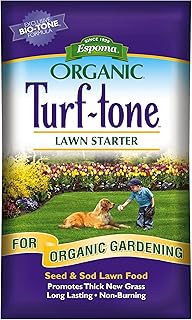
Best for new turf projects and overseeding, this organic starter blend combines long-lasting nitrogen and phosphorus with Espoma’s Bio-tone microbial formula. The 4-6-3 analysis supports early root growth and establishment in newly seeded areas or sod installations. Use with a drop or broadcast spreader to ensure uniform coverage. Best for homeowners seeking an organic option with a proven soil biology boost. A potential limitation is that coverage depends on spreader calibration and application rate, so follow label directions carefully for your lawn size.
Scotts Turf Builder Starter Fertilizer for New Grass

This starter is designed specifically for new lawns and seed establishment, with a balanced 24-25-4 NPK ratio. It’s marketed as safe for all grass types, making it a versatile choice for diverse landscapes. Choose this if you want a product optimized for seed germination and early growth, including sod, plugs, or sprigs. A caveat is that some users may prefer organic-only formulations, as Scotts offers synthetic nutrients in this option.
GreenView Starter Fertilizer

GreenView’s starter formula focuses on rapid root establishment through phosphorus support and promotes full-season growth. It’s positioned as a good option for seeding or repairing bare spots during the growing season. The formula emphasizes a sustainable approach with no micro-plastic coatings, which can appeal to eco-conscious buyers. Best used for projects where long-term soil health and environmentally friendly practices matter. A limitation is that the product is slower to release in cooler conditions, which can affect early seedling performance in some climates.
Scotts Turf Builder Starter Food for New Grass

Designed to support seed germination and rapid growth, this product claims to make grass appear 70% thicker and grow 35% quicker than unfed lawns. The 24-25-4 nutrient ratio provides essential nutrients during the critical establishment phase. It’s a strong pick for those prioritizing visible early density and faster seeding results. Consider this option if you want a proven track record for seed-to-lawn performance; however, it is not explicitly organic, which may be a constraint for buyers seeking fully organic formulations.
Purely Organic Lawn Food 10-0-2

This organic option emphasizes a plant-based formula featuring distillers grains and soy. It’s designed to promote lush green turf without harsh chemicals and is noted as family and pet friendly with no re-entry restrictions after application. Best for organic gardeners and those with safety considerations around children and pets. A potential limitation is slower nutrient release compared to conventional starters, which may affect very rapid establishment in some climates.
Buying Guide: Organic Starter Fertilizers For Grass
What should you consider when choosing an organic starter fertilizer?
- Nutrient balance and release: Look for products with a clear N-P-K ratio and consider whether slow-release organics align with your climate and maintenance schedule.
- Soil biology: Some formulas include beneficial microbes or Bio-tone technology. These can improve root colonization and nutrient uptake.
- Application method: Spreader compatibility (drop vs broadcast) and coverage per bag influence how you plan your lawn project.
- Material safety: For organic-focused buyers, verify that the product uses plant-based ingredients and avoids synthetic blends or chemical solvents.
- Project type: Seeded lawn vs sod installation vs overseeding requires different nutrient priorities. Choose accordingly.
- Environmental impact: Favor products with sustainable packaging and minimal plastic micro-coatings when possible.
Practical How-To Tips
- Prepare soil: Before applying starter fertilizer, aerate and rake to create a good seed-to-soil contact.
- Follow directions: Apply at the recommended rate for your square footage to avoid over- or under-fertilizing.
- Water thoughtfully: Lightly water after application to activate nutrients, then maintain consistent moisture during establishment.
Frequently Asked Questions
- What is the best organic starter fertilizer for new grass? Answer: It depends on your lawn goals; Espoma Turf-Tone and Purely Organic Lawn Food are strong organic options for establishment with soil-friendly formulas.
- Is phosphorus-focused fertilizer good for roots? Answer: Yes; phosphorus helps root establishment, which is crucial for seed germination and early growth.
- Can I use synthetic starter fertilizer on an organic lawn? Answer: If you require organic-only inputs, avoid synthetic formulas and choose certified organic options.
- How often should I apply starter fertilizer? Answer: Starter fertilizers are typically applied once at establishment; follow product directions for reapplication if needed for reseeding or sod installation.
- Will these products burn my lawn? Answer: Organic formulas are generally safer, but always follow label directions and apply in appropriate weather to minimize risk of burn, particularly on newly seeded areas.
- Can I use these products on all grass types? Answer: Most options are suitable for common turf grasses, but verify compatibility with your specific grass species on the product label.