Best Outdoor Wood Boiler Water Treatment Solutions for Rust Prevention and Efficiency
Choosing the right water treatment for an outdoor wood boiler helps prevent rust, reduces scale buildup, and maintains overall efficiency. This guide highlights five leading products designed to protect outdoor boiler systems, control corrosion, balance pH, and remove sludge. Each option caters to different system sizes, maintenance habits, and compatibility needs, including glycol-based coolants. The items below range from rust inhibitors to comprehensive treatment kits, so homeowners can select the best fit for prevention, routine monitoring, and long-term boiler health. Use the quick-reference table to compare at a glance, then read the in‑depth sections for dosing and usage tips.
| Product | Brand | Key Benefit |
|---|---|---|
| ChemWorld Boiler Rust Inhibitor — 1 Gallon | ChemWorld | Prevents rust; compatible with glycol; high coverage |
| ProTech 300 Boiler Treatment — 2 Gallon Pack | Alternative Heating & Supplies | Controls rust, corrosion, scale; balances pH and alkalinity |
| ChemWorld Outdoor Boiler Treatment — 1/2 Gallon | ChemWorld | Rust prevention; suitable for outdoor and closed-loop systems |
| AHS Outdoor Boiler Water Treatment Kit | AHS | Rust/corrosion protection plus test kit |
| ComStar Boiler Treatment with Blue Indicator — 1 Gallon | ComStar | Color indicator; pH neutralizer; cleaner for oil and sludge |
Note: This table provides a quick snapshot of each product. Always follow the manufacturer’s directions and check your boiler manufacturer’s guidelines before use. Proper dosing and system compatibility ensure optimal protection and performance.
ChemWorld Rust Inhibitor, 1 Gallon

ChemWorld’s Boiler Rust Inhibitor is designed to protect outdoor wood boilers from corrosion by forming a protective film that resists water and oxygen-induced damage. The product is described as compatible with propylene and ethylene glycol, allowing it to be used in most common boiler setups that rely on glycol-based coolants. The inhibitor aims to stop boiler corrosion and extend component life, making it a practical choice for long-term upkeep in harsh outdoor environments. Depending on system size and water chemistry, one gallon can cover a broad range of gallons, simplifying routine maintenance.
Application guidance emphasizes ease of use: add the inhibitor as directed, ensure even distribution in the boiler loop, and recheck chemical balance periodically. The formulation suits systems subject to temperature fluctuations and varying water quality. Homeowners should verify compatibility with other boiler chemicals and with any closed-loop configurations before adding the product. While primarily a rust inhibitor, ongoing monitoring of water pH and alkalinity remains essential for sustained protection against corrosion and mineral buildup.
ProTech 300 Boiler Treatment

The ProTech 300 Boiler Treatment comes as a two-gallon pack designed to protect outdoor wood boilers from rust, corrosion, and scale buildup. Each one-gallon bottle is stated to treat up to 300 gallons, providing a straightforward dosing model for homeowners with mid-size systems. Beyond corrosion control, the product helps balance pH and alkalinity within the boiler’s water, supporting stable chemistry across seasonal changes. This balance reduces mineral deposition and promotes smoother heat transfer, contributing to overall system efficiency over time.
Usage typically involves adding the appropriate amount to the boiler water and circulating to achieve uniform distribution. The pH-balancing aspect is a key benefit for maintaining a stable loop, particularly in setups with variable water sources or fluctuating temperatures. For households with larger boilers or longer heating seasons, the two-gallon pack offers convenient coverage and a consistent dosing schedule to minimize maintenance interruptions.
ChemWorld Outdoor Boiler Treatment

This ChemWorld product is an Outdoor Wood Boiler Chemical Treatment sold in a 1/2 gallon size, designed to treat 125 to 250 gallons of water. It functions as a rust inhibitor while also supporting overall boiler health in outdoor environments. The formulation targets rust prevention and is described as suitable for outdoor boilers and most closed-loop boiler systems, making it a versatile option for smaller to mid-sized installations where exact dosing remains manageable.
For users, the smaller packaging translates to easier handling and reduced upfront cost, particularly for seasonal or seasonalized maintenance plans. In practice, this treatment works well for systems that require periodic intervention rather than constant dosing. As with any boiler chemical, compatibility with glycol coolants and other additives should be verified prior to use to avoid potential interactions that affect corrosion control or water chemistry.
AHS Outdoor Boiler Water Treatment Kit
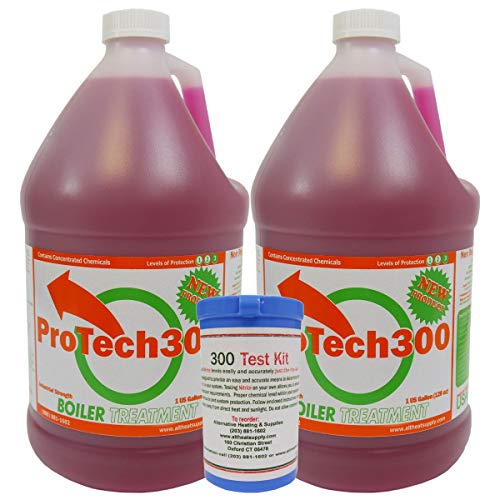
AHS groups a rust inhibitor with a test kit into an outdoor boiler treatment kit, delivering corrosion protection alongside practical monitoring. The kit is designed to safeguard an outdoor wood boiler from rust, corrosion, and scale while meeting or exceeding nitrite warranty requirements set by boiler manufacturers. The included test kit allows users to monitor nitrite levels, enabling proactive adjustments to maintain safe, effective water chemistry. This combination supports both preventive maintenance and compliance with warranty conditions, making it a solid option for homeowners who value data-backed maintenance.
The kit’s emphasis on testability helps minimize guesswork in dosing, which is especially useful for systems with variable water appeal or shifting outdoor conditions. Regular testing supports early detection of imbalances and ensures the treatment remains aligned with the boiler’s design specifications. The kit is appropriate for those who want a single purchase that covers both protection and measurement in one package.
ComStar Boiler Treatment with Blue Color Indicator
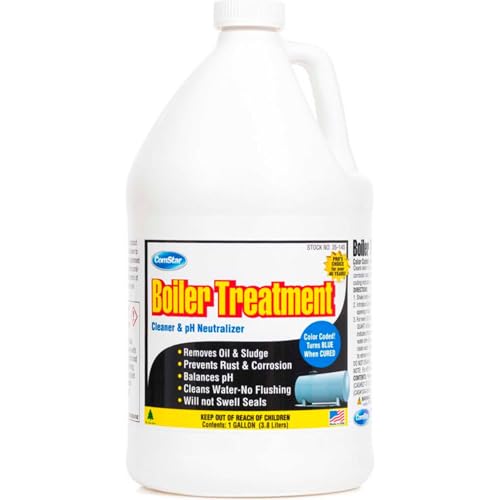
ComStar’s Boiler Treatment combines several functions in one gallon: it acts as a boiler water cleaner and pH neutralizer, helps prevent rust and scale in boiler water, and supports sludge removal without the need for flushing. A notable feature is the blue color indicator, which provides a visual cue of the treatment’s presence and activity, aiding in routine monitoring. The color coding helps simplify maintenance for homeowners who prefer a straightforward, at-a-glance approach to chemistry management.
The product emphasizes comprehensive water conditioning while remaining user friendly for residential outdoor boiler systems. Its multi-function profile—cleaning, pH adjustment, and rust/scale prevention—addresses common boiler-water challenges in a single package. The color indicator adds a practical touch, helping users decide when to refresh the treatment based on observed color cues rather than solely on time-based schedules.
Buying Guide
Key considerations
- Purpose: Choose between rust inhibitors, general boiler treatments, or kits with testing. If corrosion protection is the primary need, rust-inhibitor products are appropriate. For ongoing maintenance and particle removal, consider cleaners and multi-action formulas.
- Capacity and dosing: Match product coverage to your boiler’s water volume. Some options cover hundreds of gallons per bottle, while others are best for smaller systems. Accurate dosing reduces waste and ensures effective protection.
- Glycol compatibility: If your system uses propylene or ethylene glycol, verify compatibility with the chosen chemical. Glycol compatibility ensures effective protection without interfering with heat transfer.
- Monitoring: Kits with test strips or meters support proactive maintenance and warranty compliance. Regular nitrite or pH checks help maintain safe, efficient operation.
System compatibility
- Closed-loop vs open-loop: Some treatments are suitable for both open and closed-loop configurations; verify the product’s intended use for your specific boiler design.
- Flushing and maintenance needs: Certain products allow you to operate without flushing, while others may require occasional cleaning to remove oil or residues.
- Material compatibility: Check that the treatment does not adversely affect seals, gaskets, or metallic components within your boiler system.
Monitoring and maintenance
- Regular testing: Tests for nitrite, pH, and alkalinity help maintain optimal chemistry and prolong equipment life.
- Visual indicators: Color indicators, like the blue indicator from ComStar, offer quick at-a-glance confirmation of chemical status.
- Record keeping: Maintain a simple log of dosing dates, test results, and system performance to detect trends and adjust scheduling.
Cost and value
- Single-bottle inhibitors vs multi-pack kits: For larger boilers or harsher climates, investing in larger packs or kit combinations can reduce per-gallon costs and simplify maintenance.
- Vendor support: Some brands provide guidance on dosing, compatibility, and warranty requirements—beneficial for first-time users.
- Long-term savings: Effective corrosion control and sludge management reduce maintenance frequency and potential downtime, improving boiler efficiency and lifespan.
When choosing a product, balance your system size, maintenance routine, and willingness to monitor chemistry. For open-floor installations with variable water sources, a kit with a test component may offer the most reliable route to consistent protection. For smaller or more predictable systems, a simple rust inhibitor or a single-bottle treatment can be a practical, cost-effective solution. Always follow safety data sheets and local regulations when handling boiler chemicals.