Best Pest Control for Garden Vegetables: Safe, Effective Solutions
Finding the right pest control for garden vegetables means choosing products that protect edibles without compromising safety. This guide highlights five select options suited for home vegetable plots, from broad-spectrum sprays to targeted biological controls. Use the products best aligned with your crop and pest challenges for season-long protection. The buyer-intent table below summarizes each option for quick comparison.
| Product | Best For | Key Benefit |
|---|---|---|
| BioAdvanced Vegetable and Garden Insect Spray | General sprays for vegetables | Contact kill on 70+ insects |
| BioAdvanced Fruit, Citrus & Vegetable Insect Control | Fruit, citrus, and vegetable plants | Season-long prevention up to 2 months |
| Natria Neem Oil Spray | Integrated pest and disease control | Insecticide and fungicide in one |
| BioAdvanced Tomato & Vegetable Pest Control | Tomatoes and varied vegetables | Fast-acting protection |
| Bonide Captain Jack’s Bt Thuricide | Caterpillars and worm pests | Biological control with minimal non-target impact |
BioAdvanced Vegetable And Garden Insect Spray

This concentrate is designed to kill insects by contact, including aphids, caterpillars, thrips, and tomato hornworms, totaling 70+ listed pests. It helps protect fruit and vegetables when applied to coated leaves, offering a straightforward method for garden upkeep. Best for homeowners needing broad-spectrum coverage on a variety of vegetables with a simple mixing-and-spray workflow.
Best for: gardeners seeking a reliable, all-around insect killer for diverse vegetables. Caution: avoid over-application to minimize foliar burn; follow label mixing ratios precisely.
BioAdvanced Fruit, Citrus & Vegetable Insect Control

This special formula targets edible gardening crops, including over 100 listed fruits, vegetables, and citrus plants. It provides season-long protection, reducing new infestations for up to two months after a single application. Best for a preventative approach when you want fewer spray events and broader pest suppression.
Best for: fruit and vegetable gardeners wanting long-lasting protection with broad compatibility. Caution: check compatibility with ornamental plants nearby, and avoid spraying on blooming flowering crops when bees are active.
Natria Neem Oil Spray For Gardening

Natria Neem Oil Spray acts as both an insecticide and fungicide, delivered ready-to-use with no mixing required. It controls aphids, whiteflies, spider mites, Japanese beetles, and other pests, while also aiding disease prevention such as powdery mildew and black spot. Best for integrated pest and disease management with minimal preparation.
Best for: gardeners who want a convenient, multi-purpose spray for pests and fungal diseases. Caution: neem oil can have phytotoxic effects on some plants in hot sun or under stress; test on a small area first.
BioAdvanced Tomato & Vegetable Pest Control

This ready-to-use spray provides rapid pest control for common garden invaders like aphids and cutworms. It is versatile across multiple vegetables, including tomatoes, peppers, and carrots, offering a quick solution for protecting crops during key growth stages. Best for: gardeners needing fast-acting protection across a range of vegetables.
Limitation: as a broad-spectrum spray, it may affect beneficial insects if not applied selectively. Apply during the early morning or cooler parts of the day to minimize leaf stress.
Bonide Captain Jack’s Bt Thuricide
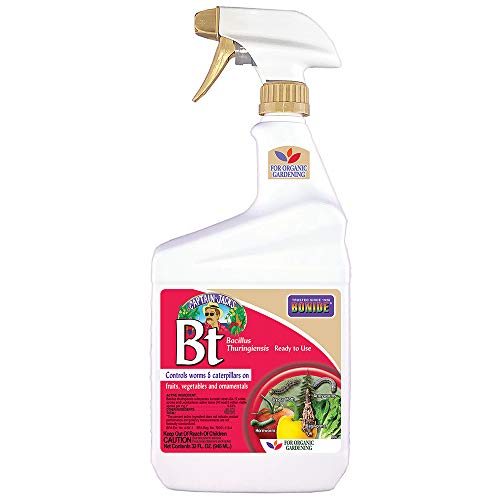
Captain Jack’s Bt Thuricide delivers a biological approach to pest control, killing worms and caterpillars such as cabbage looper and hornworms after ingestion. It protects fruits, vegetables, and ornamentals with minimal impact on birds, earthworms, and beneficial insects when used as directed. Best for: gardeners seeking a targeted, garden-safe biological control with low environmental impact.
Limitation: effectiveness relies on insect feeding; timing is important for best results, and must be applied before significant feeding damage occurs.
Buying Guide
What should you consider when choosing pest control for garden vegetables?
- Target pests: Identify the main pests (aphids, caterpillars, mites, slugs, etc.) and select products proven against them.
- Mode of action: Decide between contact insecticides, systemic options, or biological controls based on crop tolerance and non-target safety.
- Residue and reapplication: Check how long protection lasts and how often to reapply, especially in hot or rainy weather.
- Plant compatibility: Ensure the product is labeled for edible plants and avoid harming pollinators when spraying flowering crops.
- Application practicality: Consider ready-to-use versus concentrate forms and the required mixing steps.
- Environmental impact: Prefer non-target friendly options like Bacillus thuringiensis (Bt) or neem-based sprays when possible.
How to Choose By Situation
- If you want broad coverage with easy preparation, choose a ready-to-use or concentrate that covers many pests on multiple vegetables.
- If you have a caterpillar problem, consider a Bt-based product for a targeted, low-impact solution.
- If you prefer convenient, all-in-one disease and pest control, neem oil offers both insecticidal and fungicidal benefits.
- For long-lasting prevention with fewer applications, look for season-long formulations labeled for edible gardens.
Frequently Asked Questions
- What is the safest pest control for edible vegetables?
– Neem oil and Bt-based products are commonly considered safer near edibles and beneficial insects when used as directed. - Can I mix multiple pest control products?
– Mixing is not recommended unless specifically stated on label guidance; always follow product labels to avoid chemical interactions. - How often should I spray vegetables?
– Timing varies by product; some provide season-long protection, while others require repeated applications after rain or heavy pest pressure. - Are there products that kill pests without harming pollinators?
– Biological controls and selective insecticides are more likely to spare pollinators when used correctly; avoid blooming periods if possible for broad-spectrum sprays. - Should I rotate products to prevent resistance?
– Rotating modes of action can help reduce resistance; consult product labels for guidance on rotation strategies.