Best Drip Irrigation Tubing for Home Gardens
Drip irrigation tubing is essential for delivering precise water to plants with minimal waste. This guide highlights five solid tubing options suited to different setups, from small containers to larger garden beds. The best picks target common buyer intents: easy setup, longevity, and reliable water delivery. Use these choices to plan a cohesive drip system that fits your landscape and planter configurations.
| Product | Length / Size | Best For |
|---|---|---|
| Raindrip 016010T | 100 ft, 1/4 inch | Small systems, planters, shrubs |
| Raindrip 052020P | 100 ft, 1/2 inch | Main lines, larger beds |
| Sulataya 1/2″ Tubing | 49.2 ft, 1/2 inch | Medium-area gardens, versatile fittings |
| Rain Bird T22-100S | 100 ft, 1/4 inch | Flexible distribution in beds |
| Habitech 1/4″ Tubing | 100 ft, 1/4 inch with emitters | All-in-one emitter tubing setups |
Raindrip 016010T 1/4-Inch Drip Irrigation Tubing

The 1/4-inch tubing is designed to create feeder lines for low-flow watering devices and can act as a main line in small systems. It’s suitable for trees, shrubs, flower beds, groundcovers, vegetables, and planters. Best for compact setups and when connecting to emitters or drip parts is needed. A potential limitation is that its small diameter may limit flow in very large systems, so plan main lines accordingly.
Raindrip 052020P 1/2-Inch Drip Tubing
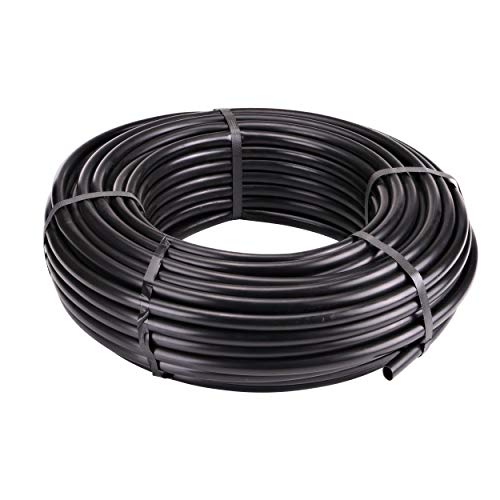
This 1/2-inch tubing works well as a main supply line or feeder line and accommodates emitters along its length. It’s versatile for trees, shrubs, beds, vegetables, pots, and hanging planters. Best for medium to larger garden zones and where a sturdier main line is helpful. A caveat: ensure compatible fittings and connectors to avoid leaks at joints.
Sulataya 1/2 Inch Drip Tubing

With a 1/2-inch inner diameter and 15 meters of length, this tubing is suitable for standard 1/2-inch fittings and can be cut to fit. Its durability supports greater pressure and broader coverage across beds or containers. Best for flexible layouts and when fitting into an existing 1/2-inch irrigation backbone. A limitation is the fixed length; custom lengths may require splicing or additional tubing.
Rain Bird T22-100S Drip Tubing
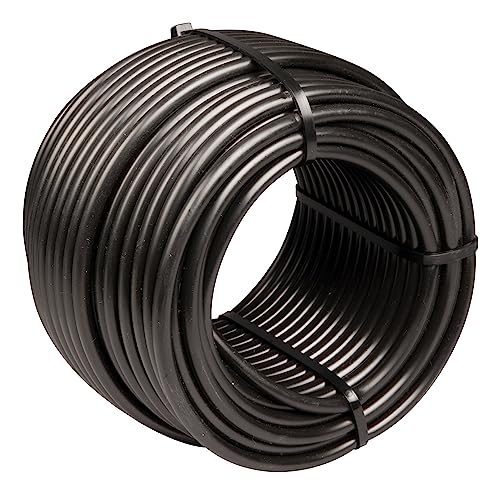
This 1/4-inch distribution tubing is rugged and flexible, easy to unroll and stake in gardens and beds. It functions well as a main line or to branch off from larger tubing to micro-watering devices. It features a textured finish for faster connections. Best for simple distribution in small to mid-sized gardens. A drawback is that the smaller diameter may limit flow for high-demand zones.
Habitech 1/4″ Tubing With Inline Emitters

This 100-foot roll of 1/4-inch tubing includes inline emitters at 6-inch intervals, making it convenient to create a ready-to-install drip system without separate emitters. It’s ideal for compact setups with row crops, planters, and raised beds. Choose this for a simplified, ready-to-use system. A potential limitation is that the fixed spacing may not suit all plant layouts; customization may be required for irregular beds.
Buying Guide
What size tubing should I choose?
- 1/4 inch is ideal for compact systems and individual plants; it’s easier to route but has lower flow capacity.
- 1/2 inch tubing works well as main lines or feeders for larger areas with higher water needs.
How do I plan emitters and connections?
- Consider spacing, plant types, and soil moisture. Inline emitters simplify layout when using tubing with integrated emitters.
- Ensure fittings match the tubing size to avoid leaks and ensure a secure connection.
Should I buy a kit or individual tubing?
- Kits with built-in emitters streamline setup and reduce parts shopping. Individual tubing offers customization for complex landscapes.
- Durability and UV resistance matter for outdoor use; look for reinforced or thicker-walled tubing for longevity.
What about installation and maintenance?
- Plan routing to minimize bending and kinks. Use stakes or anchors to prevent movement in windy or active areas.
- Regularly check for leaks, clogged emitters, and root intrusion, especially in beds with dense plantings.
How do I expand later?
- Choose tubing and fittings that match common sizes (1/4″ or 1/2″). Plan for additional emitters or zones if expanding.
- Label lines to simplify future maintenance and troubleshooting.
Frequently Asked Questions
- What is the difference between 1/4″ and 1/2″ drip tubing? — 1/4″ tubing is best for small, localized zones; 1/2″ tubing serves as a main line for larger areas and higher flow.
- Can I bury drip tubing? — Yes, some tubing is designed for subsurface use, depending on material and emitter spacing.
- Do built-in emitters save time? — Yes, they simplify setup by reducing the need for separate emitters, but check spacing suitability for your plants.
- How do I prevent leaks at connectors? — Use compatible barbed fittings, secure clamps if needed, and avoid over-tightening.
- Is drip tubing suitable for container plants? — Yes, choose shorter lengths and ensure emitters reach every container for even watering.
- Can I mix tubing brands? — Generally yes if sizes and fittings are compatible; test fit before full installation.