Best Pipes for French Drain: Top Picks for Efficient Drainage
Choosing the right pipe for a french drain improves water management around landscapes and foundations. This guide reviews five durable, expandable, and perforated options that help move groundwater away from problem areas. Each product is evaluated for filtration, installation ease, and long-term performance in American soils and weather conditions.
Summary of Selected Products
| Product | Brand | Type | Key Benefit |
|---|---|---|---|
| Flex-Drain 51510 | Flex-Drain | Perforated, expandable | High durability and easy to use |
| Flex-Drain 51710 | Flex-Drain | Solid, expandable | Flexible length for varying trenches |
| Perforated 2-Inch Drain Pipe | Generic | 2″ perforated, non-woven filter layer | All-round filtration with built-in support |
| Flex-Drain 51910 | Flex-Drain | Perforated, expandable | Versatile drainage for ground water |
| NAACOO Catch Basin Extension | NAACOO | Flexible pipe extension | Long reach with collapse resistance |
Note: Each product supports french drain setups by enabling water entry, filtration, and transport away from soils that accumulate moisture. The selections balance filter performance, ease of installation, and adaptability to different yard layouts.
Flex-Drain 51510 Perforated 4-Inch Drain Pipe

Flex-Drain 51510 offers a perforated pipe with a filter sock, designed to prevent sediment intrusion while providing easy expansion for longer trenches. The product emphasizes durability and user-friendliness, suitable for both residential and landscape installations. The expandable feature helps adapt to trench length without extra fittings. It is marketed as a value-driven choice with straightforward handling, especially for DIY drainage projects where soil composition varies.
Flex-Drain 51710 Flexible Drain Pipe

The Flex-Drain 51710 is a solid, expandable drainage pipe with a 3.37 inch inside diameter and a 12-foot length. It is positioned as durable and easy to install, with flexibility for irregular trench shapes or ground contours. This product prioritizes adaptability in longer runs and is a practical option when a continuous, strong conduit is needed to transport water away from foundations or low-lying areas. It is often paired with other filtration components in complete drain systems.
Perforated Drainage Pipe For French Drain (2-Inch)

Generic 2-Inch perforated drainage pipe combines non-woven filter layers and a built-in steel wire for rigidity. It supports all-round penetration, enabling water to enter from multiple angles. The design emphasizes filtration to prevent sediment clogging, while the pipe’s flexibility accommodates uneven subsurfaces. It scales well for smaller to mid-size french drain projects and offers straightforward connections to standard PVC pipes when extended length is needed.
Flex-Drain 51910 Perforated Drain Pipe, 4-Inch by 12-Feet
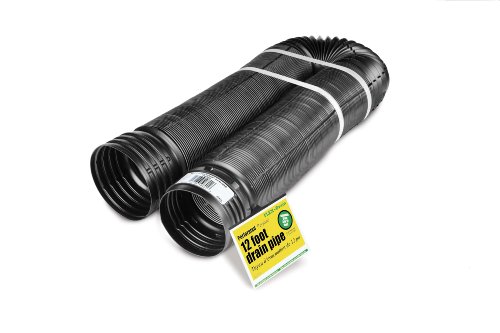
Flex-Drain 51910 is a perforated, expandable 4-inch pipe that unfolds up to 12 feet. This model is suited for larger french drain segments or areas requiring extended reach without multiple joints. The perforated design allows groundwater to enter while distributing it along the trench. It is frequently chosen for comprehensive drainage plans where a uniform cross-section is beneficial for steady water flow and soil absorption.
NAACOO Catch Basin Extension and Flexible Pipe

NAACOO offers a catch basin extension and flexible pipe system designed to extend drainage reach while maintaining UV resistance and outdoor durability. The set emphasizes a patent-backed design, stiff yet flexible pipe segments, and splicing capability for longer runs. It is especially useful when drainage needs to bypass ground-level obstacles or when connecting to existing drainage infrastructure without extensive excavation.
Buying Guide: Key Considerations For Selecting French Drain Pipes
- Filtration and sediment control: Choose pipes with filter socks or non-woven layers to minimize sediment ingress while allowing water flow.
- Pipe perforation vs. solid: Perforated pipes are better for drainage, while solid pipes are useful for transporting water over longer distances after collection.
- Diameter and length: Larger diameters move more water; longer runs reduce the need for multiple joints but require careful trenching and support.
- Expandable design: Flexibility in length helps accommodate irregular trench shapes and reduces the need for extra fittings.
- Durability and materials: Look for UV resistance, crush resistance, and weather tolerance for lasting performance in outdoor soils.
- Compatibility: Ensure pipe connections match common PVC fittings or existing drainage components in your yard.
- Installation considerations: Plan the trench slope for gravity-driven flow, and mark pathways to avoid vehicle traffic or buried utilities.
- Maintenance: Perforated systems may require occasional cleaning or screen checks to prevent clogs from sediment or roots.
- Local codes and best practices: Check regional guidelines for drainage installations to ensure compliance and effective performance.
In summary, the options highlighted balance ease of installation, filtration quality, and the capacity to handle varying rainfall and soil conditions. For most residential french drain projects, combinations of perforated, expandable pipes with protective filtering layers provide reliable drainage while reducing maintenance needs over time.