Best Plant Frost Protection Fabric for Winter Gardening
Protecting outdoor plants from frost, cold winds, and lingering chill is essential for a healthy winter and early spring. This guide highlights top frost protection fabrics that are breathable, versatile, and easy to use. Best for home gardeners, small farms, and balcony planters alike, these options help create a microclimate that supports growth while shielding delicate foliage. Below is a quick comparison of five strong choices to fit different plot sizes and protection needs.
| Product | ||||
|---|---|---|---|---|
| AlpineReach (50 ft) | 10 x 50 ft | 1.2 oz/yd² | Large garden beds; perennials | Extends season with breathable insulation |
| MAQIHAN | 6.5 ft x 13 ft | 1 oz/yd² | Medium patches; mixed crops | Flexible size; multifunc use |
| Garutom | 10 ft x 33 ft | 1.1 oz/yd² | Vegetable rows; fruit shrubs | Durable, light, UV resistant |
| JUNKOGO | 7 x 100 ft | 0.9 oz/yd² | Large, long-term protection | Wide coverage; reusable |
| YDSL | 10 ft x 50 ft | 1.06 oz/yd² | Raised beds; garden beds | Ultra-fine mesh; easy irrigation |
Note: All products are designed to block frost while allowing light, air, and moisture to reach plant roots and foliage. Choose by area coverage, firmness of fabric, and whether you need extra features such as insect barriers or wind resistance. The list below focuses on options that balance protection with ongoing garden usability.
AlpineReach Frost & Sun Protection Cover (50 ft)

Features a breathable, all-season frost cover designed to shield against frost, snow, and harsh winds. Best for large garden beds and long rows. The breathable design allows light, air, and water to reach plants, supporting growth in cooler months. Best for gardeners who need a wide, continuous protective layer.
Who it’s best for: Home gardeners with long bed lines, and those who want to extend the growing season without heavy mulch. Limitation: Heavier 1.2 oz/yd² fabric may require hoops or frames for tall plants to avoid contact with foliage in windy conditions.
MAQIHAN Plant Cover (6.5 ft x 13 ft)

Made from 1 oz/sq ft non-woven fabric, offering durable frost protection with good light penetration. It serves multiple purposes, including insulation, sun shielding, and insect barriers. Ideal for mixed plantings and smaller beds needing flexible sizing.
Who it’s best for: Gardeners with a variety of plants and flexible layout needs. Limitation: Smaller footprint means more frequent repositioning for very large plantings.
Garutom Frost Protection Cover (10 ft x 33 ft)

Offers three size options with 1.1 oz/yd² fabric that is lightweight yet durable and anti-UV. It transmits about 85% of available light, preserving photosynthesis while shielding roots and crowns. Best for fruit trees, shrubs, and row crops that require extended coverage without bulk.
Who it’s best for: Gardeners needing a sturdy, mid-size cover that combines light transmission with frost protection. Limitation: May require staking or hoops to maintain clearance over taller plants in strong winds.
JUNKOGO Frost Cloth Cover (7 x 100 ft)

Long, wide coverage designed for extended winter protection with 0.9 oz/sq non-woven fabric. It is lightweight and breathable, allowing irrigation without removal. This makes it a practical choice for larger plots, multiple beds, or seasonal crops.
Who it’s best for: Gardeners who need continuous coverage across several beds or rows. Limitation: Very long length may be cumbersome for small spaces; plan for storage and handling in off-season.
YDSL Plant Covers Freeze Protection (10 ft x 50 ft)
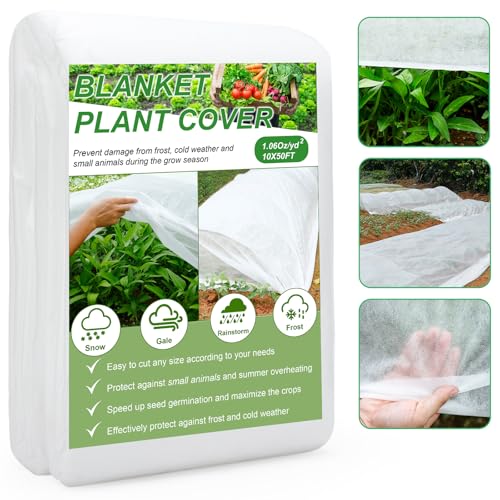
Features an ultra-fine 1.06 oz/yd² mesh designed to protect against pests and weather while preserving light and moisture for plant health. It’s particularly suitable for raised beds and smaller gardens where irrigation access is essential.
Who it’s best for: Gardeners who prioritize pest protection alongside frost defense. Limitation: Slightly less coverage per roll than some larger options; plan for coverage area accordingly.
Buying Guide: Key Considerations For Frost Fabric Buyers
- Coverage area: Measure beds and rows to determine how many feet of fabric you need. Long rolls reduce seams but require storage space when not in use.
- Fabric weight: Heavier fabrics (around 1.2 oz/yd²) offer stronger frost protection but may require support to keep the material off plant canopies.
- Light transmission: Ensure the fabric allows adequate light for photosynthesis. Most non-woven polypropylene fabrics permit partial light while blocking extreme cold.
- Breathability and moisture: Look for breathable fabrics to prevent moisture buildup and mold. Non-woven designs typically balance air flow with insulation.
- Durability and reusability: Reusable options save money over time. Check for UV resistance if exposed to strong sun in off-seasons.
- Ease of use: Consider whether you’ll need hoops, frames, or stakes. Some fabrics are easily cut to fit irregular shapes.
- Multi-use features: Some covers also deter pests or act as sun shades. If you need multiple protections, select versatile fabrics.
Frequently Asked Questions
- What is frost cloth fabric best used for? It protects outdoor plants from frost, wind, and light snow while allowing light, air, and moisture to reach roots and leaves.
- Can I cut frost fabric to fit my plants? Yes. Most fabrics are designed to be trimmed with scissors to match plant sizes and shapes.
- Will frost fabric hinder plant growth? When properly used, it creates a microclimate that supports growth without suffocation or excessive shading.
- How long can I leave frost protection fabric on plants? Leave it on during cold periods and remove when temperatures consistently rise above freezing to avoid overheating.
- Do I need hoops or frames? Hoops or frames help keep fabric off plant tops, especially for taller crops or windy locations.
- Is thicker fabric always better? Not necessarily; balance insulation with light transmission and airflow for healthy growth.