Best Plastic for Greenhouse Windows: Durable Covers for Year-Round Growth
When selecting plastic sheeting for greenhouse windows, the goal is clear: maximize light transmission, protect plants from the elements, and endure seasonal wear. This guide highlights five top options suitable for American home and small-farm greenhouses. It targets buyers looking for heavy-duty, UV-protected, yet light-diffusing plastic that can withstand wind, rain, and frost. Each product is identified by ideal users, plus practical pros and limits to help you choose confidently.
Summary of selected products (best for quick comparison):
| Product | Best For | Key Benefit | Limitations |
|---|---|---|---|
| Tapix 6 Mil Plastic Sheeting (10′ x 25′) | Heavy-duty DIY greenhouses and outdoor projects | Superior tear resistance and versatile use | Thicker film may reduce light slightly |
| Tapix 3 Mil 2-Pack Plastic Sheeting | Budget projects and extended outdoor covers | Good UV protection per roll, value-packed | 3 mil is lighter, more prone to tears |
| PROMORE 6 Mil Greenhouse Plastic | High-demand greenhouse zones | UV defense and light diffusion | May be listed primarily for outdoor protection |
| MTYIK 6 Mil Greenhouse Plastic | Large DIY greenhouse builds | High light transmission with anti-drip | Special features may vary by batch |
| Xstronq 8ft x 26ft Plastic Sheeting | Long-span greenhouse coverings | Strong UV resistance and wind tolerance | 8×26 size may require framing adjustments |
Tapix 6 Mil Plastic Sheeting 10′ x 25′

Best for: Heavy-duty greenhouse enclosures and exterior weather protection. This 6 mil plastic sheeting delivers rugged tear resistance suitable for plant covers, moisture barriers, and temporary enclosures. Its thick profile helps shield delicate starts from wind and rain, while remaining flexible for various frame shapes.
Why chosen: The heavy-duty construction is well-suited for persistent outdoor use, making it a practical pick for larger DIY projects. The film’s durability accommodates frequent handling and repositioning during seasonal changes.
Caution: Thicker film can slightly reduce light diffusion compared with thinner options, so plan for supplemental lighting if needed.
Tapix 3 Mil Plastic Sheeting (2 Pack)

Best for: Budget-friendly greenhouse projects and temporary weatherproofing. This 2-pack, 3 mil polyethylene sheeting offers UV protection for outdoor use and enough coverage for multiple small frames or seasonal beds.
Why chosen: It provides a cost-effective option without sacrificing essential UV protection. The 2-pack ensures you have extra material for extensions or spares during a project.
Caution: Lighter film is more susceptible to tears, especially in high-wind areas or when walked upon during installation.
PROMORE 6 Mil Plastic Sheeting
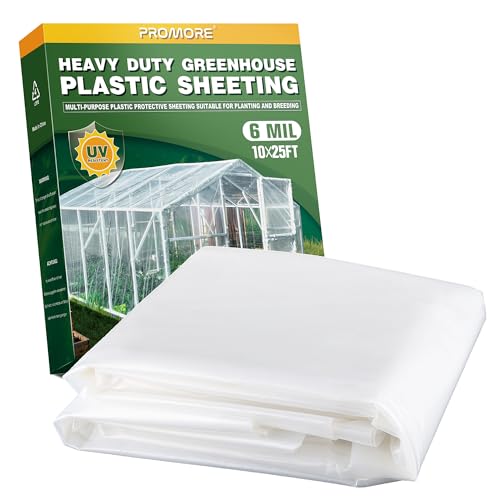
Best for: Greenhouse covers where both durability and light diffusion matter. The 6 mil thickness with UV blockers reduces film degradation while spreading light evenly for balanced growth.
Why chosen: UV defense helps extend the life of the film under sun exposure, a key factor for year-round greenhouse operation. The film’s diffusion properties promote even plant illumination.
Caution: Some users may need additional diffusion if their greenhouse relies on very bright direct sun in peak summer.
MTYIK 6 Mil Greenhouse Plastic

Best for: Large DIY greenhouses and hoop houses where durability and light transmission are both critical. This 6 mil sheet uses advanced extrusion for strength and flexibility.
Why chosen: The combination of 6 mil thickness and high light transmission (up to 90%) supports robust plant growth while reducing hot spots. Anti-drip technology helps keep foliage dry.
Caution: Features may vary slightly between batches; verify light transmission values on the packaging or product page before purchase.
Axgatoxe 6 Mil 10×25 Heavy Duty Plastic Sheeting

Best for: Protection during painting, construction, or general floor and equipment coverage. The 6 mil thickness provides reliable tear resistance and moisture protection indoors and outdoors.
Why chosen: This film serves as a versatile drop cloth or temporary cover with strong tear resistance and UV tolerance for outdoor tasks, making it a practical multi-use option for greenhouse projects too.
Caution: While durable, it’s primarily designed for temporary use; long-term greenhouse exposure may benefit from a UV-optimized option with longer service life.
Buying Guide: Key Purchase Considerations
Light transmission versus protection: Higher light transmission supports faster plant growth, but you still need enough opacity to protect crops from harsh sun. Look for films offering up to 90% light transmission while maintaining durability.
Film thickness and durability: Thicker films (6 mil) resist tears and punctures better, especially in windy or snowy regions. Thinner films (3 mil) are cheaper and lighter but require careful handling and replacement more often.
UV protection: UV inhibitors extend film life in outdoor environments. Choose films with built-in UV blockers for greenhouse windows exposed to sun year-round.
Size and fit: Measure your greenhouse’s dimensions and consider extra overlap for framing. Larger sheets may require additional framing or clips to stay secure during storms.
Diffusion and anti-drip features: Diffusion reduces hot spots by spreading light evenly. Anti-drip coatings help keep leaves dry in humid conditions, reducing disease risk.
Installation considerations: Some films are easier to handle with house clips or simple fasteners. If you have uneven frames or irregular shapes, flexible films with good tear resistance are preferable.
Budget and longevity: For long-term installations, prioritize UV-stabilized, durable 6 mil or thicker sheets. For seasonal or experimental setups, 3–4 mil options may be adequate and cost-effective.
Frequently Asked Questions
- What thickness should I choose for a home greenhouse? For year-round use, 6 mil is a common balance of durability and light transmission. Lighter films work for temporary covers or budget projects.
- Will plastic sheeting block too much light for seedlings? Most 6 mil films provide high light transmission, but test with your specific plant types. Diffusion helps distribute light evenly to prevent scorching.
- How long does greenhouse plastic typically last outdoors? UV-stabilized films last longer, often a season or more depending on climate and exposure. Replace when tearing, yellowing, or significant thinning occurs.
- Can I reuse plastic sheeting after removing it from a greenhouse? Reuse depends on condition. Clean any debris, inspect for tears, and store flat to prevent creases that weaken the film.
- Is thicker plastic better for wind resistance? Yes, thicker film offers more tear resistance and durability in windy areas, reducing the need for frequent replacement.
- Should I prioritize UV protection over light diffusion? Both matter. UV protection extends film life; diffusion improves plant growth uniformity. Choose a product that balances both features for your climate.