Best Pressure Compensated Drip Line Options for Even Watering
Pressure compensated drip lines provide uniform irrigation across uneven terrain, helping avoid dry spots or overwatering. This guide compares top consumer options ideal for gardens, raised beds, and containers. Each pick is suited to different landscapes and water pressures, with clear notes on who benefits most and potential limitations. Use the quick reference table below to identify the best match for your setup, then explore detailed sections to compare features, ideal uses, and cautions.
| Product | Best For | Key Benefit | Emmitter/Spacing |
|---|---|---|---|
| Rain Bird ET256-50S | Medium-to-large beds | Even watering from start to end | 1/4″, 6″ spacing |
| Rain Bird ET25-50S2 | Small to medium beds | Reliable flow with 12″ spacing | 1/4″, 12″ spacing |
| Hunter HDL Dripline | Sloped or uneven terrain | Built-in check valve reduces drainage | 0.6 GPH emitters |
| Rain Bird SSF70-50S | Under turf and landscape | Copper Shield technology against roots | 1/2″, 18″ spacing |
| Raindrip R292DP | General drip systems | Preassembled, consistent flow along line | 1/2″ line with 1 GPH emitters |
Rain Bird ET256-50S Drip Tubing — Even Watering

Best for medium-to-large planting areas where even distribution matters from start to end. The ET256-50S uses pressure-compensating emitters that minimize clogging and keep water flowing evenly across the entire run. Each emitter has two outlet holes, spaced 180° apart, to help maintain balance along the line. Ideal for perennial beds or mixed plantings where uniform moisture is key. A potential limitation is the fixed 6″ emitter spacing, which may not suit very densely packed pots or tightly spaced plantings.
Why it’s selected
- Pressure compensation promotes uniform watering under variable pressure.
- Two-outlet emitters help stabilize flow along the tubing.
- Low maintenance compared to traditional soaker hoses.
Rain Bird ET25-50S2 Drip Tubing — 12″ Spacing
This option fits smaller to mid-sized plantings where 12″ emitter spacing helps conserve water while still keeping roots evenly wetted. The pressure compensating emitters reduce flow variation across the line, supporting uniform irrigation across uneven ground. Best for home gardens, raised beds, and container-rich plots. A caution is that wider spacing may require more careful planning to ensure outer plants receive sufficient moisture in very dry conditions.
Considerations
- Spacing affects how evenly moisture is delivered to diverse plant heights.
- Check compatibility with your existing drip fittings and tubing diameter.
Hunter HDL Dripline CV — 0.6 GPH

Best for gardens and landscaped areas that include slopes or uneven ground. The HDL line provides a consistent, pressure-compensated flow at every emitter, helping plants receive uniform moisture despite elevation changes. A built-in check valve minimizes drainage waste on slopes. This makes it a solid choice for raised beds and irregular layouts. A potential limitation is the need for compatible connectors and potential higher initial setup complexity for beginners.
Why choose this
- Check valve reduces low-point pooling on slopes.
- Coiled tubing resists kinks for easier DIY setup.
Rain Bird SSF70-50S Sub-Surface Tubing

Best for turf and landscaped areas where above-ground lines are undesirable. Copper Shield Technology helps protect emitters from root intrusion, supporting long-term performance in turf edges or beds beneath lawns. Sub-surface placement can increase watering efficiency by delivering moisture closer to plant roots. Best for low-visibility installations. One limitation is potential installation effort to bury and protect the tubing properly.
Who it’s for
- Homeowners prioritizing a neat, invisible irrigation setup.
- Yards with active root competition from nearby trees or turf roots.
Fulairgd 30-Pack Drip Emitters — 0.5 GPH

Best for versatile DIY drip setups with multiple plant types. These pressure-compensating emitters provide a stable 0.5 GPH under 10–60 PSI, maintaining consistent flow along long runs. They’re compatible with standard 1/4″ tubing and can be mixed with different flow rates to tailor irrigation to specific plants. A caution is that performance depends on maintaining clean tubing and regular checks for clogs in busy irrigation lines.
Why it stands out
- Uniform flow along long runs helps larger plantings stay hydrated.
- Flexible use with various tubing sizes and plants.
Raindrip PC2010B 1/2 GPH Drippers
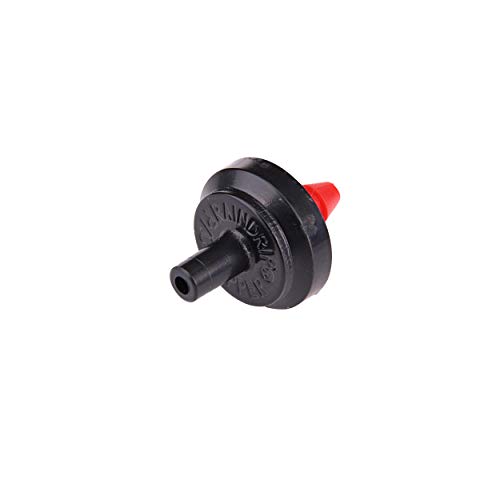
Best for shrubs, trees, and plantings in pots or garden beds where a constant 1/2 GPH flow is desired as pressure varies. The emitters are easy to install into 1/4″ feeder lines or directly into 1/2″ supply tubing. They are designed for reliability across a variety of landscapes. A potential limitation is that you’ll need to punch or attach fittings carefully to avoid leaks in high-traffic irrigation zones.
Usage note
- Provides consistent flow across different pressures, aiding plant health.
- Suitable for watering containers and grouped plantings.
Buying Guide: Pressure Compensated Drip Lines
What to consider when selecting a pressure compensated drip line
- Water pressure range: Choose emitters rated to your typical home sprinkler pressure to ensure consistent flow.
- Emitter spacing: Denser spacing is better for closely planted beds; wider spacing suits larger plants or sparse layouts.
- Tubing diameter: 1/4″ lines are flexible and easy; 1/2″ lines support longer runs and more devices.
- Root intrusion protection: Sub-surface options with copper shields help turf and garden beds near roots.
- Installer skill: Some systems require burying tubing or precise fittings; plan for DIY ease or professional help.
- Maintenance needs: Look for clog-resistance features and easy flush points to keep lines clear.
- Compatibility: Ensure fittings and emitters work with existing irrigation components.
- Climate and sun exposure: UV-resistant tubing lasts longer in sunny climates; consider shading for hot regions.
Frequently Asked Questions
- What is pressure compensation in drip irrigation? It maintains a constant flow rate despite changes in water pressure along the line.
- Which spacing is best for mixed planting beds? 6″ to 12″ spacing generally provides even coverage across diverse plants.
- Do I need a regulator with pressure compensating tubing? Often yes for systems with high feed pressure or long runs.
- Can I bury drip tubing? Yes, sub-surface installations reduce visibility and may improve efficiency, especially under turf.
- How often should I flush emitter lines? Periodically flush to remove debris and prevent clogging, especially in sandy soils.
- Are these systems suitable for containers? Yes, choose emitters with appropriate flow rates and set spacing to match container size.