Best Pressure Tanks for Irrigation Systems: Reliable Options for Home Gardens
Choosing the right pressure tank for an irrigation system helps stabilize water pressure, extend pump life, and reduce cycling. This guide reviews five dependable options, highlighting construction, capacity, and key features to help American homeowners compare models for farm, garden, or yard irrigation needs.
| Product | Brand | Capacity | Key Feature | Notes |
|---|---|---|---|---|
| WaterWorker HT-30B Vertical Pressure Well Tank | Water Worker | 30 gallons (26 gal working) | Butyl diaphragm, NSF listed | Seamless diaphragm; no flavor/odor transfer |
| VEVOR 34-Gallon Vertical Well Pressure Tank | VEVOR | 34 gallons | Pre-charged, 36.2 PSI; durable carbon steel | Not for drinking water; high-capacity for whole-house use |
| Red Lion RL20A 20-Gallon Tank | Red Lion | 20 gallons | NSF/ANSI/CAN 61 certified; leak-safe diaphragm | Thermoplastic base; pre-charged 20 PSI |
| AQUASTRONG 1.6 HP Shallow Well Pump With Tank | AQUASTRONG | 5-gallon tank; pump up to 1320 GPH | NSF certified; corrosion-resistant stainless steel | Integrated pressure gauge; automatic operation |
| Well Pressure Tank Vertical, 14Gal | ELEVZO | 14 gallons | 145 PSI steel shell; polypropylene liner | Sturdy base; safe drinking water design |
Below is a detailed look at each option, focusing on what makes it suitable for irrigation and general well systems. Each section includes real-world considerations such as installation, maintenance, and compatibility with typical residential equipment.
WaterWorker HT-30B Vertical Pressure Tank

The WaterWorker HT-30B is a 30-gallon vertical tank designed for reliability in irrigation and small-scale well systems. Its Butyl diaphragm is built to flex rather than shear, reducing wear over time compared with some bladder designs. The polypropylene liner safeguards water quality by avoiding flaking or odor transfer, which is beneficial for irrigation where taste is not a priority but water cleanliness matters. NSF listing under ANSI/NSF Std 61 adds a layer of consumer confidence regarding material safety. This model suits households with moderate-to-large irrigation demands and multiple zones.
VEVOR 34-Gallon Vertical Well Pressure Tank
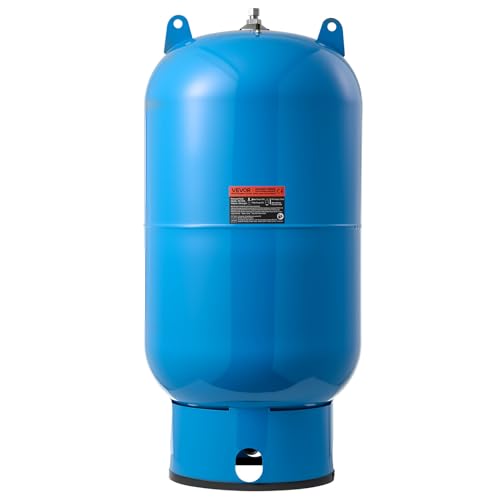
The VEVOR 34-Gallon tank offers a larger capacity suitable for households with extensive irrigation zones or higher daily water needs. It uses a carbon steel body with a 1-inch NPT connection for a secure seal. The tank ships pre-charged at 36.2 PSI and can withstand internal pressures up to 116 PSI, broadening its compatibility with typical well pumping systems. While it’s not intended for drinking water, it excels at stable pressure and reduced pump cycling, translating to quieter operation and longer pump life in irrigation setups.
Red Lion RL20A 20-Gallon Vertical Tank

The Red Lion RL20A 20-Gallon model is built for reliable well-pump support with a 20-gauge steel tank and a 304 stainless steel water connection featuring leak-safe technology. The diaphragm is designed to maintain stable pressure while the in-tank materials, including a propylene liner, help minimize concerns about water purity. It arrives pre-charged at 20 PSI; users should adjust the air charge to two PSI below the system’s cut-in setting for optimal performance. It’s a strong candidate for mid-sized irrigation systems needing consistent pressure.
AQUASTRONG 1.6 HP Shallow Well Pump With Tank

The AQUASTRONG package pairs a 1.6 HP shallow-well jet pump with a compact 5-gallon pressure tank. It’s NSF certified, featuring a stainless steel housing for heightened durability and corrosion resistance, which is beneficial in agricultural or garden irrigation systems where minerals or chlorinated water are present. The system includes a pressure switch for automatic operation, starting around 20 PSI and shutting off near 40 PSI. A built-in gauge helps track performance, while the compact tank design supports tight install spaces. It’s ideal for smaller lots or elevated garden zones requiring reliable yet affordable pressure support.
Vertical Well Pump Pressure Tank, 14 Gal

This 14-gallon ELEVZO model provides a compact option with a robust 145 PSI steel shell and a food-safe polypropylene liner, which helps prevent metals from contacting drinking water. The 1″ FNPT stainless steel port rated to 218 PSI supports reliable connections to standard piping. While designed with water safety in mind, the tank’s smaller size makes it suitable for limited-space irrigation systems or homes with modest water demands. The durable base helps minimize moisture on flooring in outdoor or utility spaces.
Buying Guide: Key Purchase Considerations
Selection should balance capacity, durability, and compatibility with existing equipment. Consider these factors when evaluating pressure tanks for irrigation systems:
- Capacity and demand: Larger irrigation zones or multiple zones require higher total storage to reduce pump cycling. Choose a tank with enough working volume to meet peak irrigation needs without frequent cycling.
- Diaphragm vs bladder: Diaphragm tanks like some Water Worker and Red Lion models can offer long-term reliability in irrigation, while bladder tanks may be more sensitive to movement and temperature.
- Material and corrosion resistance: Stainless steel ports and carbon steel bodies with protective linings prolong life in outdoor or mineral-rich environments. Food-safe liners are beneficial if water is used for any potable applications.
- Pre-charge pressure: Match the tank’s pre-charge (often around 2 PSI below the system cut-in) to the pressure switch settings. Incorrect pre-charge can reduce efficiency or shorten pump life.
- Certifications: NSF/ANSI/CAN 61 listings indicate safer materials for drinking water components; not all irrigation applications require it, but it can indicate quality.
- Connections and compatibility: Verify port size (1″ FNPT is common) and ensure compatibility with existing piping, fittings, and pumps.
- Install location and environment: Outdoor or garden installations require weather-resistant finishes. Frost-proof placement is important in colder climates.
- Maintenance needs: Regular inspection of diaphragms, liners, and seals helps prevent leaks and pressure loss. Consider tanks with accessible serviceability.
In irrigation-focused scenarios, teams often prioritize stable pressure with minimal pump cycles, straightforward installation, and durability against weather exposure. The products listed offer a range of capacities and materials to match different yard sizes, well depths, and water quality conditions. For optimal performance, pair the tank with a compatible pump, pressure switch, and zone valves configured for the landscape’s irrigation schedule.