Best Pull Behind Lawn Dethatcher for Large Yards
Answering buyers who want efficient dethatching, this guide highlights five top pull-behind lawn dethatchers. These selections are best for large lawns, riding mowers, ATVs, and garden tractors. Each option focuses on wide coverage, durable tines, and stable towing. Read on to compare suitability for your terrain, equipment, and thatch needs. The quick-reference table below helps identify the right pick for your yard size and setup.
| Product | Working Width | Tines | |
|---|---|---|---|
| Agri-Fab 48 In Tow Behind Lawn Dethatcher | 48 in | 24 spring steel | Large lawns with riding mowers |
| AugFir 48-Inch Tow Behind Dethatcher | 48 in | 20 spring steel | Wide coverage, high-tower weight option |
| Vlaeng 48″ Tow Behind Dethatcher | 48 in | 24 rust-proof springs | Deep thatch removal on large areas |
| BlumeTrec Tow Behind Dethatcher | 40 in | 20 spring tines | Large lawns needing fast coverage |
| MegaChoice 48 in Tow Behind Dethatcher | 48 in | 24 spring steel | Heavy-duty, universal hitch compatibility |
Buyer note: Each product is described with who it suits best, why it was chosen, and a short limitation to consider before purchase. Use the buying guide and FAQ for deeper decision making.
Agri-Fab 48 In Tow Behind Lawn Dethatcher
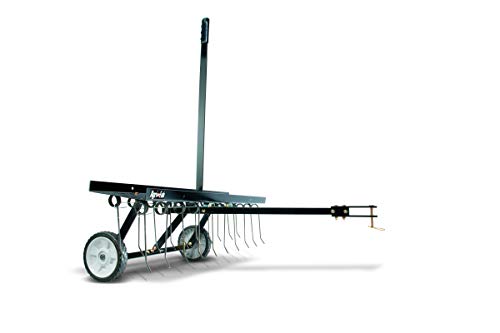
Best for large lawns hit by matted thatch, this dethatcher has a 48-inch width and 24 durable spring steel tines. It offers convenient cantilever height adjustment for easier tine raising and lowering, aiding transport across the yard. It helps improve water, nutrient, and airflow access to roots. For owners with riding mowers or utility ATVs, this model aligns with wider coverage and sturdy construction.
Limitation: No explicit ballast information; consider ballast if you need deeper tine penetration on tougher thatch.
AugFir 48-Inch Tow Behind Dethatcher

Best for homeowners with expansive lawns who want fast coverage, this dethatcher uses two rows of flexing tines across 48 inches. It supports a heavy-duty tray rated up to 150 lb, letting you add ballast for deeper tine penetration. The adjustable height and anti-slip stopper provide secure operation on uneven terrain, making it suitable for large courtyards, golf courses, and farms.
Limitation: Taller ballast requires careful handling to avoid tipping on slopes or steep drops.
Vlaeng 48″ Tow Behind Dethatcher

Best for large yards that require thorough debris removal, this 48-inch dethatcher features 24 rust-proof spring tines with a 70 lb ballast capacity. It emphasizes easy height adjustments and a universal hitch, enabling attachment to most riding mowers, ATVs, or UTVs. The design aims for deep penetration and broad coverage in fewer passes.
Limitation: The metal weight tray must be used with care; avoid overloading on delicate turf to prevent damage.
BlumeTrec Tow Behind Dethatcher

Best for large lawns needing consistent thatch removal, BlumeTrec uses a 40-inch working width with 20 spring tines and a universal hitch. Its wheel bearings support heavier loads and reduce effort during towing. This model emphasizes efficiency across broad areas while maintaining reliable dethatching with easy assembly and maintenance.
Limitation: Slightly narrower width than 48-inch models; may require more passes on very large properties.
MegaChoice 48 in Tow Behind Dethatcher

Best for heavy-duty dethatching on large plots, MegaChoice offers 24 spring steel tines across a 48-inch width and a universal hitch compatible with most ATVs, UTVs, and riding mowers. The sturdy frame and replaceable tines provide long-term reliability for regular dethatching and soil improvement.
Limitation: As with heavy-duty trailed tools, ensure you have enough ballast to maximize tine contact on firm soils; avoid over-penetration in shallow lawns.
Buying Guide: Key Considerations For Your Dethatcher Purchase
- Working width: Larger lawns benefit from 48-inch or wider machines to reduce passes; smaller properties may not need as wide a unit.
- Tine material and count: Rust-proof or spring steel tines provide longevity; more tines increase dethatching effectiveness but add weight.
- Weight capacity and ballast: Ballast trays deepen tine penetration; ensure compatibility with your towing vehicle and turf safety.
- Height adjustment: Easy lift/lower mechanisms help adapt to lawn contours and protect hard surfaces.
- Hitch compatibility: Universal or pin-style hitches improve compatibility with tractors, ATVs, and UTVs.
- Maintenance: Clean tines after use and check for bent or damaged tines to maintain performance.
- Terrain and accessories: Consider anti-slip features and transport ease for driveways and transitions between sections of lawn.
Frequently Asked Questions
- What is the main purpose of a pull-behind dethatcher?
It loosens thatch and dead grass, improving air, water, and nutrient flow to roots. - Is a wider dethatcher always better?
Generally yes for large lawns, but it requires a compatible tractor or implement and sufficient ballast for deep penetration. - Do these dethatchers work on all lawn types?
They are designed for common turf but check tine depth and turf sensitivity for delicate grasses. - Can I use a dethatcher on slopes?
Yes, but use slower speeds and be mindful of ballast and stability to avoid tipping or damage. - How often should dethatching be done?
For heavy thatch, once per season in spring or fall is common; adjust frequency to lawn health and density. - What maintenance is required after dethatching?
Clean the tines, remove debris, inspect for wear, and store in a dry place to prevent rust.