Best Tow-Behind Lawn Spreader: Top Picks for Even Coverage
Choosing a pull-behind lawn spreader hinges on capacity, spread pattern, and ease of use across varied conditions. This guide compares five tow-behind models and related lawn-care tools to help you achieve even distribution of seed, fertilizer, and ice-melt. Each option is evaluated for hopper size, adjustability, durability, and installation simplicity, with notes on performance on lawns, gravel, and snow. Use the quick reference table below to compare core specs at a glance.
| Product | Brand | Capacity / Width | Key Benefit |
|---|---|---|---|
| VEVOR Tow Behind Broadcast Spreader | VEVOR | 130 lb hopper; 10 ft spread | Precise, adjustable coverage for seed, fertilizer, and ice melt |
| Brinly AS2-40BH-P Tow Behind Aerator Spreader | Brinly | 40-Inch width; Weight Tray up to 75 lb | 2-in-1 aeration and spreading for faster soil penetration |
| John Deere Tow-behind Lawn Spreader | John Deere | 130 lb capacity | Durable polyethylene construction and straightforward use |
| Brinly BS361BH-A Deluxe Tow Behind Broadcast Spreader | Brinly | 175 lb hopper | Extended easy-reach handle and included hopper cover |
| AUTOSAVER88 42″ Tow Behind Lawn Sweeper | AUTOSAVER88 | 12.9 cu ft capacity; 42″ width | Effective debris clearing as a complementary lawn tool |
VEVOR Tow Behind Broadcast Spreader

The VEVOR spreader is designed for versatile coverage control with a wide 10-foot spread pattern and 30 adjustable settings. This capability allows precise placement of seed, fertilizer, and even ice-melt products, helping to minimize gaps or double-dosing on uneven lawns. The spreader’s multi-directional adjustments facilitate uniform distribution across irregular turf, sloped areas, and pathways, reducing manual reseeding or spot applications.
Durability and construction are central to long-term performance. The unit features a powder-coated steel frame and aluminum gears, which resist UV exposure and impact. Its 13-inch pneumatic tires handle grass, gravel, and light snow with relatively smooth traction, reducing the risk of bogging down in softer soil or damp turf. A 130-pound hopper helps minimize refills, enabling longer, uninterrupted spreading sessions.
Ease of use is emphasized with straightforward assembly and maintenance. No tools are required for assembly, making it accessible for users across a range of experience levels. The large hopper capacity paired with simple settings makes it suitable for regular lawn maintenance, large properties, or seasonal tasks where efficiency matters.
Brinly AS2-40BH-P Tow Behind Combination Aerator Spreader
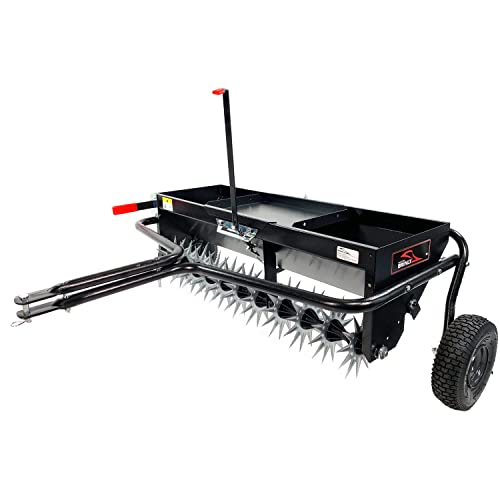
The Brinly AS2-40BH-P combines aeration with spreading in a single tow-behind unit, enabling seed, fertilizer, or lime to be introduced into the soil at the same time as core aeration. This integrated approach can speed lawn renovation projects by improving soil contact and distribution efficiency, particularly helpful for compacted soils or patches that require deeper penetration.
Key enhancements include a weight tray capable of holding up to 75 pounds for deeper soil penetration in tough substrates, and 3-D tines crafted from galvanized steel. The rugged tine design resists bending and corrosion, supporting sustained performance in hard or compacted soil. The combination design helps maintain a consistent soil interface, promoting seed-to-soil contact and more uniform germination.
Operational considerations emphasize tandem tasks. Users can space out seed release and aeration to achieve even coverage while avoiding over-tilling or uneven seed depth. The 40-inch spread width provides wide coverage to minimize passes, which reduces overall mowing and spreading time on larger lawns.
John Deere Tow-behind Lawn Spreader

This John Deere tow-behind spreader emphasizes simplicity and durability. With a 130-pound capacity, it supports extended spreading sessions between refills, making it suitable for mid-to-large lawns where frequent stops would disrupt workflow. The unit’s manual operating design provides direct control over application rate and pattern, allowing precise adjustments to suit different turf conditions and product types.
Durability stems from a polyethylene construction that balances lightweight handling with resilience against weather exposure. While not the heaviest-duty model in the lineup, its robust build is well-suited for residential lawns, gravel driveways, and garden patches where reliable performance without frequent service is valued. The design supports straightforward maintenance and lower maintenance costs over time.
Brinly BS361BH-A Deluxe Tow Behind Broadcast Spreader

The Brinly BS361BH-A stands out with a high-capacity 175-pound hopper, designed to maximize time spent spreading before refilling. The deluxe model includes a clear-top hopper cover to keep moisture out and dust in, preserving material quality and reducing clumping or clogging during application.
The extended Easy-Reach handle lets you operate the hopper gate directly from the tractor seat, enhancing convenience for users with little time or mobility constraints. Built for longevity, the unit uses a heavy polyethylene hopper with stainless steel hardware and a nylon gearbox with glass-filled nylon gears. This combination helps resist corrosion and wear, making it a strong choice for regular, larger-area lawns that demand fewer maintenance interruptions.
AUTOSAVER88 42″ Tow Behind Lawn Sweeper
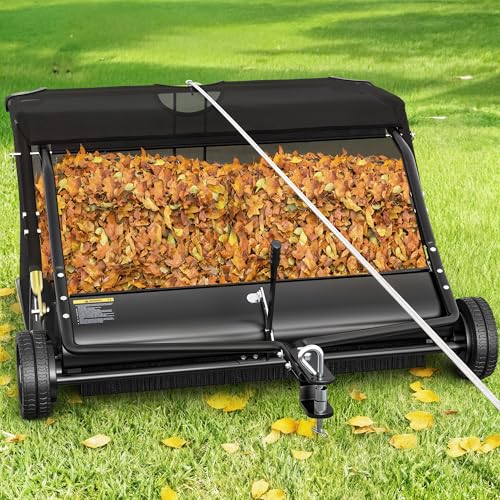
The AUTOSAVER88 42″ Tow Behind Lawn Sweeper is a complementary tow-behind tool designed for leaves, grass clippings, and other debris. While not a spreader itself, its 42-inch sweeping width and 12.9 cubic feet capacity enable efficient cleanup of yards between spreading tasks, helping maintain a tidy lawn and preparing surfaces for subsequent seeding or fertilizing applications.
The sweeper’s universal hitch makes it compatible with a wide range of lawn tractors, zero-turn mowers, and ATVs. The hopper is designed for straightforward emptying, with a rope-dump action that simplifies clearing collected material. This model is best used as a finish-care accessory when fall cleanup or post-application cleanup is part of a broader lawn care routine.
Buying Guide
Choosing the right tow-behind spreader or compatible tool requires balancing capacity, coverage, build quality, and terrain compatibility. The following considerations help frame a smart purchase for different lawn sizes, products, and seasonal needs.
Spreader Capacity and Coverage
- Hopper capacity determines how often you refill. Larger yards benefit from 130–175 lb hoppers, reducing downtime during big spreading tasks.
- Spread width and adjustable settings control how evenly product is distributed. Wider spreads save time on large lawns but require careful calibration to avoid over-application on slopes or delicate turf.
- Combination units (aerator-spreader) can streamline soil preparation and seed/fertilizer placement, but consider whether you need both functions regularly.
Durability and Materials
- Steel frames with powder coatings resist corrosion and rust, especially in environments with fertilizer or salt exposure.
- Polyethylene hoppers are lightweight and durable, but verify UV resistance for prolonged sun exposure.
- Gearbox and tine assemblies should use materials like stainless steel or reinforced nylon to withstand frequent use and varied soils.
Terrain Compatibility
- Wide, non-marking tires improve stability on uneven turf, gravel, or light snow.
- Aerator-integrated tools are best for lawns with compacted soil or that require core aeration before seeding.
- Consider hitch compatibility with your current tractor or riding mower to avoid retrofit costs.
Maintenance and Accessories
- Hoppers with covers prevent moisture-related clumping; keep spare parts like gates, gears, and tines in stock for long-term use.
- Cleaning after use prevents corrosion and ensures more consistent performance across seasons.
- Ease of assembly and adjustments can reduce learning curves and improve on-task efficiency.
Cost and Value
- Higher-capacity models and deluxe features (cover, extended handles) add upfront cost but can lower refill frequency and improve usability over time.
- Combination tools may carry a premium but save money and space by replacing multiple separate devices.
- Consider the total property size and how many tasks you perform regularly to determine the best overall value.
Across these selections, the best choice depends on your lawn size, soil conditions, and maintenance habits. For large properties and frequent applications, options with higher hopper capacity and extended handles tend to offer greater efficiency. If soil health and deep penetration are priorities, aerator-spreader combinations can deliver more uniform seed-to-soil contact. For debris management and seasonal upkeep, pairing a high-capacity spreader with a versatile sweeper can streamline fall cleanup and spring reseeding workflows. Weigh durability, ease of use, and compatibility with existing equipment to select a model that fits your yard best.