Best Riding Lawn Mower Rating for Larger Yards and Ease of Use
Answering the question: which riding lawn mowers rate best for American yards, budgets, and long-term maintenance? This guide compares top-rated gas and electric riding mowers to help buyers choose the right model for their yard size, gate width, and desired finish. Ideal buyers include homeowners with up to 2 acres, those seeking quick mowing with mulching capability, and users who want a zero-turn option for tight spaces. The table below highlights five strong contenders across gas and electric options to simplify comparison.
| Product | Deck Width | Engine / Power | Best For |
|---|---|---|---|
| CRAFTSMAN 36″ Gas Riding Lawn Mower | 36″ | 11.5 HP Briggs & Stratton | Small-to-medium yards, tight spaces |
| CRAFTSMAN 42″ Gas Riding Lawn Mower | 42″ | 17.5 HP Briggs & Stratton | Medium yards, faster mowing |
| EGO Power+ Electric Riding Lawn Mower | 42″ | Electric, 21 HP equivalent | Battery flexibility, zero-emission |
| Greenworks 60V Riding Mower | 30″ | 60V Brushless, 16 HP equivalent | Battery-powered convenience |
| Husqvarna Z254F / TS 148X | 54″ / 48″ | Kawasaki 23 HP / Briggs 24 HP | Large yards, durability, high-cut quality |
Craftsman 36-Inch Gas Riding Mower

The Craftsman 36″ gas ride-on mower uses an 11.5 HP Briggs & Stratton single-cylinder engine for reliable starts and steady performance. Its 36″ reinforced deck is designed to cut up to 2 acres and fit through narrower gates, making it suitable for compact backyards and smaller lots. The included mulching kit helps return nutrients to soil, supporting lawn health. Best for owners with tight gate access or who need a lower-profile mower for precision edging. Caution: smaller deck may require more passes on thick grasses.
Craftsman 42″ Gas Riding Mower
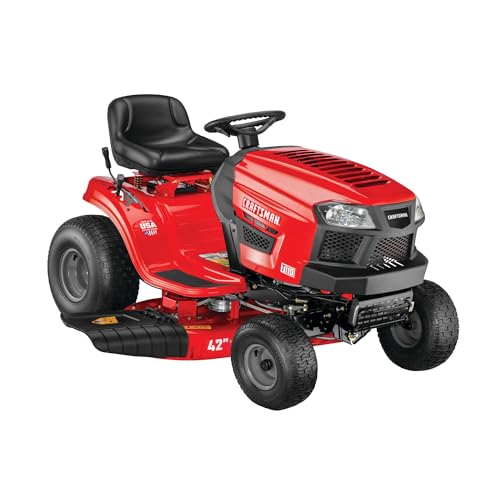
The Craftsman 42″ model offers a 17.5 HP Briggs & Stratton single-cylinder engine and a 7-speed transmission. A larger deck improves mowing efficiency on medium to larger lawns while maintaining the same rugged build as the 36″ model. Best for homeowners who want a balance of speed and maneuverability with the option to mulch. Better for wider mowing paths, but keep in mind gate width and storage space requirements. Limitation: heavier and taller, which may be harder to lift for maintenance checks.
EGO Power+ Electric Riding Lawn Mower

The EGO Power+ is a 42″ electric riding mower with six 56V 6.0Ah batteries included, offering the equivalent of 21 horsepower. It can mow up to 1.5 acres per charge, with the option to add more batteries for longer runtimes. Best for buyers prioritizing zero-emission operation and lower maintenance. Choose this if you have easy access to charging and prefer quieter operation. Caution: performance depends on battery availability and grass condition; heavy work may require extra battery packs for larger properties.
Greenworks 60V Riding Lawn Mower

Greenworks delivers a heavy-duty 60V system with a 30″ deck and a four-battery setup described as delivering up to 1.25 acres per charge, depending on grass conditions. The mower features a 4-in-1 deck and a deck wash port for easier clean-up. Best for buyers seeking a compact electric option with robust cutting performance. A limitation to note is runtime variability with grass density; plan charging breaks for larger properties.
Husqvarna Z254F 54-Inch Gas Zero-Turn
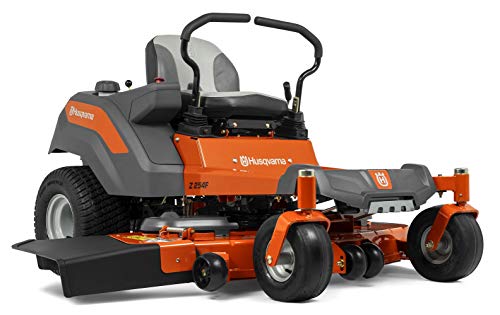
The Husqvarna Z254F pairs a 23 HP Kawasaki engine with a ClearCut 54″ deck for a wide, clean cut and improved bagging. Its hydrostatic transmission provides smooth control, and the wider deck is ideal for larger yards or fields. Best for homeowners who want fast mowing with high efficiency and professional-like finish. Caution: zero-turns require more space to maneuver safely and may have a steeper learning curve for beginners.
Buying Guide
What deck size do I need?
Deck width affects mowing time and gate clearance. A 36–42″ deck suits small-to-medium yards and narrow gates. 46″ and 54″ decks are better for larger lawns, reducing passes but require more storage space and wider turning clearance.
Gas vs. electric: which is right for you?
Gas mowers offer longer runtime on large properties and strong performance on thick grass. Electric mowers provide lower noise, zero emissions, and simpler maintenance but may require battery planning or charging breaks for big yards.
Maintenance considerations
Engine-based models require oil checks, spark plug maintenance, and air-filter replacements. Electric models need battery care, charging, and occasional motor upkeep. Consider warranty coverage and availability of service centers in your area.
Best for gate access and maneuverability
Smaller decks (36″–42″) are easier to navigate through gates and tight spaces. Zero-turns excel in lawns with many obstacles or irregular shapes, offering faster mowing once you’re comfortable with the controls.
How to compare value
Focus on deck width, engine power, transmission type, mulch compatibility, and included battery configurations for electrics. A larger deck and mulching kit can reduce time spent finishing lawns, while robust transmission ensures smooth mowing across varied terrains.
Quick buying checklist
- Yard size and gate width
- Preferred power source (gas or electric)
- Maintenance footprint and service options
- Need for mulching and bagging capabilities
- Storage and maneuverability considerations
FAQ
Q: What is the typical mowing width I should choose?
A: For smaller parcels, 36″–42″ is common. For larger lawns, 46″–54″ saves time and improves efficiency.
Q: Do electric riders cut as well as gas ones?
A: They can, especially with larger battery kits and multi-battery configurations, but results depend on grass density and battery runtime.
Q: Is a zero-turn mower necessary for a flat, open yard?
A: Not necessary, but it reduces turning radius and can speed up mowing on larger, obstacle-free sections.
Q: How important is mulch vs. bagging?
A: Mulching returns nutrients to the lawn, while bagging removes clippings. If lawn health is a priority, mulching capability is beneficial.