Best Rollers Behind Lawn Mowers for Even Lawns
Answer: Rollers behind lawn mowers are best for homeowners seeking quick lawn leveling, seed-bed preparation, or smoothing surfaces after mole or frost damage. The top picks below are ideal for different yard sizes and vehicle setups. Use this guide to pick the right roller for your mower and terrain, whether you need a lightweight push model or a heavy-duty tow-behind drum.
Summary Table: Selected Rollers
| Product | Width | Drum Capacity | Best For |
|---|---|---|---|
| Agri-Fab 18 in x 48 in Tow Behind Poly Lawn Roller | 48 in | 550 lb (water) | Medium to large yards; leveling high spots |
| VEVOR Tow Behind Lawn Roller | 48 in (approx) | 400 lb (sand/water) | Seed bedding and soil compaction; easy storage |
| Agri-Fab 45-0216C Steel Lawn Roller 24″ x 48″ | 24 x 48 in | 910 lb (water) | Heavy-duty leveling for larger projects |
| COSTWAY Lawn Roller Push/Tow Behind | Variable (tow/push) | 113 L capacity | Versatile use with or without tractor |
| Brinly 42 Gallon 390 lb Tow-Behind Poly Roller | 36 in width | 390 lb (water) | Medium yards; quick smoothing and seed bed prep |
Agri-Fab 18 in x 48 in Tow Behind Poly Lawn Roller

Features: Effective lawn leveling helps flatten uneven grass caused by moles, gophers, frost heave, and other imperfections. Large water-filled drum holds up to 550 lbs for wide 48 in swaths. Easy fill and drain with a standard garden hose for quick setup and seasonal storage.
Best for: Homeowners with tractors or towing vehicles working large or irregular lawns that need even smoothing and quick fill/drain capability. Consider this when you want maximum weight in a tow-behind package with broad coverage.
Caution: Heavy weight requires safe attachment to a suitable hitch and careful towing on slopes to avoid turf damage.
VEVOR Tow Behind Lawn Roller

Features: Large-capacity cylinder holds up to 400 lbs of sand or water. Easy assembly and connection to a vehicle for efficient lawn compaction. Heavy-duty steel frame provides durability, stability, and safer operation, with convenient storage options when not in use.
Best for: Homeowners who want a robust roller that’s easy to attach to tractors or ATVs and store after use. Choose this if you value a sturdy frame and straightforward setup.
Caution: Monitor weight to avoid over-compactment in newly seeded areas; ensure even weight distribution during rolling.
Agri-Fab 45-0216C Steel Lawn Roller 24″ x 48″
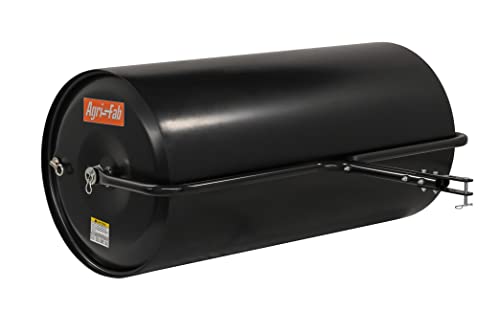
Features: Durable 24 in diameter by 48 in wide poly drum with a steel frame. Drum capacity 910 lb when filled with water. Lightweight to carry when empty, with a drain plug for easy filling and emptying.
Best for: Users needing a high-capacity roller that can flatten significant terrain or work across larger swaths quickly. Choose this for heavy-duty residential or small commercial applications.
Caution: Heavier when filled; ensure compatible towing gear and safe handling on inclined surfaces.
Brinly 42 Gallon 390 lb Tow-Behind Poly Lawn Roller

Features: 36″ rolling width with a 390 lb capacity. New Easy-Turn drum plug design for quicker filling and draining. Designed for medium to large yards and effective for erasing lawn damage from moles or frost and packing down loose dirt or sod.
Best for: Yard owners seeking a balanced option between coverage and weight, with a user-friendly plug system for faster setup. Good for regular maintenance and seedbed preparation.
Caution: Not the heaviest option; for very uneven or heavily compacted soils, a thicker drum or additional passes may be needed.
COSTWAY Lawn Roller Push/Tow Behind

Features: Sturdy, rust-resistant construction with powder-coated finish. The roller supports push, pull, or tow-behind use and includes a removable drain plug for easy filling and emptying. Large capacity cylinder holds up to 113 liters of water or sand.
Best for: Gardeners who want a versatile roller usable with or without a tractor, offering flexible handling in small or tight spaces. Choose this if you need a multipurpose tool for different setups.
Caution: Verify compatibility with your mower or tractor hitch and ensure proper maneuverability around landscaping features.
Buying Guide
What size roller do I need? Choose width based on yard size and mower availability. Wider rollers cover more ground but can be harder to maneuver in tight spaces. Narrow rollers are easier to control but require more passes for uniform leveling.
How much weight is optimal? Heavier rollers provide more soil compaction and leveling but demand stronger towing and careful handling. Lighter rollers are easier for smaller lawns or semi-regular maintenance.
What material matters? Poly drums are lighter and rust-resistant; steel frames offer durability for frequent use or larger jobs but can add weight. Consider environment and storage space when selecting materials.
Should I fill with water or sand? Water offers uniform weight and is easy to drain; sand provides stable mass if you don’t want the risk of leaks. Water filling is common for seasonal storage.
Is a tow-behind model better than a push roller? Tow-behind models are ideal for larger lawns and tractors, enabling quick coverage. Push models work well for smaller properties or sites without tractors.
What about compatibility? Ensure your mower or tractor can tow the roller and that the hitch and mounting points are appropriate. Some rollers include universal fittings; others require specific adapters.
FAQ
- What is the main purpose of a lawn roller? To flatten uneven areas, compact seed beds, and remove minor imperfections for a smoother lawn.
- Can I use a lawn roller on newly seeded lawns? Yes, but avoid over-rolling; use light passes to prevent seed damage and soil compaction.
- Can I fill a roller with sand instead of water? Some models allow sand for fixed weight, but water is more common and easier to drain for storage.
- Is a larger roller always better? Not necessarily. Match width and weight to your yard size and mower capabilities to balance efficiency and control.
- Do I need a tow-behind model if I have a small yard? A push model may suffice for small spaces and walk-behind mowers, offering easier handling without a tractor.
- What maintenance is required for lawn rollers? Regularly drain and clean the drum, inspect the hitch connections, and ensure the drain plug seals properly to prevent leaks.