Best Rotary Tillers for Tractors: Top 5 Picks for 2026
Answering the question, these rotary tillers are designed to fit many Class 1 three-point tractors and help prepare seedbeds efficiently. They are best for small farms, vegetable plots, nurseries, and garden beds where soil needs loosening, weed trimming, and mixing of composted material. The following models stand out for compatibility, depth capability, and maintenance-friendly designs.Below is a quick comparison of the top five selections to consider.
| Product | Working Width | Maximum Depth | ||
|---|---|---|---|---|
| Heavy Duty 3 Point Hitch Rotary Tiller 3.5 FT (QEEKA) | 41.34 in | 3-5 in | Single Speed PTO | Small gardens and nurseries needing a compact yet capable tiller |
| Heavy Duty 3 Point Hitch Rotary Tiller 3 FT (QEEKA) | 37.40 in | 3-5 in | Single Speed PTO | Medium plots and tight spaces |
| Titan Attachments 3 Point 48″ Rotary Tiller | 48 in | Up to 5 in | Single Speed PTO | Medium to larger plots with even soil mixing needs |
| MechMax 72 in Rotary Tiller | 72 in | Depth adjustable, 35–70 HP range | PTO with Slip Clutch | Large gardens and mid-size farms requiring broad coverage |
| DOPERFE 49″ 3-Point Rotary Tiller | 49 in | 4.7 in | 540 RPM PTO | Flexible operation on diverse crops and terrains |
Heavy Duty 3 Point Hitch Rotary Tiller 3.5 FT

This 49.6-inch tiller is designed for Class 1 three-point tractors and provides a working width of about 41.34 inches with a 3-5 inch cutting depth. It uses 20 alloy steel blades suitable for most soils, delivering fine seedbeds and clod-free soil. Best for small farms, vegetable beds, and nurseries where compact equipment is advantageous. Choose this if you have limited tractor width and want reliable soil mixing with a simple single-speed PTO drive. A potential limitation is depth variance in hard soil or heavy clay, which may reduce maximum depth achievable in practice.
Heavy Duty 3 Point Hitch Rotary Tiller 3 FT 37 in

With a 37.40-inch working width and 3-5 inch depth range, this tiller features 16 alloy steel blades for broad soil compatibility. It is well-suited for gardeners needing a balance between maneuverability and tilled area. Best for mid-sized plots and orchard margins where space is a premium. If you need more surface coverage than the smaller model but less than a full-width tiller, this is a solid middle-ground choice. Limitation: fewer blades can mean slower operation in very dense soil compared with larger models.
Titan Attachments 3 Point 48″ Rotary Tiller

The 48-inch tiller fits Category 1 tractors and uses a single-speed PTO with replaceable, hardened steel blades. It can till up to about 5 inches deep and features adjustable ski settings for depth control. Best for small farms or produce gardens where reliable, uniform tilth is essential. Choose this if you want a sturdy, straightforward tiller with accessible replacement blades. Limitation: blade replacement requires searching for compatible parts (part number 191644).
MechMax 72 in Rotary Tiller
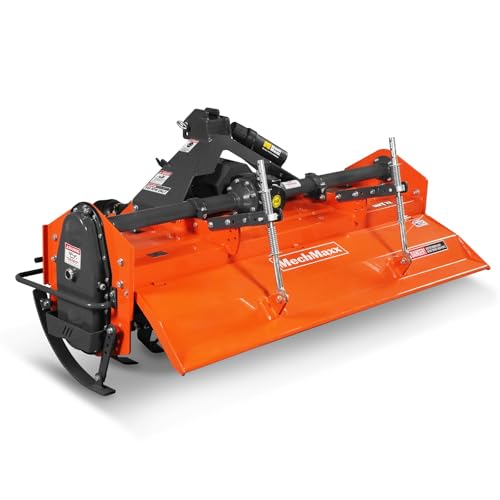
The 72-inch tiller offers a wide working width for large plots while using a fully gear-driven transmission for smooth power transfer. It uses hardened steel, replaceable tines and adjustable side skids for consistent depth. Best for mid-size to large gardens and farms needing higher throughput. Better for users who prioritize torque and durable gearing over compact size. Limitation: larger footprint requires more space and tractor stability considerations on uneven ground.
DOPERFE 49″ 3-Point Rotary Tiller

Designed for category 1 tractors, this 49-inch tiller features a 540 RPM PTO drive and replaces L-shaped tines for efficient soil loosening and mixing. It has a maximum working depth around 4.7 inches, which suits a broad range of soil types. Best for flexible operation across diverse terrains and crops. Use with caution in rocky soil, as debris can hinder tine performance and require blade maintenance sooner than softer soils.
Buying Guide: Key Considerations For Choosing A Rotary Tiller
- Tractor compatibility: Confirm Category 1 3-point hitch compatibility and verify PTO shaft length and speed (540 RPM is common).
- Working width vs. maneuverability: Wider tillers cover more area but require more space to operate and turn. Choose based on plot size and tractor stability.
- Depth capability: Maximum tilling depth (3-5 inches is typical) depends on soil condition. Very hard or rocky soil may limit depth achieved.
- Blade type and durability: Replaceable L-shaped blades are common; check blade material and availability of replacements.
- Gear-driven vs. chain-driven: Gear-driven tilters generally offer smoother power transfer and durability for heavier soils. Chain-driven units may be lighter and simpler.
- Depth control features: Side skids and adjustable depth settings help maintain uniform tilth across passes.
- Weight and transport: Heavier models require careful handling for mounting and transport. Lighter units are easier to maneuver but may offer less durability in tough soils.
- Maintenance needs: Look for accessible grease points, gear lubrication, and replacement part availability.
Frequently Asked Questions
- What size tiller should I choose for a small garden? – A tiller with a working width around 37–41 inches is typically best for small gardens, balancing maneuverability and soil coverage.
- How deep can a standard rotary tiller go? – Most tillers reach 3–5 inches in ideal conditions, but depth depends on soil hardness, blade wear, and operator technique.
- Do gear-driven tillers last longer than chain-driven ones? – Gear-driven models generally offer greater torque and durability in dense soil, but require proper maintenance to prevent wear.
- Are these tillers universal for Category 1 tractors? – Yes, the listed models are designed for Class 1 three-point hitches, but always verify tractor horsepower compatibility and hitch dimensions before purchase.
- Can I till a slope or embankment with a tiller? – Tilling on slopes is possible but requires caution to maintain stability and reduce soil erosion; follow manufacturer depth and speed recommendations.
- What maintenance is needed after tiling? – Clean blades, check for wear, lubricate gearboxes and PTO connections, and replace blades as needed to maintain performance.