Best Sand Filter Solutions for Irrigation Systems: Clean Water, Creak-Free Drip
Choosing the right sand filter for an irrigation system helps protect pumps, emitters, and sprinklers from sand, sediment, and debris. The following article highlights five top-rated spin-down and sand-filter options from Amazon, focusing on flow capacity, filtration mesh, and ease of maintenance. Each product section includes quick-access details and practical considerations to help you compare options for home lawns, gardens, and small to medium irrigation networks.
Summary of chosen products
| Product | Brand | Typical Use | Filtration Type | Notes |
|---|---|---|---|---|
| Rusco Spin Down Separator | Rusco | Irrigation systems up to 50 GPM | 100-mesh spin-down | Clear body option helps flush timing |
| H2O PRO Spindown Sediment Filter | Star | Well and irrigation pumps | Spin-down, visible sediment | Adapters for 1″ and 1-1/2″ |
| SimPure Spin Down Filter | SimPure | Whole-house and irrigation pre-filter | 100-mesh stainless screen | Reputable for BPA-free construction |
| Rusco Vu-Flow 100 Mesh | KleenWater/Rusco | Broad irrigation use | 100-mesh screen | Includes dual can holders |
| DIG Drip Filter | DIG | Drip irrigation and micro-sprinklers | 155/200 mesh options | High flow up to 13 GPM |
Rusco 1-1/2″ Spin Down Separator Sand/ Sediment Water Filter
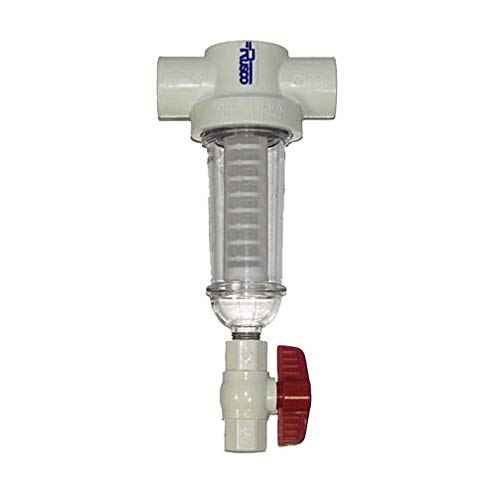
The Rusco Spin Down Separator provides a practical solution for irrigation systems dealing with sand and sediment. With a capacity up to 50 GPM, it uses a spin-down mechanism to trap debris while allowing clean water to continue flowing. The model listed includes a compact package and basic dimensions that fit common filtration housings. Its design supports easy flushing when sediment buildup becomes noticeable, helping protect pumps and emitters from abrasive particles. This option is particularly suitable for homeowners with sandy wells or outdoor irrigation lines where sediment is a recurring concern.
H2O PRO Spindown Sediment Water Filter

The H2O PRO Spindown Sediment Filter is designed to protect irrigation pumps and plumbing fixtures by removing sand and debris before entering pumps. It is available in 1″ and 1-1/2″ configurations with adapters, enabling compatibility with various irrigation lines. The clear filter body allows users to visually assess when sediment accumulation warrants flushing. This filter helps extend the life of pumps, tanks, and sprinkler heads by reducing abrasive particles and minimizing clogging in the system. Easy maintenance makes it a practical upgrade for many well-water systems.
SimPure 100/500 Micron Spin Down Sediment Filter

SimPure’s Spin Down Sediment Filter offers a robust approach to protecting domestic water and irrigation lines. It emphasizes a flushable and reusable design with a 100-micron stainless steel mesh as a protective barrier, helping to trap rust, silt, and other particulates before they reach fixtures. The unit supports multiple thread types (MNPT and FNPT), broadening compatibility with city or well water supplies. Its transparency and brass valve head support easy visibility and reliable operation, contributing to system longevity in homes with variable water quality.
Rusco Vu-Flow 100 Mesh Spin Down Filter System

The Rusco Vu-Flow system combines spin-down filtration with a two-can holder setup for enhanced organization and maintenance. Featuring a 100-mesh screen, this option is designed to capture sediment in irrigation lines while maintaining a steady flow. The kit’s dual-housing concept can support larger irrigation networks or multi-line configurations, offering a practical path to centralized filtration. This solution suits households with longer feeds, multiple zones, or higher sand loads from well water sources, balancing filtration efficiency and accessibility.
One Stop Outdoor 3/4″ Drip Filter with 155 Mesh Screen

This All-Purpose filter is designed for drip irrigation and micro-sprinkler systems. It uses a 155-mesh screen to protect emitters and valves from sediment and debris while maintaining low friction loss for longer intervals between cleanings. Its compact 3/4″ FHT to MHT hose-thread connections support easy integration into smaller irrigation networks or zone lines, making it a practical choice for yard-scale drip systems prone to sediment-related clogging.
Buying Guide: Key Considerations for Sand Filters in Irrigation
When selecting a sand filter for irrigation, consider reliability, filtration mesh, flow capacity, maintenance, and compatibility with your piping. The following perspectives help address common scenarios:
- Filtration mesh and debris size: Filters with 100-mesh (approximately 150 microns) capture fine sediment while avoiding excessive pressure loss. If your water contains finer particles, a tighter mesh (e.g., 100 microns) may be preferable, but check flow compatibility with your pump and lines.
- Flow rate compatibility: Match the filter’s maximum flow (GPM) to your irrigation system’s demand. A mismatch can cause pressure drops, reduced sprinkler efficiency, or pump strain. Spin-down designs often balance filtration with steady flow across zones.
- Maintenance and flushing: Clear, visible filter bodies simplify maintenance. Spin-down systems facilitate periodic flushing to remove collected sediment, reducing downtime and preserving sprinkler performance.
- Material and compatibility: Stainless steel mesh and durable plastics are common. Ensure adapters or fittings align with your pipe sizes (1″, 1-1/2″, 3/4″ etc.). For well water, consider corrosion resistance and the ease of cleaning the screen.
- System integration: For drip systems, evaluate how a filter affects pressure and distribution uniformity. Drip-specific filters with larger filtration areas can reduce clogging in emitters and micro-sprinklers.
- Maintenance frequency and cost: Reusable filters save replacement costs but require periodic flushing and cleaning. Replacements screens should be readily available for long-term maintenance.
- Visible sediment indicators: Clear filter housings let you observe sediment accumulation, enabling timely maintenance and avoiding unexpected system downtime.
In practice, homeowners with sandy wells or outdoor irrigation lines typically prioritize 100-mesh filtering, clear housings, and compatibility with 1″ to 1-1/2″ lines. For drip systems, a 155-mesh or 100-mesh option with a high filtration surface reduces clogging in emitters and prolongs system life. Assess your water source, flow requirements, and maintenance preferences to select the best match for your landscape needs.