Best Snow Protection for Plants: Top Winter Covers for Healthier Gardens
When frost, snow, and freezing winds threaten your plants, choose a protective cover that creates a warmer microclimate while letting light, air, and water reach roots. The best options below are suitable for home gardeners, container growers, and small orchard plots. Each product is evaluated for who it’s best for, practical use, and a clear trade-off to help you decide.
Summary table of selected products:
| Product | Best For | |
|---|---|---|
| MAQIHAN Plant Cover – 6.5 ft × 13 ft | Flexible, reusable frost and snow protection for a variety of plants | 6.5 ft x 13 ft |
| AlpineReach Frost & Sun Protection 10 × 30 ft | All-season use with light transmission, ideal for larger beds | 10 ft x 30 ft |
| AlpineReach Frost & Sun Protection 10 × 50 ft | Large garden rows and extended growing seasons | 10 ft x 50 ft |
| FARAER 7 ft × 10 ft | Medium coverage for raised beds, herbs, perennials | 7 ft x 10 ft |
| SUNPRO 10 ft × 30 ft | Large, cut-to-size frost protection with good light transmission | 10 ft x 30 ft |
Notes: All products are designed to shield against frost, snow, and cold winds while allowing essential light and air. The right choice depends on your garden size, plant types, and whether you prioritize portability, reusability, or maximum coverage.
MAQIHAN Plant Cover – 6.5 ft × 13 ft

The MAQIHAN 1 oz/sq non-woven fabric provides insulation against frost while allowing sunlight to penetrate for continued growth. This cover serves triple duties as frost protection, snow barrier, and insect barrier. It can be cut to fit and laid loosely over plants or fixed with hoops or frames. Best for gardeners seeking a versatile, reusable option for varied plant sizes.
Who it’s best for: Small-to-medium beds or container gardens needing adjustable coverage. Why selected: Strong balance of insulation, breathability, and multi-use design. Limitation: May require hoops or frames for taller crops to stay securely in place.
AlpineReach Frost & Sun Protection 10 × 30 ft

All-season protection with breathability, designed to shield against frost, snow, and winds while promoting healthy growth. Its permeable design lets light, air, and water reach plants, helping seedlings and established plants alike. Ideal for gardeners who want a robust cover for extended seasons without sacrificing light.
Who it’s best for: Gardeners needing year-round protection in temperate or variable climates. Why selected: Balanced insulation and light transmission. Limitation: One size may not fit very large plants without trimming.
AlpineReach Frost & Sun Protection 10 × 50 ft

Extra-large coverage for long rows and larger plantings. Keeps frost at bay and supports an extended growing season. The breathable fabric shields from winter weather while maintaining air flow for roots and near-surface systems.
Who it’s best for: Large vegetable patches, fruit trees, or multiple raised beds. Why selected: Best for high-coverage needs on a budget. Limitation: Larger sheets can be cumbersome to handle in windy conditions without proper securing methods.
FARAER 7 ft × 10 ft Plant Covers

A heavyweight 1 oz fabric that creates and retains warmth, protecting against frosts down to about 24°F. It transmits roughly 70 percent of light, acts as a windbreak, and allows rain and irrigation to reach soil. Best for extending seasons for strawberries, herbs, and perennials.
Who it’s best for: Home gardeners with medium-sized beds or row crops. Why selected: Strong warmth retention with good light permeability. Limitation: Might require staking or pins to prevent wind movement on exposed sites.
SUNPRO 10 ft × 30 ft Frost Protection Cover
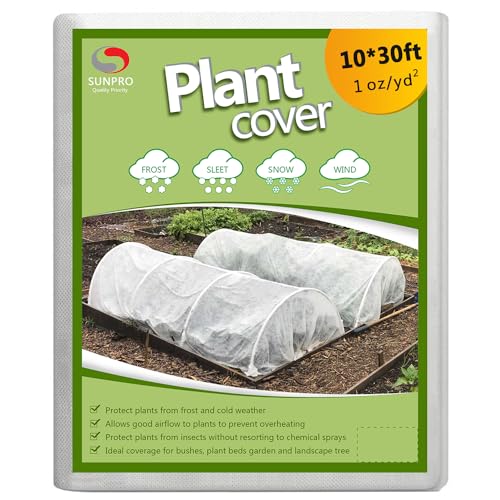
This large, cut-to-size cover offers 24°F to 28°F freeze protection with 70–85% light transmission. It works as a multi-season barrier against frost, snow, and pests while allowing air and water movement. It’s suitable for strawberries, herbs, perennials, or fruit trees that need protection without heavy shading.
Who it’s best for: Gardeners needing a scalable cover that maintains light for photosynthesis. Why selected: Excellent blend of protection and light transmission. Limitation: Thick snow load may require frequent checks to prevent sagging.
Buying Guide: Snow Protection For Plants
What to consider when choosing a plant cover:
- Garden size and layout: Larger beds benefit from long, wide covers; smaller plots may prefer modular or cut-to-fit options.
- Material and breathability: Non-woven polypropylene provides insulation while allowing light. Ensure the fabric is UV-stabilized for reuse.
- Light transmission: Adequate light is essential for photosynthesis; aim for at least 70% light transmission if possible.
- Temperature range: Check the stated frost protection level and ensure it matches your climate zone and plant sensitivity.
- Ease of use: Consider pop-up designs or covers that are easy to place and remove, especially for frequent plant checks.
- Durability and reuse: Reusable fabrics save money over time; look for stitching quality and fabric thickness (1.0–1.2 oz/yd² are common for frost covers).
- Security: Some covers perform better with hoops, frames, or ground stakes to prevent movement during wind or snowfall.
Frequently Asked Questions
- What temperature is best for using frost covers? Most covers provide protection down to roughly 24–28°F, but actual performance depends on plant tolerance and local microclimates.
- Can I use these covers on perennial beds year-round? Yes, many covers are designed for all-season use, but verify the specific product’s temperature and light guidelines.
- Should I remove the cover daily? In cold spells, you may keep it in place at night and remove during mild days to prevent overheating; lighter fabrics permit continued light exposure.
- How do I secure covers without harming plants? Use hoops, frames, stakes, or weights like rocks to secure edges; avoid pressing too tightly on stems.
- Are these covers suitable for container plants? Yes, most covers can be adapted to containers with careful measurement and adjustments.
- Will these covers protect against heavy snow? They help reduce snow accumulation on foliage, but heavy accumulation should be removed to prevent damage or breakage.