Best Soil pH and Moisture Tester for Gardens: 5 Top Picks for Healthy Plants
Answering: Find reliable soil pH and moisture testers to keep your plants thriving. This guide highlights five versatile testers suitable for garden beds, lawns, indoor plants, and farms. Each option is evaluated for ease of use, accuracy, and value. Best for beginners: simple plug-and-test meters. Best for seasoned gardeners: multi-function models with screens and backlights. Best for back-friendly users: rotating dial designs. Use this summary to compare at-a-glance features before buying.
| Product | Key Functions | Best For |
|---|---|---|
| SONKIR MS02 | Moisture, pH, Sunlight | All-around garden use |
| YAMRON 4-in-1 | Moisture, pH, Temperature, Sunlight | Outdoor plants with backlit display |
| Moisture Meter 7-in-1 | Moisture, pH, Temp, Light, EC, TDS, Fertility | In-depth plant care |
| Raintrip 4-in-1 | Moisture, pH, Light, Nutrients | Comprehensive care without batteries |
| Soil Test Kit 2-in-1 | Moisture, pH | Easy dual-readout |
SONKIR Soil pH Meter MS02 — 3-in-1 Tester
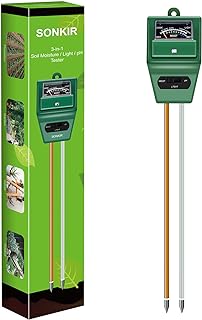
The SONKIR MS02 combines soil moisture, pH, and sunlight testing in one compact unit. It requires no batteries and delivers readings after a brief insertion into soil. Best for gardeners who want a simple, battery-free tool for basic soil monitoring. Suitable for gardens, lawns, farms, and indoor/outdoor use. Caution: very dry soil may not show movement; water before testing for accurate results.
YAMRON 4-in-1 Soil Moisture Meter

The YAMRON 4-in-1 tester measures soil moisture, pH, temperature, and sunlight with a backlit LCD display. It uses 4 AAA batteries (not included) and includes a backlight for easy reading in dim conditions. This model is ideal for gardeners who need more environmental data to guide watering and fertilization, especially for outdoor plants. Best for: those who want quick, digital readings in all four areas. Limitation: requires batteries for operation.
Moisture Meter 7-in-1 Digital Soil Tester

This 7-in-1 tester covers moisture, pH, temperature, light, plus fertility indicators (EC and TDS). Its large LCD with backlight enhances readability in daylight or dark spaces. It relies on battery power (4 x AAA). Choose this when you need a broad view of soil health to time watering, nutrient application, and light exposure. Caution: battery maintenance is required; low-battery warnings are shown on the display.
Raintrip 4-in-1 Soil Moisture Meter

The Raintrip 4-in-1 tester provides moisture, pH, light, and nutrient considerations in a single, battery-free unit. It features a 90-degree rotating dial designed for easy reading without bending, enhancing comfort for seniors or garden enthusiasts with back issues. Best for: back-friendly use and quick, all-in-one checks. Limitation: may require occasional cleaning after soil testing to keep readings accurate.
Soil Test Kit 2-in-1 — Dual Dial

The 2-in-1 Soil Test Kit combines moisture and pH testing with a clear dual-dial readout for immediate interpretation. It’s battery-free and straightforward, making it suitable for beginners and casual gardeners who want a quick snapshot of soil conditions. Best for: easy, low-maintenance monitoring. Limitation: dual-readout may not capture nuanced changes as precisely as more advanced meters.
Buying Guide: How to Choose a Soil pH and Moisture Tester
- Measurement scope: Decide whether you need moisture and pH only or additional data like temperature, light, EC/TDS, and fertility. Multi-function models save space and cost but can be more complex.
- Power source: Battery-free meters are simple and maintenance-free but may have fewer features. Battery-powered models offer backlights and more readings, yet require battery management.
- Display readability: Large LCDs with backlights improve usability in low light. For outdoor use, a bright screen helps during daytime readings as well.
- Readability design: Rotating dials and dual-dial displays reduce the need to bend and make readings quick and ergonomic.
- Soil compatibility: Some meters are suited for dry or sandy soils, while others require moist soil to function accurately. Always water dry soil before testing if the indicator won’t move.
- Durability and use case: Indoor houseplants vs. outdoor gardens may demand weather-resistant housings and longer probes for deeper root zones.
- Accuracy and calibration: Look for devices that report direct values and have straightforward interpretation. Some meters include calibration prompts or guidance in the user manual.
FAQ
- What should I test first for new plants? Start with soil moisture to avoid overwatering, then check pH if you’ve observed growth issues or soil type concerns.
- Do I need to calibrate these meters? Some models include calibration guidance; battery-powered units may require battery replacement rather than calibration.
- How often should I test soil? For container plants, test weekly during hot or dry periods. For garden beds, test at planting and then monthly during growing seasons.
- Why does the meter sometimes show no reading? Dry soil or very compacted soil can prevent a reading. Water the soil and reinsert the probe for accurate results.
- Is a high-pH soil always bad? Not necessarily. Some plants prefer alkaline soils, while others require acidic conditions. Use pH readings to adjust watering and soil amendments to meet plant needs.
- Which tester is best for beginners? A 2-in-1 or 3-in-1 model with clear readouts and a simple interface is typically most approachable for new gardeners.