Best Sphagnum Peat Moss for Garden Soils and Potting Mixes
Need sphagnum peat moss bales to improve moisture retention, aeration, and seed starting in pots or beds? This guide highlights five solid choices that are widely available and suitable for different growing needs. Whether you’re potting indoor plants, amending native soil, or starting seedlings, these products offer reliable texture and consistency. The buyer’s notes below help you match each option to your plants, space, and gardening style. A quick summary table is provided for fast comparison.
| Product | Best For | Notes |
|---|---|---|
| Indoor and outdoor container plants | Enriched with plant food; good for immediate bedding and soil mixes | |
| Seed starting and well-draining mixes | Moisture retention; helps prevent compaction | |
| Seed starting and mixed potting soils | Semi-compressed; versatile for indoor/outdoor use | |
| Bulk projects and large mixes | Large bag; high-quality moisture retention | |
| Custom soilless mixes | Coarse, Canadian sphagnum; good for aeration |
Miracle-Gro Sphagnum Peat Moss – Enriched With Plant Food
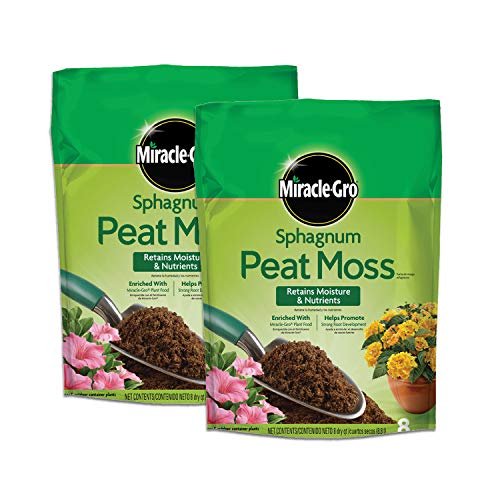
Best for container gardening where immediate nutrient availability matters. This 8 qt (2-pack) product is enriched with Miracle-Gro plant food, supporting strong root development and sustained moisture. The enriched formula reduces the need for additional amendments in many potting mixes. It is versatile for indoor and outdoor plants and can be used to blend seed starting mixes or to improve native garden soil.
Best use scenarios: houseplants in pots, herb and flower containers, seed starting projects, and soil amendments for beds that benefit from improved texture and water-holding capacity. A caveat: the plant-food enrichment means you’ll want to consider whether you prefer a neutral mix or want to control fertilization separately for per-plant needs.
Doter Organic Sphagnum Peat Moss

Best for seed starting and soil amendments where improved drainage and rootzone health are priorities. Doter peat moss emphasizes moisture retention while reducing compaction, making a good base for mixes with other components. Its acidity profile (PH 3.5–6) supports acid-loving plants such as blueberries and strawberries.
Choose this if you need a reliable base to mix with perlite or vermiculite for custom blends. A limitation to note is its strong acidity; if your plants prefer neutral to alkaline soils, plan to adjust pH with lime or select a different product.
Old Potters Organic Peat Moss

Best for seed starting and general potting soils, especially when a semi-compressed format is desired for handling and storage. This 20-quart bag provides a generous quantity for larger projects. It helps prevent waterlogging in containers and supports seedling health by preserving moisture.
Best for: indoor starter flats, patio planters, and soil mixes for small gardens. Limitation: compression can affect bulk handling; break apart thoroughly to achieve a uniform texture before mixing with other amendments.
SUN GRO HORTICULTURE INC Peat Moss 2.2 Cu Ft

Best for bulk gardening projects where large volumes of peat moss are needed. This 2.2 cubic feet bag includes high-quality Canadian sphagnum peat and is ideal for mixing with perlite or other amendments for custom potting mixes. It improves soil structure and supports robust root growth in gardens and containers.
Better for: extensive greenhouse or landscape projects, seed starting beds, and larger potting projects. Caution: large bags require storage space and careful handling to avoid clumping when mixed with other materials.
Hoffman Canadian Sphagnum Peat Moss – 18 Quart

Best for forming custom soilless mixes with controlled texture. Hoffman’s product uses premium New Brunswick sphagnum peat moss and is commonly blended with perlite or vermiculite to create well-draining media that retains moisture. Suitable for succulent and houseplant mixes, as well as hobby hydroponic or seed-starting blends.
Choose this if you want a straightforward base material for designing a tailored growth medium. Limitation: not enriched with nutrients, so you may need to add fertilizers separately depending on plant needs.
Buying Guide: How To Choose The Right Sphagnum Peat Moss
- Moisture retention vs. drainage: If you need a moisture-rich base for seedlings, lean toward products noted for high water-holding capacity. For drainage-heavy mixes, pair with perlite or vermiculite.
- pH considerations: Peat moss is naturally acidic. For acid-loving plants (blueberries, azaleas), acidic peat is beneficial. For neutral or alkaline-loving plants, plan to adjust pH with lime or choose a less acidic base.
- Form and packaging: Semi-compressed blocks or bags vary in handling. Larger bags are cost-efficient for bulk projects but require storage space and labor to mix evenly.
- Enrichment and nutrient requirements: Some products come enriched with plant food or nutrients. If you prefer to control feeding separately, choose plain peat moss and supplement as needed.
- Intended use: Seed starting, container plants, hydroponic setups, or soil bed amendments each benefit from different peat moss textures and blends. Match the product to your primary use case.
- Combination potential: Consider how each moss type blends with perlite, vermiculite, or coconut coir to achieve the exact texture and aeration your plants require.
Frequently Asked Questions
- What is sphagnum peat moss best used for in gardening?
It is widely used to improve moisture retention, aeration, and seed-starting environments in pots and soil beds.
- Should I use enriched peat moss or regular peat moss?
Enriched peat moss provides initial nutrients, which can benefit new plantings, while regular peat moss offers a neutral base to which you add fertilizers as needed.
- Can peat moss be used in hydroponics?
Yes, but it is typically mixed with other media such as perlite or vermiculite to ensure adequate aeration and drainage in hydroponic systems.
- How do I prevent peat moss from compacting in pots?
Mix peat moss with perlite or vermiculite, and avoid overwatering. Break up compressed blocks thoroughly before use to ensure even texture.
- Is peat moss suitable for acidic soil plants?
Yes, peat moss is naturally acidic and can benefit plants that prefer lower pH, such as blueberries and azaleas.