Best Spike Aerator Tools for a Healthier Lawn
Maintaining a lush, resilient lawn often hinges on proper soil aeration. Spike aerators create channels that reduce compaction, improve air and water movement, and boost nutrient uptake. This guide highlights top spike aerator options designed for American yards, from manual to rolling designs, so you can choose the best fit for your lawn size, soil type, and maintenance preferences.
The following table provides a quick comparison of five selected spike aerators, including key strengths to help you decide which model matches your lawn care goals.
| Product | Brand | Key Benefit |
|---|---|---|
| Walensee Lawn Aerator Spike | Walensee | 15 spikes for efficient penetration, durable iron, pre-assembled |
| SENVERT Rolling Lawn Aerator | SENVERT | Heavy-duty rolling design, adjustable weight, high efficiency |
| GrdnCare Rolling Lawn Aerator Tool | GrdnCare | 42 spikes, 71″ handle, sturdy steel, versatile soil compatibility |
| YIYOUPENG Pro Lawn Aerator Tool | YIYOUPENG | 21 spikes, automatic reset, efficient and ergonomic |
| Jardineer Lawn Aerator Spike Tool | Jardineer | 36″ length, 12-tip spikes, easy assembly, back-saving design |
Walensee Lawn Aerator Spike

The Walensee aerator uses 15 sharp iron spikes, each about 2.3 inches long, designed to penetrate compacted soil and thatch. Its galvanised iron construction, powder-coated finish, and long 34.6-inch handle help reduce back strain during use. The tool aims to improve drainage and prepare soil for seeding by promoting air, water, and fertilizer movement to the roots. The spikes work simultaneously to speed up aeration, making it suitable for small to medium-sized lawns, gardens, and patios.
Key considerations with the Walensee include its manual operation requirements and the need for forward assembly. For users dealing with clay or dense loam, the 15-spike design can deliver evenly spaced holes while minimizing the effort needed to reach the root zone. However, marks of wear may appear on the spikes after frequent use, so inspecting the tips and keeping the iron rust-free will extend life.
SENVERT Rolling Lawn Aerator

The SENVERT rolling aerator weighs 32 pounds and provides a high-efficiency approach to lawn aeration with a spiral-spiked tread pattern for smoother rolling. It’s designed to penetrate most soils effectively, and the built-in design allows you to add extra weight up to 55 pounds by loading sand through a covered opening. This increases penetration depth, enabling deeper channels for air and water to reach root zones. The rolling mechanism helps users cover more ground than traditional spike shoes and step-style aerators.
Users should consider soil moisture and surface texture: rolling aerators perform best on moderately moist soils and on relatively even patches. For very dry soil, pre-watering may improve penetration. The heavier weight adds stability but can be more tiring to maneuver, so combining this with a well-balanced stance minimizes fatigue. The adjustable weight feature is a practical option for adjusting depth to soil conditions without sacrificing control.
GrdnCare Rolling Lawn Aerator Tool

GrdnCare’s rolling aerator features 42 heat-treated 2-inch spikes and a 71-inch adjustable handle that helps maintain posture while aerating larger yards. Its spiral tread design promotes smooth rolling and minimizes vertical bounce, which lends more consistent soil penetration. The tool’s steel construction is rust-resistant, providing long service life. It supports loading with sand or stones to increase weight for deeper aeration, improving soil structure and nutrient uptake for a thicker lawn.
In evaluating this model, consider the balance between stiffness and ease of use. The longer handle reduces bending, but heavier weights can be more challenging to maneuver on uneven ground. A well-drained lawn will benefit from gradual, incremental weight increases to avoid over-penetration. For soils with heavy clay, this tool’s robust construction helps maintain stability during deeper passes.
YIYOUPENG Pro Lawn Aerator Tool
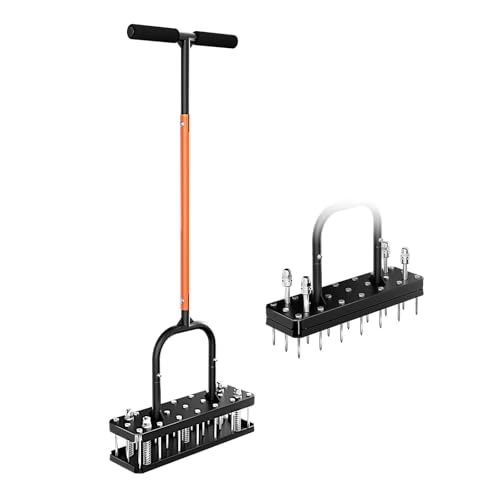
The YIYOUPENG aerator features 21 iron spikes, each about 2.4 inches long, designed to reach the root zone efficiently. A standout feature is the double-layer spring mechanism that automatically resets with every step, reducing strain and eliminating the need to pull the tool back after each pass. This semi-automatic operation keeps the user moving steadily, helping to achieve uniform aeration across the lawn. The 5-spring system minimizes jam and keeps dirt and leaves from sticking to the mechanism.
Consider this model if you want a balance of manual effort and automation. The shorter spike count compared to some larger rolling designs translates to a lighter feel, while still delivering effective aeration. This makes it suitable for small to mid-sized yards where user comfort and quicker passes matter. Proper maintenance involves cleaning after use and keeping springs free of debris to preserve performance.
Jardineer Lawn Aerator Spike Tool

The Jardineer spike aerator is a 36-inch manual tool with 12-tip spikes that break up compacted soil and create channels for air, water, and nutrients. It is designed to be a back-saver option with a longer reach, reducing the need to bend or crouch during aeration. The included wrench and instructions streamline setup, and its modular design allows partial disassembly for storage or transport. This model is well-suited for balconies, patios, and smaller lawns where a full-size core aerator is impractical.
When choosing Jardineer, assess whether you need occasional, space-conscious aeration versus frequent, heavy-duty sessions. The 12-tip design provides adequate coverage for smaller areas, and the 36-inch length helps users work without excessive bending. Dry, hard soils may require multiple passes, so plan energy use accordingly to keep sessions efficient.
Buying Guide: Key Purchase Considerations And Comparisons
What to consider when selecting a spike aerator depends on yard size, soil type, user strength, and maintenance preferences. Here are essential factors to compare:
- Soil Type and Lawn Size: Rolling aerators with deeper or more numerous spikes work well on medium to larger lawns and on soils with high compaction. For small lawns, a lightweight spike tool or sandals may suffice, though spike shoes generally offer lighter use and risk of slipping on wet turf.
- Penetration Depth and Spike Count: Higher spike counts (e.g., 42 or 21) and longer spikes provide deeper penetration, improving airflow and drainage. Ensure the spikes are made of durable material to resist bending and wear.
- Ease of Use and Ergonomics: Manual tools require physical effort; rolling designs reduce back strain and provide smoother operation. Look for features like adjustable handles, automatic reset mechanisms, and anti-slip components for safer use.
- Weight and Stability: Heavier aerators penetrate deeper but can be harder to maneuver on small or uneven lawns. Some models allow adding weight to customize depth, which can be advantageous for compact or dense soils.
- Maintenance and Durability: Galvanized or powder-coated steel resists rust, extending tool life. Check for easy disassembly for storage and simple cleaning to prevent debris buildup.
- Storage and Portability: Tools with shorter lengths and folding or removable components are easier to store in a garage or shed, especially in urban settings with limited space.
- Safety: Ensure anti-slip features and proper footwear recommendations are followed. Avoid over-penetration that can damage roots or create uneven turf patches.
In practice, a rolling aerator with replaceable spikes and adjustable weight suits homeowners with medium to large lawns who want efficient coverage and deeper penetration. For smaller yards or occasional maintenance, a lightweight spike aerator or spike shoes can deliver adequate aeration without a heavy setup. Always aerate when the soil moisture is optimal—neither bone-dry nor oversaturated—to maximize effectiveness and minimize turf stress.