Best Tarp for Bushcraft and Survival
For bushcraft enthusiasts and backcountry travelers, a reliable tarp is more than shelter—it’s protection, versatility, and a cornerstone of every emergency kit. The right tarp balances durability, coverage, and packability while accommodating a range of setups—from hammock shelters to ground sheets and stormproof tents. Below are five tarps that excel in rugged outdoor conditions, offering varied sizes, materials, and features to fit different climates and terrains. Each option emphasizes waterproofing, reinforced seams, and adaptable tie-down configurations to help you build resilient shelters quickly in the wild.
| Product | Brand | Size | Waterproof Rating | Notable Feature |
|---|---|---|---|---|
| AquaQuest Defender Camping Tarp | AquaQuest | 10 x 10 ft | 20,000 mm | Dual coating, rugged durability, reinforced ridgelines |
| Texas Bushcraft Emergency Tarp | Texas Bushcraft | 10 x 10 ft | 15,000 mm | Reflective aluminized polymer, heat-taped seams |
| OneTigris Bulwark Camping Tarp | ONETIGRIS | 12.8 x 9.5 ft | 2,000 mm | 19 reinforced loops, anti-UV coating |
| FREE SOLDIER Tarp Shelter | FREE SOLDIER | 118 x 126 in | 2,500 PU | Heat-sealed seams, strong ridgeline |
| GEERTOP Camping Tarp | GEERTOP | 17.2 x 10 ft | 3,000 mm | Large coverage, UV50+ protection |
AquaQuest Defender Tarp Review

The AquaQuest Defender stands out for its high-durability construction and exceptional waterproof performance. Built to withstand backcountry storms, this tarp employs a robust fabric and a dual-coating system that delivers an industry-leading waterproof rating of up to 20,000 mm. The design emphasizes reinforced ridgelines and burly stitching, ensuring long-term shelter integrity even under dynamic wind, rain, or snow. With a 10×10 ft footprint, it provides ample room for two people or for creating a waterproof ground sheet beneath a tent or hammock setup. The Defender’s rugged webbing tie-outs add reliability when anchoring in uneven terrain.
- 10′ x 10′ coverage suitable for two-person setups
- 20,000 mm waterproof rating for severe weather
- Reinforced ridgelines and heavy-duty stitching
- Rugged loop ties for secure anchoring
- Compatible with hammocks, ground shelters, or tarp-tent hybrids
Texas Bushcraft Emergency Tarp Overview
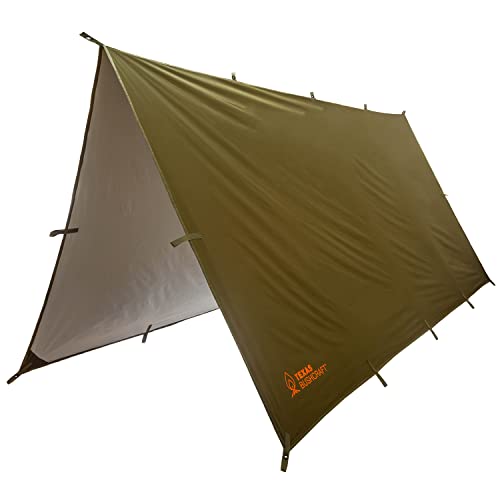
This Texas Bushcraft tarp is engineered for emergency backcountry conditions. Crafted from 70D ripstop nylon, it combines resilience with practical warmth maintenance, featuring a 15,000 mm waterproof PU coating for reliable rain protection. The tarp’s reflective aluminized polymer helps preserve body heat when used as an improvised blanket, while heat-taped seams and nylon webbing along the edges bolster durability in stormy weather. At 10×10 ft, it delivers generous shelter space that can be strung between trees, laid as waterproof tent flooring, or deployed as a quick emergency shelter to endure cold and wet environments. It remains a staple for wildland responders and solo trekkers alike.
- 70D ripstop nylon construction
- 15,000 mm waterproof PU coating
- Reflective aluminized polymer for heat retention
- Heat-taped seams and reinforced webbing
- Versatile as shelter, flooring, or emergency blanket
OneTigris Bulwark Tarp for Bushcraft

The OneTigris Bulwark Camping Tarp is designed for versatility and stealth in the wild. Constructed from 210T polyester taffeta with a dual PU coating, it offers a claimed 2,000 mm of water resistance and features 19 reinforced webbing loops (including several along the ridgeline). This setup enables multiple configuration options—from a hammock tarp to a ground sheet or tent fly—making it adaptable across seasons and terrains. The tarp’s anti-UV coating helps protect gear and shelter fabrics from sun damage, while the overall weight and packability support fast shelter deployment on long hikes or bushcraft missions.
- 210T polyester with dual PU coating
- 2000 mm waterproof rating
- 19 reinforced webbing loops for flexible setups
- Can function as hammock tarp or tent fly
- Anti-UV coating for durability
Free Soldier Tarp Shelter Overview
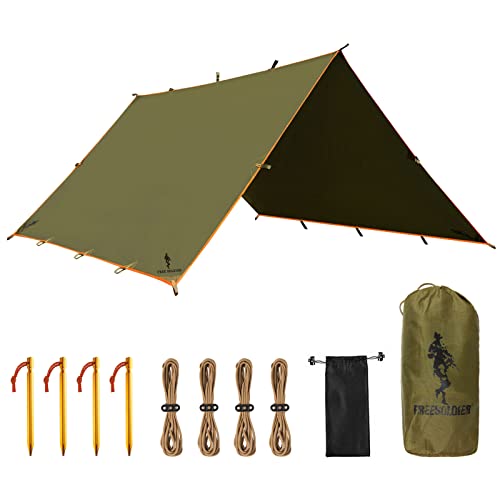
The FREE SOLDIER tarp shelter offers a robust balance of size, protection, and portability. With a large expanse measuring around 118″ by 126″, it provides ample coverage for two people, making it ideal for hammock setups or ground shelters during multi-day treks. The material is a 210T ripstop with a 2500 PU waterproof rating, and the construction features heat-sealed seams to minimize leakage. Weighing about 1.2 kg, it remains portable for hikers while remaining sturdy in windy or drizzly conditions. The large scope and reinforced ridgelines support adaptable shelter formations in unpredictable weather.
- 210T ripstop polyester with 2500 PU
- Heat-sealed seams for leak resistance
- Large 118″ x 126″ footprint
- Weight around 1.2 kg for easy packing
- Suitable for hammock or ground shelter configurations
Geertop 17×10 Camping Tarp Review

The GEERTOP tarp offers expansive coverage through a large 17.2 x 10 ft footprint, making it well-suited for larger tents, multi-person setups, or creating perimeter shade and windbreaks. Crafted from rip-stop waterproof polyester with a 3000 mm PU coating, it balances durability with weather resistance. The UV50+ protection helps shield gear and campers from sun exposure on long journeys. At roughly 3.3 lbs, it remains portable for backpacking, though its larger size may require more careful packing. Its generous dimensions enable flexible configurations, whether deployed as a communal shelter, hammock canopy, or ground tarp in varied terrains.
- 17.2 x 10 ft oversized coverage
- 3000 mm PU coating for rain resistance
- UV50+ protection
- Lightweight for its size (about 3.3 lbs)
- Includes a carrying bag for transport
Buying Guide
Key Material And Build Considerations
Material quality directly impacts shelter longevity in backcountry conditions. Look for tarps with ripstop fabrics or reinforced nylon or polyester, coupled with a reliable PU or silicone coating. Dual coatings or multiple layers typically raise waterproof performance and seam integrity. Consider whether the tarp uses heat-sealed or taped seams, which reduce leakage at stitch lines. Also assess the presence of reinforced ridgelines and robust webbing loops, which improve stability in gusty weather.
Waterproofing Standards And Coverage
Waterproof ratings are a practical shorthand for how tarps perform in rain. Higher ratings tend to translate into better rain protection, especially in prolonged downpours. However, real-world use includes wind-driven spray and dew. Tarps in this guide range from around 2,000 mm to 20,000 mm equivalents. For longer expeditions in wet climates, prefer tarps with higher ratings and sealed seams. Ensure the size covers your intended shelter area, factoring in potential wind directions and the need for vestibules or side walls.
Weight, Packability, And Transport
Weight matters for ultralight backpackers, but the tarp’s size and bulk also affect packing efficiency. Larger tarps provide more stretchable shelter options but require more pack space. Compare weights and packed dimensions to determine how a tarp glides with your existing gear. Tarps around 1–3 pounds are common for 10×10 ft or larger, offering a good balance between portability and protection for most bushcraft scenarios.
Attachment Points, Grommets, And Setup Variability
The number and arrangement of attachment points determine how you can configure your shelter in the woods. Tarps with numerous reinforced loops or ridgeline ties give flexibility for hammock setups, lean-tos, or ground-shelter builds. If you frequently camp in forested areas, look for tarps with multiple grommets along the edges and a ridgeline loop for overhead shelters. Easy setup with included guylines, stakes, and compact carry bags improves readiness on unpredictable days.
Versatility Across Scenarios
Effective bushcraft tarps support more than just rain protection. They can serve as windbreaks, sunshades, emergency blankets, or a base for a shelter system with hammocks. The tarps above offer varying degrees of multi-use appeal—from emergency blankets and ground sheets to full canopy shelters. Consider your typical trips—solo treks, family outings, hammock camping, or car-based adventures—and choose a tarp that scales with your planned shelter configurations and climate exposures.
Practical Comparisons For Common Use-Cases
If you frequently hike in forests with tall trees, tarps with numerous tie-out points and a looser canopy can be advantageous for building shelter quickly around a hammock setup. For occasional overnighters or emergencies in mobile winter trails, higher waterproof ratings and reinforced seams reduce the risk of leaks. For hammock enthusiasts, a tarp with a ridge line and many side loops allows fast, stable hammocking without exposing you to drafts. By evaluating size, weight, and the type of terrain you most often encounter, you can prioritize a tarp that best matches your bushcraft workflow.
In short, the tarps highlighted here deliver a spectrum of rugged protection and adaptable configurations suitable for American wilderness adventures. Whether you’re building a robust bushcraft shelter, planning a hammock camp, or preparing an emergency kit, these tarps provide reliable protection with varying levels of coverage, weight, and bulk. Use the buying guide to align product features with your typical routes, climates, and shelter preferences to select the best tarp for your bushcraft toolbox.